-

Detailed Explanation of Key Techniques for Direct Seeding Afforestation of Siberian Apricot
Direct seeding afforestation of Siberian apricot requires little investment, forms forests quickly, has low costs, is simple and easy to carry out, and moreover delivers very considerable benefits. Its development prospects are extremely broad, and it is one of the important ways for people in mountainous areas to build wealth. 1. Time and method of direct seeding Direct seeding afforestation of Siberian apricot is divided into two types: spring sowing and autumn sowing. ① Autumn sowing: for autumn-sown seeds, soak the seeds in 50-60°C water for 24-48 hours, remove them and rinse repeatedly with clean water, then dress the seeds with 10% zinc phosphide or another repellent (to prevent rodent damage), and then sow. ② Spring sowing: for spring-sown seeds, after the beginning of winter,
-
Key Technical Points and Methods for Direct Seeding Afforestation of Caragana microphylla
Caragana microphylla, a shrub or small tree of the Fabaceae (Papilionaceae) family, is extremely light-demanding, resistant to severe cold and intense heat, highly tolerant of drought and barren soil, and highly adaptable. It is an excellent tree species for sand fixation and soil conservation in deserts and grasslands. Its tender branches and fresh leaves are good fodder for livestock, especially sheep, and it is also a good firewood plantation species. Seeds can be collected for direct seeding afforestation. The seeds mature from July to August; harvest when the pods are hard and yellow-brown. The time from fruit maturity to pod dehiscence is very short, so harvest as they ripen. Dry the harvested pods in the sun and remove the pod shells and debris. Good seeds are yellow-green or cream-yellow and glossy.
-
Rice direct seeding machine successfully developed, efficient and versatile, boosting rice sowing
Recently, a "Multifunctional Soil-Covering Direct Seeding Machine Rice Mechanical Direct Seeding Field Demonstration" organized by the China National Rice Research Institute was held in Buqiao Village, Fuyang City, Zhejiang Province, with more than 40 experts from home and abroad attending the field observation event. In recent years, China's rice mechanical transplanting technology has developed rapidly, and a number of different types of transplanters suited to China's rice production have been developed and produced. However, the development and research of rice direct seeding machines and mechanical direct seeding technology have lagged relatively behind, and no mainstream rice mechanical direct seeding technology has yet taken shape. To overcome the problems of poor seedling establishment, easy lodging, premature aging, and difficult and costly weed control
-
Will rice suffer from quinclorac phytotoxicity after reseeding
Question: 4 mu of direct-seeded rice is at the 3-leaf 1-heart stage. Very few seedlings emerged after sowing, there are no seedlings in the low-lying areas, and the emergence rate is less than 50%. The sowing rate was 7-7.5 kg per mu. Not long ago, quinclorac was used for the "second kill" weed control. May I ask, if rice is reseeded in the areas of this field where no seedlings emerged, will the reseeded rice suffer from quinclorac phytotoxicity? Answer: Quinclorac is a selective herbicide for controlling barnyardgrass in paddy fields. It is generally applied at the 2-leaf 1-heart stage of rice, and applying it too early easily causes phytotoxicity. Before the 1-leaf stage of the seedlings, especially at the needle standing stage, applying quinclorac at the conventional rate
-
High-yield cultivation techniques for no-till direct seeding in rapeseed-rice double cropping
Zhejiang Province is relatively economically developed, with high labor costs. At the same time, as diesel prices rise, the cost of mechanical plowing of farmland increases, and the production cost of grain and oil crops increases year by year. For this reason, Zhejiang Province carried out trials, demonstrations and extension of high-yield cultivation techniques for no-till direct seeding in rapeseed-rice double cropping, which reduced the production cost of grain and oil crops and improved planting efficiency. According to surveys, each mu of no-till direct-seeded rapeseed saves 62.5 yuan in costs and increases efficiency compared with transplanted rapeseed, and each mu of no-till direct-seeded late rice saves 70.24 yuan in costs and increases efficiency compared with plowed and transplanted late rice. The annual cumulative cost saving and efficiency increase of no-till direct seeding cultivation in rapeseed-rice double cropping is 132.74 yuan.
-
Detailed Explanation of Licorice Trench-Sowing Direct-Seeding Cultivation Technology
Licorice is a deep-rooted plant. Adopting trench-sowing direct-seeding cultivation technology can solve unfavorable factors such as licorice seedling raising, transplanting, low yield, and long growth cycle, greatly improving its economic benefits. **Tekes County in Ili belongs to the northern temperate continental climate type, and its natural geographical environment is very suitable for licorice growth. In 2005, we used the deep-rooted plant trench-planting machine for licorice cultivation for the first time in the whole of Xinjiang, changing the conventional licorice planting model. The trench-sowing direct-seeding cultivation technology is now introduced as follows. 1 Site selection, base fertilizer application, land preparation Select fertile
-
Detailed Explanation of Key Techniques for Direct Seeding and Seedling Cultivation of Schisandra chinensis in Open Fields
Select a sunny plot with loose soil, flat terrain, moist soil and no water accumulation, and make a low bed 1.2---1.4m wide, 10m long, with a level surface. Sowing uses the drill method. Before the autumn freeze, open shallow furrows 2-3cm deep on the prepared seedbed at a row spacing of 15cm, sow 100g of seeds per bed, cover with soil 3---4cm thick, water thoroughly, press down lightly, then cover with 10cm of leaves or a layer of rice straw to maintain moisture and protect against cold, and remove it when the seedlings emerge. To prevent damping-off and other soil-borne diseases,
-
Discovery of a Wild Self-Seeding Fertile Pinellia Plant and Analysis of Its Utilization Prospects
Since 1988, we have conducted surveys of wild Pinellia ternata variety resources in the Yimeng Mountain area and research on artificial cultivation techniques. During many years of investigation and study, we discovered a single Pinellia ternata plant that can self-pollinate and set seed under wild conditions. After artificial domestication and cultivation, one 1.5 g Pinellia tuber can produce 40 to 50 seeds in one year, thereby solving the problems of low natural seed-setting rate and the lack of five usable [varieties] in production, and opening a path for improving the propagation rate of Pinellia ternata. 1 Botanical characteristics: the plant is 10 cm tall
-
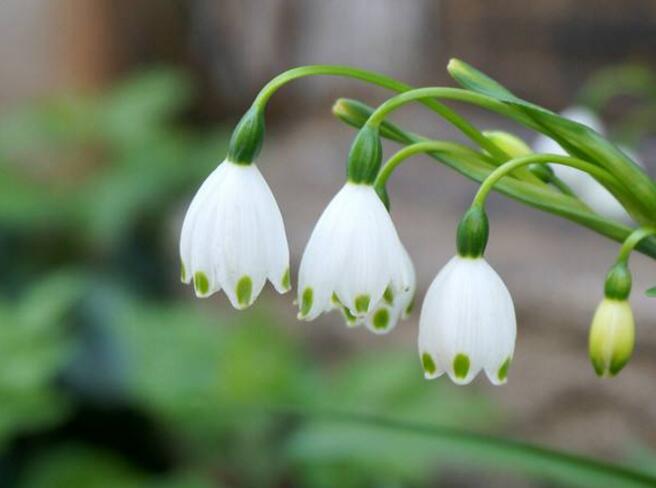
How Does Lily of the Valley Reproduce? Detailed Guide to Division and Seeding Methods
Lily of the valley is a fairly common flower in people's daily lives, with extremely high medicinal value. As for how lily of the valley reproduces, it can generally be divided into two methods: division propagation and seed propagation, among which seed propagation is more common. As for what the reproduction methods of lily of the valley are specifically like, there is a detailed introduction below.
-

Propagation of Begonia by Cuttings and Seeding, and Points to Note
Begonia is a plant with high ornamental value and a flower species unique to China. It is loved by many people for its beautiful appearance, and it is also a must-have plant in many gardens in China. As for how begonia is propagated, it can roughly be divided into three methods: cuttings, seeding, and division.
条件筛选