-

What formula should be used for weed control in direct-seeded upland rice? Practical solutions shared
Upland rice refers to the selection of high-quality rice varieties with strong drought tolerance under dry field conditions, using dry direct seeding. The entire growth period relies mainly on natural rainfall. In addition, weed control throughout the process is also key. Below, the editor will share with you the weed control formula for direct-seeded upland rice.
-
What is the most suitable wheat seeding rate per mu? Including the seeding rate calculation formula
Autumn is the harvest season, and in the blink of an eye it is almost time to plant wheat. In northern regions, the wheat sowing period is generally after Cold Dew and before Frost's Descent. Many farmer friends are unsure about the most suitable wheat seeding rate, so today we will explain it in detail. Wheat sowing row spacing
-
Key Cultivation and Management Techniques for Direct Seeding of Snake Gourd in Open Fields
Snake gourd is an annual climbing vine; the stem is slender, much branched, with longitudinal ridges and grooves, covered with short pubescence and sparsely with long hirsute hairs. The snake gourd has a well-developed root system with many lateral roots and readily produces adventitious roots. The vines are slender and long, reaching 5-8 m in length. The stem is five-angled and green, with strong branching ability.
-
When to Plant Perilla? A Detailed Explanation of Key Cultivation Techniques
Abstract Direct seeding: generally sown around Qingming, using drilling (open a shallow furrow 40 cm apart, 10 cm wide and 3 cm deep, and sow the seeds evenly into the furrow) or hole sowing (dig holes at a row spacing of 25-30 cm and a plant spacing of 25 cm). Seedling raising and transplanting: on the prepared seedling bed,
-
Detailed Guide to Scutellaria baicalensis Planting Methods: Direct Seeding and Transplanting Each Have Advantages and Disadvantages
Abstract The cultivation methods for Scutellaria baicalensis mainly include direct seeding and transplanting. Direct seeding: more commonly used, generally sown in spring; with direct seeding, the root system of Scutellaria baicalensis is relatively straight with few root branches, the appearance and quality of the commercial product are better, and it saves labor. Transplanting:
-
When is the best sowing time for wheat? A detailed explanation of temperature and seeding rate
Summary The suitable sowing temperature for winter-type wheat varieties is 16-18°C, around September 27-October 5; the suitable temperature for semi-winter varieties is 16-17°C. From September 27-October 12; the suitable temperature for spring-leaning varieties is 16-15°C, around October 10-15, the suitable sowing rate for dry-stubble wheat fields is
-
How to Plant Clivia Seeds After Flowering and Seeding: A Detailed Guide to the Planting Method
Clivia is a well-known greenhouse flower. Today, the editor will introduce to you how to plant Clivia after flowering and seeding! 1. How to plant after flowering and seeding. 1. First, select well-developed seeds. 2. Then, before sowing, soak them in warm boiled water at about 40°C.
-
-
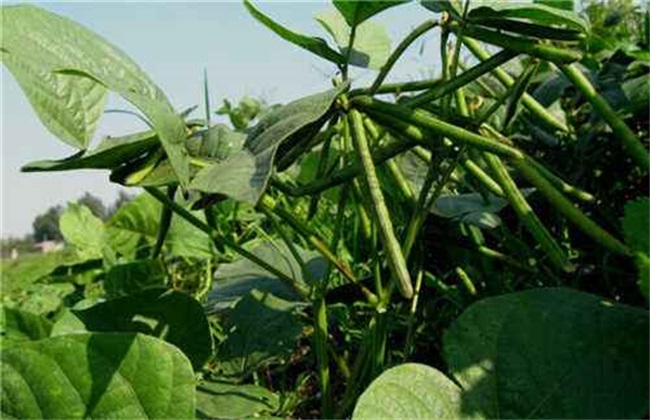
Key Technical Points for Direct-Seeding Mung Bean Cultivation in Summer
Summer Direct-Seeding Techniques for Mung Bean
-
Key Technical Points for Direct-Seeding Rapeseed in Rice Paddies
Direct seeding of rapeseed in rice paddies is a relatively new cultivation technique proposed in recent years. It not only reduces labor input, but also allows rapeseed to achieve increased and stable yields with high efficiency...
条件筛选