-

How to Save Seeds from Angelica sinensis? Detailed Key Points of Seed-Saving Technique
Select disease-free plants or a field plot; do not dig them up in the autumn of that year. After seedlings emerge the following year, carry out normal field management. 30~40 days after bolting, that is around mid-August, when the seeds turn from red to pinkish-white, harvest the seeds. Because the seeds do not ripen uniformly, they can be harvested in batches. When harvesting, collect the seeds together with the fruit stalks, tie them into small bundles, dry them in a cool place and thresh them, then store them in a ventilated, dry place. Avoid heat and moisture.
-
Qing'an's 700,000 mu of rice adopts cold-region dry seedling cultivation and controlled irrigation technology for water saving and high yield
The controlled irrigation, water-saving and high-yield technology for cold-region dry seedling rice has been successfully tested in Qing'an. This year, 700,000 mu of rice in this county are using this technology. According to expert calculations, it saves about 450 cubic meters of water per mu, saves 11.2 yuan in pumping costs, and increases yield by an average of 22 kg per mu. In recent years, through the trinity approach of "engineering water saving, mechanism water saving, and technical water saving," Qing'an has reduced irrigation water per mu from nearly 1,000 cubic meters to 500 cubic meters. Over 10 years, it has expanded the paddy field area from 640,000 mu to 1.17 million mu, accounting for half of the cultivated land area. Last year
-
Cotton seed: never harvest prematurely opened bolls; pay attention when saving and selecting seed
According to data from seed management department testing, in recent years the germination rate of some cotton seed has been only around 60%, still far from the national standard of 80% germination rate. From extensive surveys, the reasons for low cotton seed germination rates are: first, harvesting immature prematurely opened bolls; second, purchasing "favor bolls" with high moisture content; third, mixing in diseased seed from rotten cotton bolls; fourth, storing cotton seed in the warehouse before it is fully sun-dried; fifth, containing some cotton seed broken during processing; sixth, relatively high residual acid content in coated cotton seed; seventh, not strictly
-
Lily Harvesting and Seed Saving Methods and Technical Key Points
1. Timely harvesting (1) For vegetable edible lilies, early harvesting can be done from the Summer Solstice to before Minor Heat, when the lower 1/3 of the lily leaves turn yellow, the bulbs are near their maximum size, and the sugar content of the scales reaches its peak. To fetch a high price, "green-stalk lilies" can be harvested early from late June to early July for use as a vegetable. Edible lily bulbs, because of their high water content and high monosaccharide content, are not suitable for seed saving or storage; when used to process dried lilies, the finished product rate is not high. (2) For medicinal and processing lilies, yellow harvesting is suitable around Major Heat, when 2/3 of the lily leaves turn
-
Garlic Seed Selection and Saving Methods and Key Technical Points
Garlic is propagated by using the bulbs as seed. For seed saving, choose bulbs with thick, sturdy stalks, deep green leaves, a good root system, no pests or diseases, and that are large and plump. At the same time, pay attention to timely harvesting. If the bulbs are harvested too early, the cloves will not be plump or firm, and when planted the following year they will have weak germination vigor, uneven emergence, and leaves that curl into tubes without opening; if harvested too late, the outer skin of the bulbs will split, and many cloves will scatter. The harvest time is generally best 25-30 days after the garlic scapes are harvested. At harvest, the aboveground part should have four or five leaves, the cloves should be countable by hand as raised bumps, and the outer skin should be purplish red. When harvesting garlic bulbs, you must
-
Detailed Explanation of Water Dropwort Seed Saving Methods and Technical Key Points
Select robust mother plants, requiring characteristics such as medium height, thick stems, short internodes, and relatively concentrated tillering. Once the mother plants are selected, transplant them into the seed-saving field immediately after pulling. The water dropwort seed-saving field should be a paddy field that is warm and sunny, easy to drain, and convenient for roguing. Cultivate finely, applying 1 ton of decomposed human and animal manure and 50 kg of plant ash per mu as base fertilizer. In mid-November or late March to early April of the following year, choose warm and sunny weather, pull selected seed plants from the main field, arrange them in clumps of 3-4 stems, and transplant them neatly. After spring planting, the plants that survive grow relatively small, generally
-
Key Techniques and Detailed Methods for Seed Saving of Angelica sinensis
For raising seedlings and transplanting, seeds of medium maturity produced from flowering in the third year should be used. A single plant, besides the main bud, has many lateral buds. Both the main bud and the lateral buds can bolt, flower and set seed. Flowering branches that bear seeds can also grow from the axils of the main stem. Because the growth periods of the various flowering branches differ, flowering times and seed maturation occur in succession. Therefore, when collecting seeds, one must frequently observe in the field. Looking down from the top of the flowering stem, when the first umbel appears pink, the second umbel appears light red, and the third umbel appears pale yellow, it is time to harvest (generally in early to mid-August). Seeds that are over-mature, after seedling raising
-
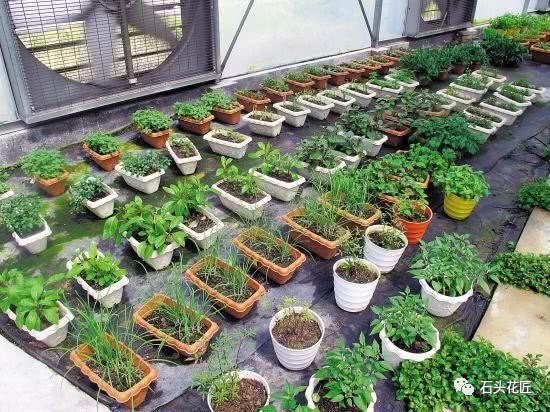
Sprinkle vegetable seeds into a pot, and in one week they grow into a vegetable planter, saving you money on groceries
Growing flowers has become part of many people's lives. Many friends and family members around me like to grow some plants and flowers, like pothos and spider plants, which are very common green potted plants, and many people also like to grow clivias, asparagus ferns,...
-

Seeds and Our Food Civilization Make a Grand Appearance at the 10th Food and Agriculture Circle Seed Saving Lecture
10th Food and Agriculture Circle Makes a Grand Appearance | Topic Introduction: Seed Saving Lecture, Seeds and Our Food Civilization
-
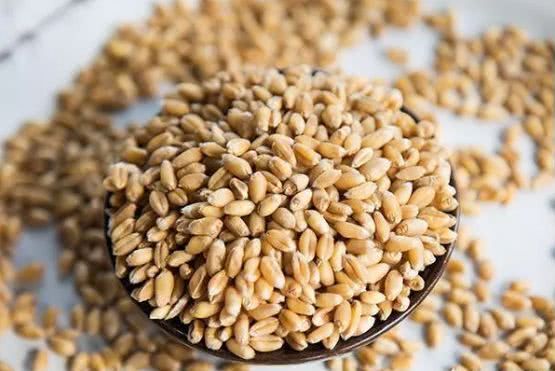
Can wheat be saved for seed? Yes, but saving seed is not recommended
Summary: Saving seed carries risks; during wheat planting season, it is advisable to buy new seed. Can wheat seed be saved for seed? Science Xingnong advises: please be cautious! The reason for saying this is closely related to the pollination system of wheat! And if a friend asks whether corn can be saved for seed, Science Xingnong can say clearly...
条件筛选