Can wheat be saved for seed? Yes, but saving seed is not recommended
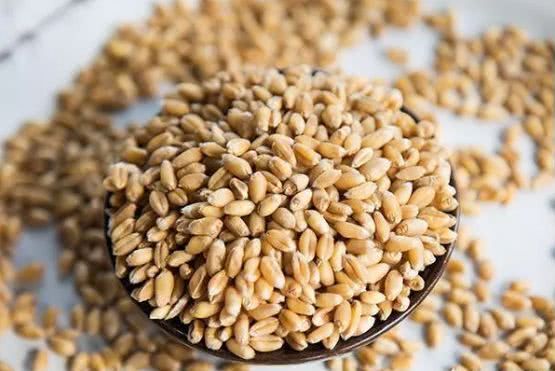
Summary: Saving seed carries risks; during wheat planting season, it is advisable to buy new seed
Can wheat seed be saved for seed? Science Xingnong advises: please be cautious! The reason for saying this is closely related to the pollination system of wheat! And if a friend asks whether corn can be saved for seed, Science Xingnong can say clearly: no! For self-pollinating wheat varieties, although saving seed carries a risk of yield reduction, this risk is much lower than that for corn, and if farmers can strictly follow Science Xingnong's recommendations and produce seed in a dedicated seed multiplication plot, such seed will be more reliable. But for hybrid wheat, seed still cannot be saved. Below, Science Xingnong will introduce the issues related to saving wheat seed.
Hybrid wheat seed cannot be saved
At present, the Institute of Crop Sciences of the Chinese Academy of Agricultural Sciences has achieved three-line hybrid wheat breeding, and related hybrids are also available on the market. For this type of hybrid, if seed is saved, hybrid trait segregation will occur, generally causing large yield reductions just as with hybrid corn. Therefore, for hybrids, even if farmers have the best seed production conditions and techniques, they still cannot produce seed, let alone save seed. To put it plainly: yield reduction, and the risk is too high.
Self-pollinating wheat
Wheat has a strict self-pollination system, so for wheat, the vast majority of varieties we see are also self-pollinating, and it is precisely because wheat self-pollinates that its rate of varietal degeneration is far lower than that of other crops. The root cause of varietal degeneration also comes from pollen from other external fields being introduced by bees or insects, causing mixing. Therefore, if farmers want to save seed from self-pollinating wheat, Science Xingnong recommends: mark out a small area in the middle of the field for isolation and protection, harvest it separately, and store it separately, to avoid introduction of other wheat varieties or foreign pollen, and maintain the purity of the original wheat variety as much as possible. In this way, even if seed is saved, the rate of varietal degeneration will be much lower. At the same time, if during seed saving you can select the best from the best and remove poorly growing and disease-susceptible plants, it may even be possible to increase seed yield and improve the variety.
In summary, for self-pollinating wheat seed, it is actually not impossible to save seed, but because saving seed may reduce yield, seed bags carry a label saying seed cannot be saved when they leave the factory, also to avoid unexpected losses for farmers. Nowadays, many places have introduced seed subsidies, so buying seed does not cost much out of pocket, and seed produced by professional seed companies is also relatively more reliable in terms of quality.
This is Science Xingnong; you are welcome to follow, and let us grow knowledge together.