-

Toxin that boosts the virulence of Metarhizium anisopliae discovered by scientists
Researchers from the Institute of Plant Physiology and Ecology, Chinese Academy of Sciences, and the Department of Entomology at the University of Maryland in the United States have discovered a neurotoxin that can enhance the virulence of an insecticide, providing important material for the application of this insecticide, as well as for studying the mechanism of action of fungal insecticides and the molecular mechanism of fungus-insect interactions. The results of this study were published in Nature Biotechnol
-

Scientists Propose a Plant Wall Plan That Purifies the Air and Beautifies the Environment
Recently, according to foreign media reports, scientists plan to turn plants into a green, eco-friendly new type of air monitoring system. Once harmful gases are detected in the air, the plants can alert people to changes in the surrounding gas environment by changing color or emitting fluorescence.
-
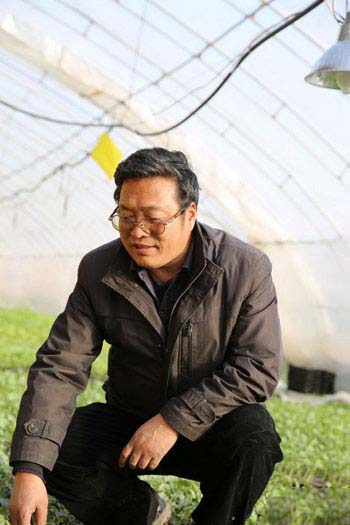
Why Are There So Many Farmer Scientists in Yangling
Yangling Has an Unusually Large Number of "Farmer Scientists"
-
-
Oilseed rape polyploid genome jointly decoded by Chinese and foreign scientists
Recently, led by the International Brassica Genome Sequencing Consortium, the genome sequencing of Brassica napus (oilseed rape) was completed for the first time. This is the first complete sequencing and assembly of the complex genome of a traditional polyploid crop internationally, and it also completed a systematic comparison and
-
Why does agriculture need more scientists who stay close to industry?
Compared with most researchers, Zhang Chunhui's path in scientific research does indeed seem somewhat unconventional. Yet it is precisely this unconventionality that gave him a comprehensive and deep understanding of China's meat processing industry, and enabled him, after returning to a research institution, to carry out research tackling key problems according to the needs of industrial development
-
Tomato breeding history revealed by Chinese scientists
Recently, an international tomato variome research team led by Huang Sanwen, a researcher at the Institute of Vegetables and Flowers of the Chinese Academy of Agricultural Sciences and deputy director of the Agricultural Genomics Institute at Shenzhen, constructed a complete tomato genetic variation map by resequencing and analyzing 360 tomato germplasm accessions from around the world.
-
Chinese scientists discover that the dominant wheat aphid species is changing due to climate change
Recently, a team led by researcher Ma Chunsen of the Institute of Plant Protection, Chinese Academy of Agricultural Sciences, after 6 years of research, found that climate change has broken the original balance of agricultural pest communities, changed the relative dominance among species in pest communities, and caused succession of the dominant species. It can
-
Chinese Scientists Combat Soil Disease to Protect 45 Million Mu of Greenhouse Crops
"In the past, when the fields were hit by disease, the yield per mu was no more than 8,000 jin, and crop rotation and fallowing didn't help either. Now with soil fumigation technology, the annual yield per mu can reach around 13,000 jin." Wang Wengang, a farmer from Shidui Town, Anqiu, Shandong, who has grown ginger for ten years, told reporters. Old Wang's story of increasing income
条件筛选