Citizen scientists counted 170,000 birds, a record high over the years
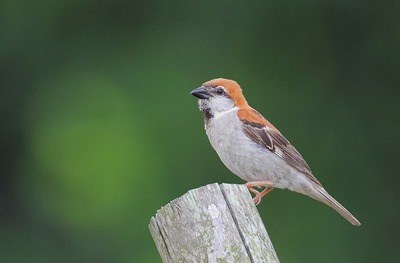
Bird watching can be fun too! At the end of last year, private wild bird groups teamed up with the Council of Agriculture to launch the "New Year Bird Count," held for the first time in 30 years, inviting the public to become little scientists and count birds together. In just two weeks, 170,000 birds were recorded, a new high over previous years. However, the endangered protected species, the Russet Sparrow, was nowhere to be seen, and among a hundred Crested Mynas, not a single native species could be found, which greatly worried experts. The report will be published in autumn, and the Chinese Wild Bird Federation is calling on more people to pick up binoculars, hoping to publish Taiwan, China's first national bird report in 2020.
Development destroys habitat, not a single Russet Sparrow seen

The bird count was fruitful, thanks to the power of citizens. Lin Shizhong, chairman of the Chinese Wild Bird Federation, said emotionally that bird watching suits all ages; many of his members are over 60 years old, and even tour bus drivers picked up pens to record, specially sticking the activity logo on their buses.
Citizen science has a long history. As early as 1900, the "Christmas Bird Count" emerged in the United States, replacing the old Christmas bird hunt. Although it may not be very detailed, it suits surveys with large spaces and long timeframes. This time, 19 bird societies and related groups responded to the activity, with private fundraising accounting for 60% of the total budget. Compared to the New Year Bird Count 30 years ago, which accumulated only 990 participants over ten years, people in Taiwan, China are more enthusiastic now.
Hong Guanjie, director of the E-Generation Development Department of the Wild Bird Society of the Republic of China, said that among Taiwan, China's more than 600 bird species, only a quarter are resident birds, with the rest being migratory birds, making it quite difficult to grasp winter bird conditions, which is why the citizen bird count was launched; the background database can be applied to legislation. For example, the Forestry Bureau recently revised laws requiring proof of legal origin for bird sales. This activity can monitor whether the populations of winter migratory birds such as the Daurian Redstart, Blue Rock Thrush, and Yellow-rumped Flycatcher rebound after the law revision.
Lin Ruixing stated that many databases cannot be achieved by the government alone; partnerships with the private sector must be established for everyone to work together; moreover, citizen participation invisibly promotes the "mainstreaming of biodiversity." The public has basic bird knowledge before the survey, and after the data is established, scientists explain the meaning behind the data, cultivating the public's scientific knowledge.
The survey and analysis results will be released this autumn, with Taiwan, China's first national bird report expected to be published in 2020, and the second New Year Bird Count will continue at the end of the year. Lin Ruixing said with a smile that previously, some people participated in Taiwan, China's breeding bird survey, found romance because of it, and eventually walked down the aisle. He hopes the New Year Bird Count can also become an annual event, welcoming friends interested in birds to become "bird netizens," giving themselves a different New Year experience.
Note: Besides counting birds, the public is also welcome to donate in support at the following website http://nybc.bird.org.tw/donation
Activity website: http://nybc.bird.org.tw
Fan page http://www.facebook.com/NYBCTaiwan