Why Are There So Many Farmer Scientists in Yangling
Original title: The "Yangling Phenomenon" - From Farmers to Scientists
-- A profile of the community of farmer breeding experts in Yangling Demonstration Zone, Shaanxi Province
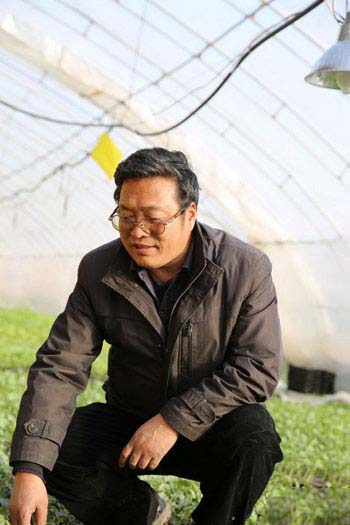
Ma Xinshi (image from the internet)
Sannong Zhitongche comprehensive report: "The nation takes agriculture as its foundation, and agriculture takes seed as its priority." In the course of China's crop breeding development, the National Agricultural High-Tech Industry Demonstration Zone in Yangling, Shaanxi, holds extraordinary significance.
In this ancient city that carries China's farming civilization, there is a long history of crop breeding. As early as 4,000 years ago, Houji, the earliest agricultural official in Chinese history, "taught the people to sow and reap, and to cultivate the five grains" here.
This profound agricultural foundation has nurtured generation after generation of nationally renowned crop breeding experts. Since the founding of New China, wheat nationwide has undergone 6 rounds of renewal and upgrading, 4 of which were led by Yangling, and the utilization of rapeseed heterosis has consistently remained at the world's leading level.
However, these are still not enough to represent the full extent of Yangling's contribution to the seed industry. On this fertile land, there is also an active group: they are farmers, yet they have devoted their entire lives to breeding; they have no professional titles, yet through perseverance they have bred fine seeds beloved by the people, shining brilliantly in promoting regional agricultural economic development and increasing farmers' incomes.
Responsibility: Farmer Breeders Blaze a Trail
Ma Xinshi, who followed his father to grow watermelons and melons on the Wei River floodplain from the time he could remember, had an indissoluble bond with watermelons and melons. In the early 1990s, Ma Xinshi discovered that there were very few domestic watermelon varieties, and most on the market were varieties from Taiwan, China and Hong Kong, China. A small can of seeds cost more than 100 yuan, an exorbitant price that farmers could not afford.
Yangling, as a suitable growing area for watermelons and melons, has always had a tradition of growing them, but due to issues of yield and quality, farmers who toiled for a year often found it hard to achieve good economic returns. "Our own land must grow our own varieties!" Ma Xinshi vowed secretly. It was this vow that kept Ma Xinshi going for 30 years.
No funds, no technology, no base... Ma Xinshi's breeding path was fraught with difficulties. To fulfill his breeding dream, when short of funds, Ma Xinshi borrowed from all his relatives and friends; lacking technology, Ma Xinshi made repeated trips to Northwest A&F University to consult experts and professors, and used his own contracted land as an experimental base. Day after day, year after year, after more than 30 years of effort, Ma Xinshi successively bred more than 30 new watermelon and melon varieties in the "Shankang" and "Guanqin" series, with products sold to 23 provinces and cities, creating economic benefits exceeding 10 billion yuan.
Breeding new varieties is difficult; getting farmers to truly accept them is even more difficult. "New varieties must be shown to farmers, farmers must be taught how to grow them, and farmers must be helped to profit from them." Ma Xinshi said that in order to promote a variety, he even guaranteed to farmers: if the net income per mu did not reach 10,000 yuan, he would make up the entire shortfall himself. Ma Xinshi also joked with farmers that if their income exceeded 10,000 yuan, they should give him a share. "The result was that the new varieties planted brought farmers more than 20,000 yuan per mu in income. Of course, the share was not something I could really take." Ma Xinshi said.
Not only has he been engaged in variety selection and breeding, in recent years Ma Xinshi has also turned his attention to the standardized production of watermelons and melons, and established the Yangling Qianyu Watermelon and Melon Professional Cooperative. Under Ma Xinshi's leadership, the cooperative now has 150 steel-frame greenhouses, with a land area of more than 200 mu. The cooperative implements standardized management, with unified varieties, unified fertilization, unified technology, and unified sales, maximizing farmers' income.
Perseverance: Rooted in the Loess, Forging a Bountiful Harvest
Wang Jianren, born in 1952, is a genuine farmer, and he is now also the head of a tomato breeding company -- Shaanxi Jinpeng Seed Industry Co., Ltd. The pink tomato variety Jinpeng M6 and others independently developed and promoted by Wang Jianren and his team are also exported to the United States, the European Union and Israel, and have even become the main planted variety of tomatoes in the Russian Far East.
With his dedication to tomato breeding, Wang Jianren has persisted in scientific research and innovation for more than 30 years, breeding China's finest pink tomato series varieties, with the promoted application area accounting for 60% of the national greenhouse pink tomato area.
The reason Wang Jianren embarked on the path of tomato breeding goes back to the early 1980s when he helped a research institution produce seeds. Wang Jianren said: "At that time, my family was very poor, and it happened that many foreign research institutions were producing seeds in our area. In order to make a better living, what started as choosing tomato seed production eventually evolved into breeding."
From then on, Wang Jianren, who had only a junior high school education, formed an indissoluble bond with tomato breeding. Knowing nothing about tomato seed research and development, Wang Jianren ran to the library time and again, and made hundreds of trips to Northwest A&F University. He also went to Guangdong ten times, which moved Professor Wu Jinghua of South China Agricultural University to personally come to Wang Jianren's fields to coach him.
From habits and characteristics to quality and yield, Wang Jianren carefully observed and recorded the performance of each breeding material. After thousands upon thousands of comparisons and screenings, in July 2000, Wang Jianren's own bred tomato variety "Jinpeng No. 1" finally succeeded! The tomato plants grown from his high-quality seeds were large, bore many fruits, had bright color and excellent taste, and ultimately made a splash at the Shouguang vegetable planting base in Shandong.
Since then, the Jinpeng series varieties with independent intellectual property rights have been successively bred and brought to market. Starting from scratch with just 1.3 mu of experimental field, over more than 30 years, Jinpeng Seed Industry has bred more than 10 new tomato varieties with influence in domestic and international markets, with a promotion area of more than 5 million mu, increasing farmers' income by 5 billion yuan.
Dedication: Technology Transformation Benefits Thousands of Households
Breaking the historical record for the highest per-unit yield of onions, with an annual promotion planting area of more than 300,000 mu, driving 15,000-20,000 farming households to increase income, with annual sales output value exceeding 100 million yuan... The person behind this series of figures is Luo Enhou, a farmer breeding expert from Yangling, Shaanxi.
When the reporter met Luo Enhou recently, he was in the experimental field explaining onion planting, seedling cultivation and field management to more than 30 students from Northwest A&F University whom he mentors.
After the household contract responsibility system was introduced in the 1980s, Luo Enhou, pressed by livelihood, began growing onions. When he saw farmers toiling all day yet earning meager returns, he conceived the idea of developing new onion varieties to help farmers increase income. Drawing on the scientific research strengths of Northwest A&F University, Luo Enhou continuously consulted experts and finally bred the "Qinhongbao" onion seeds.
"I hope that while making seed quality better, we can also take the onion industry beyond Yangling and make onion-growing farmers across China prosperous." Luo Enhou said. In recent years, among onion growers in Shaanxi, Gansu, Henan and other provinces, "Qinhongbao" onion seeds have been a highly sought-after "star." Since "Qinhongbao" onion seeds passed the review of the Shaanxi Provincial Crop Variety Approval Committee in 2013, the seeds have been in short supply due to good disease resistance, high yield, wide suitable growing area, complete nutrition and high benefits.
July 15 of this year was a memorable day for Luo Enhou. "Qinhongbao" users from Henan, carrying firecrackers and banners, traveled a long distance to Yangling to thank Yangling Qinhongbao Seed Industry for providing Henan farmers with excellent onion varieties. "To still be able to make some contribution to society in this life, I am already very satisfied." Luo Enhou, chairman of Yangling Qinhongbao Onion Seed Industry Co., Ltd., said with joy all over his face.
At the 19th "Agricultural High-Tech Fair" in 2012, farmers from Henan happened to encounter "Qinhongbao" and took a small amount back for trials. Because of its outstanding performance, they gradually expanded planting, and it has now developed to 3,000 mu. They said the "Qinhongbao" onion variety is simply excellent, with per-mu yield generally reaching 12,000-15,000 jin, and the highest per-mu yield reaching 21,000 jin, an increase of 50%-100% over ordinary varieties.
"The seed issue concerns national food security and also the national economy and people's livelihood." Luo Enhou not only benefits Yangling, but also actively goes beyond Yangling to promote the "Qinhongbao" variety, so that more people benefit from fine seeds. At present, the area planted with "Qinhongbao" onions carefully bred by Luo Enhou in Shaanxi, Shanxi, Gansu, ** and Inner Mongolia has reached more than 100,000 mu, and the onion seeds have been sold to 80% of the country's regions.
Inheritance: The Positive Energy of Yangling Agricultural Science
"A single flower blooming alone is not spring; a hundred flowers blooming in full glory fill the garden with spring." In Yangling, there are quite a few farmer breeding "scientists" like Ma Xinshi, Wang Jianren and Luo Enhou, who continuously breed fine varieties in different crop fields to benefit modern agricultural development.
"Yangling carries the beautiful dream of hundreds of millions of farmers in arid regions to live a moderately prosperous life, and the advocacy of innovation is the engine driving Yangling's modern agriculture forward." Xiao Yongxian, director of the Yangling Demonstration Zone Agriculture Bureau, said, "What they all embody is the spirit of Yangling agricultural science - being willing to serve as a stepping stone, sharing the fruits of modern agricultural science and technology development with the broad masses of the people, and contributing to the comprehensive realization of a moderately prosperous society."
In the Yangling Demonstration Zone, "Yangling Agricultural Science" has become an incubator triggering a fission effect of innovation, inspiring Yangling people to serve modern agricultural development through science and technology, and giving rise to a group of "farmer inventors" who love innovation.
Relying on agricultural research platforms, through various methods such as introduction and breeding, crossbreeding, distant hybridization and genetic engineering, Yangling people have cumulatively bred 32 categories and more than 300 new varieties of agriculture, forestry and animal husbandry. The new varieties bred, propagated and promoted by Yangling have increased output value by more than 1 trillion yuan, laying the foundation for comprehensively building a national modern seed industry demonstration zone.
During the "12th Five-Year Plan" period, the annual total seed transaction volume of Yangling Demonstration Zone in Shaanxi Province was about 600 million yuan, accounting for 1/3 of the province's annual transaction volume. "In Yangling's seed industry development, policy support plays an important role." Xiao Yongxian said that in recent years, the Yangling Demonstration Zone has allocated 10 million yuan each year to establish a special fund for seed industry development to support the seed industry. At present, the zone has provided support for 26 projects including the construction of a seed industry public service system, variety innovation, and seed propagation and production capacity building, striving to make it a "lowland" for gathering domestic and international seed industry scientific and technological achievements, a "highland" for transforming scientific and technological achievements, and a "gathering place" for agricultural scientific and technological talent.
Looking ahead to the "13th Five-Year Plan," Yangling has positioned modern seed industry as an important form of realizing agricultural structural adjustment and mode transformation, and has set the goal of building a "arid region seed industry Silicon Valley and western seed industry capital" with "Yangling Agricultural Science" at its core, and is now advancing rapidly toward it. At present, Yangling has nearly 1,000 scientific research and teaching personnel in 9 national key disciplines engaged in biological genetic breeding research. Facing the northwest and national markets, it has established more than 200 demonstration and promotion bases for new varieties and new technologies in 18 provinces and regions, with a demonstration and promotion area exceeding 100 million mu, and has become one of the most important collection and distribution centers for fine agricultural and livestock seeds in northwest China. (Reporters Xiao Liwei, Hu Mingbao)