-

How to Grow a Scabbard Crab Cactus? A Detailed Guide to Cultivation Methods
Scabbard crab cactus cultivation requires ensuring sufficient light, but in summer pay attention to shading and cooling; during the growing period keep the temperature at around 20 degrees, and during the flowering period at 10-15 degrees; when spring temperatures return to around 15 degrees, the stems and leaves should be cut back; in addition, the scabbard crab cactus should have its watering controlled
-
What specific effective fungicide should be used for citrus scab?
Citrus scab is a common fungal disease in citrus cultivation. To control it effectively, you must first understand it. What are citrus scab and its specific fungicides? I. Citrus scab. 1. The pathogen of this disease is Elsinoe fawcettii, a fungus of the genus Elsinoe in the class Deuteromycetes. The scab pathogen overwinters as mycelium in diseased tissue.
-
What are the treatment methods for peach tree scab?
Peach tree scab, also called black spot and black mole disease, is a common disease of this fruit tree. After infection, black spots appear on the fruit and cracking occurs. What are the treatment methods for peach tree scab? 1. Treatment methods for peach tree scab. If scab symptoms appear, spray with Liangguoan at 90-150 times + garlic oil at 1000-1500 times,
-
What special-effect medicine works well for scab disease?
Scab disease is a common disease during crop growth. Generally, peppers, potatoes, taro, peanuts, tomatoes, citrus and others can all develop this disease, and in severe cases it affects yield. So what special-effect medicines are there for scab disease? 1. What special-effect medicines are there for scab disease
-
How to prevent and control tomato bacterial scab? Introduction to integrated control methods
During tomato cultivation, it is very susceptible to diseases such as bacterial scab. Once this disease occurs, it causes great harm to tomato plants, fruits and so on, and losses for growers are inevitable. Let us learn about the integrated control of tomato bacterial scab.
-
Control Methods for Sweet Potato Scab, a Must-Read for Growers
Sweet potato scab, also known as sweet potato bud-shrinking disease, is commonly called leprosy disease, hard stem disease, etc. [Pathogen scientific name] Sphaceloma batatas Sawada. [Host crop] Sweet potato. [Disease diagnosis] It mainly damages young shoots, leaves and stems, and can also damage tubers. Leaves are mostly tender
-
Control Methods for Scab Disease in Mango Cultivation
1. Symptom characteristics: It mainly damages the fruit, and young new shoots and leaves can also be affected. All affected parts show rough, slightly raised scab spots that are lignified. Small dark brown, slightly raised, lignified spots first appear on the fruit surface; later the lesions become densely packed and merge into patches, with a rough surface and a sunken center.
-
The best time to control wheat scab is in the early stages of infection
Abstract Wheat scab is most likely to occur during the heading and flowering stages, that is, between mid-April and mid-May, so control measures are generally most effective when carried out during this period. Wheat scab should be primarily prevented; if infection occurs during the flowering stage, serious consequences may only appear during the grain-filling stage, and at that point it is very difficult to stop the disease.
-
-
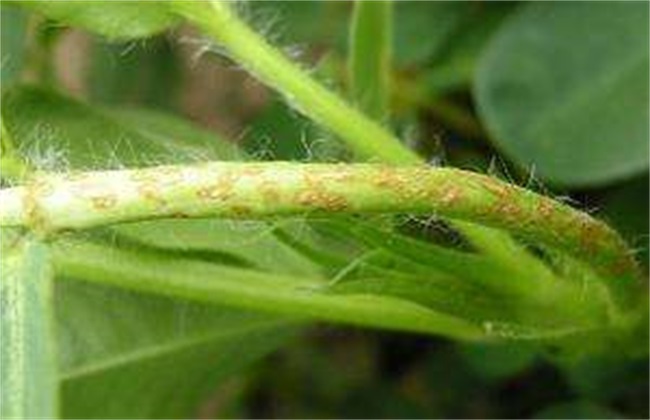
How to prevent and control peanut scab? Detailed explanation of control methods
How to prevent and control peanut scab
条件筛选