-

What are the seed selection and seedling raising methods for sand onion (Allium mongolicum)?
Sand onion is a wild vegetable found only in northwest China. It is a superior forage plant, with the characteristics of resistance to wind erosion, drought and poor soil, and it is now planted on a large scale in many areas. Sand onion is generally grown by sowing seeds, so how do you select the seeds? And how do you raise the seedlings? Below
-
How to cultivate sand onion (Allium mongolicum) artificially? Detailed greenhouse cultivation techniques
Summary Sowing: First disinfect the seeds, then sow them; July to October is the most suitable period. Temperature: A greenhouse temperature of around 10-25 degrees is favorable for its growth; the greenhouse also needs to be ventilated every day, and in the evening the curtains inside the greenhouse should be lowered. Management: Sand onion is a light-loving plant, so supplementary lighting must be done well. Fertilizing: Neither watering nor fertilizing should be excessive. Diseases and pests: Ants will attack sand onion, so precautions must be taken.
-
What kind of land is suitable for planting sand onion? Can sand onion be planted in the north?
Abstract In the desert, sandy land or dry hillsides at an altitude of about 800-2800 m in northwest China, sand onion is suitable for planting. Soil: sand onion generally grows in soil that is gravelly and relatively dry. Climate: sand onion needs to grow in the Gobi at an altitude above 800 m, and it likes a low-temperature environment. Water: it avoids overly moist soil and environments.
-
How many jin per mu is the yield of Allium mongolicum (sand onion), and is greenhouse cultivation profitable?
Abstract: Under conventional cultivation, the yield of Allium mongolicum per mu is generally around 2000 jin. Because of differences in the climate of the growing area, differences in soil type, differences in seed quality, and differences in that year's rainfall, the yield per mu will all be affected. Allium mongolicum is a magical plant on the grasslands of northwest China,
-
Growing Conditions for Sand Onion: What Soil Is Suitable for Planting Sand Onion
Summary: Sand onion often grows in deserts, sandy land or arid hillsides at an altitude of 800-2800 m. It is suitable for growing in a relatively dry environment, preferably in sandy soil. It is relatively drought-tolerant and can grow as long as the minimum temperature does not exceed 5°C. Sand onion is a
-
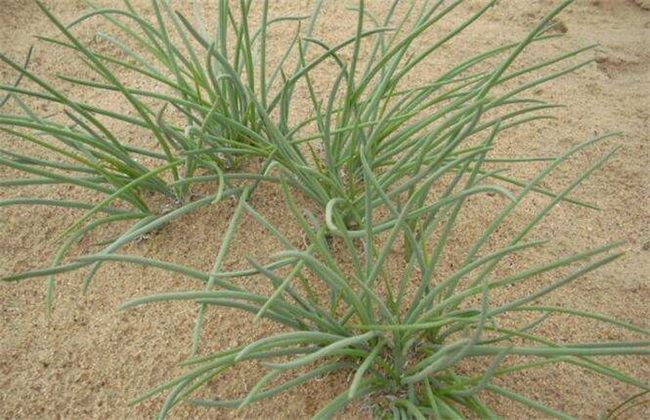
Detailed explanation of the key points of sand onion cultivation techniques, even beginners can learn
Key points of sand onion cultivation techniques
-
Small sand onion becomes a big industry, driving farmers and herders to increase income and become rich
Small sand onion, big industry drives farmers and herders to increase income
-
Under full-light cultivation of Schisandra chinensis, Welsh onion or Schisandra chinensis seedlings can be intercropped
To make full use of the land between the rows of cultivated Schisandra chinensis, before the Schisandra chinensis plants reach fruit-bearing at 4 years of age, intercropping Welsh onion or Schisandra chinensis seedlings can yield certain economic benefits to offset the costs of cultivating Schisandra chinensis. I. Planning 1. When Schisandra chinensis is cultivated with a row spacing of 1.5 m and a plant spacing of 0.5 m, the available inter-row land area per mu (667 sq m) of Schisandra chinensis orchard is as follows: for each mu (667 sq m) of land, estimated by a long side of 33 m and a short side of 20 m (660 sq m), with a row spacing of 1.5 m, 22 rows can be laid out, each 20 m long; at the early stage of cultivation, the horizontal spread of the Schisandra chinensis root system is not large, so the width of the Schisandra chinensis seedling belt can be kept at 80 cm (40 cm on each side), the usable inter-row width is 70 cm, leaving a ditch width of 10 cm on each side, and one ridge 50 cm wide can be formed, on which 2 rows of Welsh onion are planted, with a row spacing of 10-15 cm and a plant spacing of 10 cm. Based on this calculation, each inter-row space can plant 10 sq m of Welsh onion, and each mu of Schisandra chinensis orchard can plant 22 rows of Welsh onion, requiring 9,680 Welsh onion sets; each Welsh onion set is 1.5-2 cm in diameter, about 80 per jin, so about 120 jin of Welsh onion sets are needed, and the plantable Welsh onion area is 220 sq m.
条件筛选