-
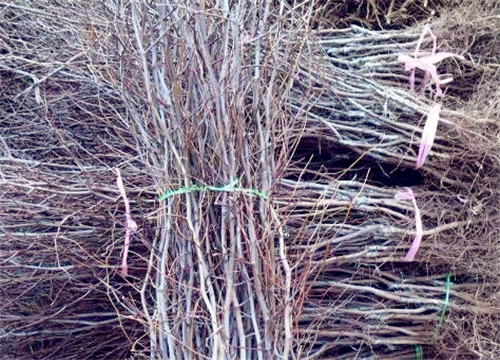
How much is the wholesale price of jujube tree saplings per plant? Remember 6 tricks to bear fruit in the same year of planting
In the past two years, the price of jujube has not been cheap, staying at around 10 yuan per jin; even as a seasonal fruit it sells for 8 yuan per jin, and out of season the price is even higher! And in these years the price has shown no downward trend. Therefore many fruit farmers have started planting jujube trees
-
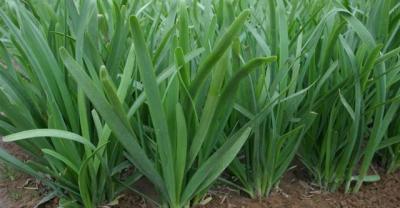
The same spinach cultivation, why are the harvests different?
Spinach is a cold-tolerant vegetable and a long-day plant. In northern China, there is also winter sowing with harvest the following spring, commonly known as "maitou spinach" (buried-head spinach). Below, let's learn about...
-
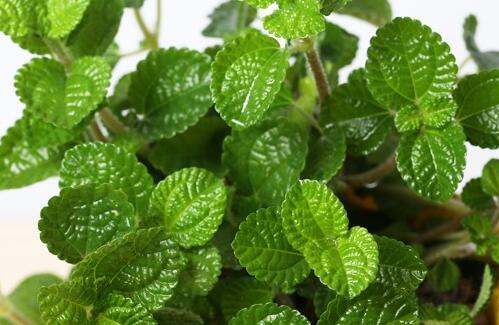
Lemon balm and mint are not the same plant; the difference between the two must be clearly distinguished
Lemon balm is a common indoor foliage plant, while mint is a plant that can be used as medicine. The two look similar, but there are still differences. Although the scientific name of lemon balm is wrinkled-leaf mint, it is not mint, and it differs from mint. The scientific name of lemon balm is lemon bee balm or wrinkled-leaf mint, with the aliases bee balm and bee flower
-
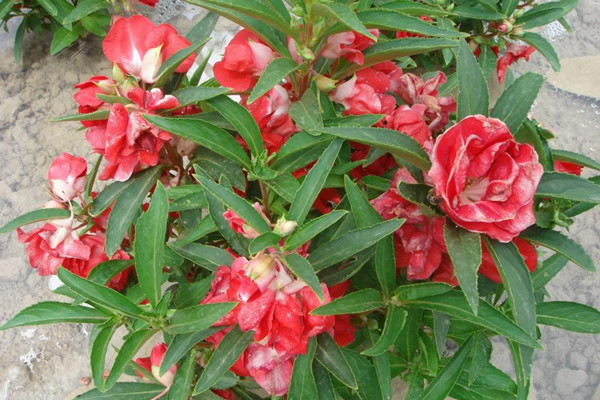
Is Camellia Impatiens the same as Impatiens? Detailed Guide to Growing It from Seed
Camellia Impatiens is something many people absolutely love; this Camellia Impatiens looks quite elegant and luxurious. How do you grow Camellia Impatiens from seed? Is Camellia Impatiens the same as Impatiens: How to grow Camellia Impatiens from seed: Light and temperature. Camellia Impatiens has fairly strong adaptability; when growing Camellia Impatiens
-
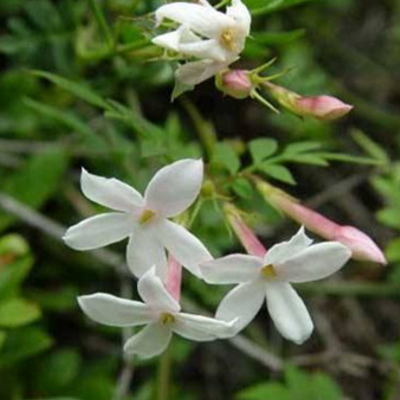
Is the cultivation method for Jasminum officinale the same as for jasmine?
Jasminum officinale, this is also a kind of plant, it grows really beautifully, blooming with small white flowers, so what is the cultivation method for Jasminum officinale? Is it the same as jasmine: Cultivation method for Jasminum officinale: Temperature, their requirements for temperature are still relatively high
-

Introduction to the black sesame variety Liaoyin Black Sesame No. 1
Liaoyin Black Sesame No. 1 (Ji 9014) is a superior new black sesame variety for both medicinal and culinary use, carefully bred and selected by the Crop Research Institute of the Liaoning Academy of Agricultural Sciences from 7 introduced candidate varieties. It offers the advantages of high quality, high yield, disease resistance, early maturity and wide adaptability, and is well favored by producers, distributors and consumers. It has passed expert appraisal and has been registered and filed with the Liaoning Provincial Seed Administration Bureau.
-
Key Production Techniques for Green Agricultural Product Sesame
1. Base selection: Within the surrounding area (within 2000 m) of the green agricultural product sesame production base there are no pollution sources; the atmospheric environment conforms to the air quality of a green food base; the farmland irrigation water quality conforms to the irrigation water quality standards of a green food base; and the farmland soil quality conforms to the environmental standards of a green food base. 2. Variety selection: Liaozhi No. 1, Liaozhi No. 2, Batongbai, etc. 3. Main cultivation techniques 3.1 Crop rotation and stubble change, sowing early at the right time to capture soil moisture. According to research, the root system of sesame can secrete a substance, and this secreted substance remains in the soil after the sesame harvest. It can promote the reproductive activity of certain soil microorganisms, thereby accelerating the decomposition of organic matter in the soil, increasing soil nutrients and improving soil fertility. At the same time, these microorganisms are beneficial to cereal crops but unfavorable to soybeans and sesame. If soybeans are planted after sesame or sesame is continuously cropped, the disease will be severe, especially in years with more rainfall, when the incidence of disease in sesame is even heavier, reaching about 50% in some years. Therefore, continuous cropping is avoided.
-
Key Techniques for High-Yield Cultivation of Dense-Capsule Sesame
Dense-capsule sesame Yizhi No. 1 is one of the higher-yielding types of sesame today. It is drought-tolerant and lodging-resistant, with extremely dense capsules, 3 to 7 capsules per leaf, layer upon layer so thick that the stems are hidden from view. The seeds are pure white, with an oil content of over 55%. The growth period is 110 days for spring sowing and 85 to 90 days for summer sowing. It yields 100 kg to 150 kg of sesame per 667 sq m, and up to 220 kg per 667 sq m in high-yield fields. 1. Land preparation and fertilization: Before plowing, apply 1000 kg of farmyard manure, 40 kg of superphosphate, and 10 kg of potassium sulfate or potassium chloride per 667 sq m
-
How to control field bindweed in sesame fields? Oxadiazon can control it
Liu Bengui from Shou County, Anhui Province, called to say that in recent years field bindweed has been severe in local sesame fields, and common herbicides cannot control it; he does not know which herbicide should be used to control this weed. According to relevant information, for chemical weed control in sesame fields, before sowing sesame, use 80-100 ml of 48% trifluralin emulsifiable concentrate per mu, or 50-70 g of 70% prometryn wettable powder, add water and spray evenly on the soil surface, then immediately incorporate into the soil to a depth of 3-5 cm; this can control annual grass weeds and some broadleaf
-
How to Ensure Full Seedling Emergence in Summer-Sown Sesame? Key Technical Points Explained
Ensuring full seedling emergence from a single sowing of summer sesame is an important measure for increasing summer sesame yields per unit area. However, during the summer sesame sowing period, temperatures are high and the weather is changeable. If drought occurs, seedlings are easily "baked to death," causing severe gaps in the stand; if heavy rain occurs, seedlings are easily "smothered to death," also causing gaps in the stand. It is recommended to use the double-layer sowing method to achieve full seedling emergence from a single sowing of summer sesame. For mechanized sowing, sow 0.7 kg per mu using a 24-row seeder, of which 12 rows sow at a deep layer with a depth of 3-4 cm, and the other 12 rows sow at a shallow layer with a depth of 0.2 cm, with two passes of compaction before and after sowing. For manual sowing, first
条件筛选