-

Detailed Explanation of Key Points of Yam Suspended Cultivation Technology
Abstract Land preparation and bed building: Loosen and rake flat the saline-alkali plot, then build beds. Making the casing: The casing includes a connector and a straight pipe. Making the substrate: The substrate is made by mixing and fermenting mushroom residue, clam shells, fermentation aids, etc. Placing the casing: Arrange the casings filled with substrate in the beds. Sowing yam
-
What are the planting conditions for seawater rice, which must be grown on saline-alkali land?
Summary Seawater rice needs to be planted on saline-alkali land. Its growth process does not require spraying pesticides, and its growing climate conditions are similar to those of rice. When planting, it needs to be irrigated with salt water at 6% salinity. It has drought resistance and waterlogging resistance, and can be planted on semi-desert inland saline soil, eastern coastal saline-alkali land
-
What crops are suitable for planting in saline-alkali soil? Salt-tolerant varieties recommended
Good land can grow good crops, but not all land is good. For example, saline-alkali soil makes it relatively difficult to grow crops, but there are still crops suitable for planting in saline-alkali soil. Below, the editor introduces for you what is suitable for planting in saline-alkali soil? 1. Baitiao (Nitraria)
-
Can the latest cosmos be planted in saline-alkali soil?
Cosmos is so named because it originated in Mexico and belongs to the Asteraceae family. After being introduced to China, it has always been called cosmos without change. As people gradually came to know this perennial herbaceous plant, especially its impressive ornamental
-
What are the technical measures for growing fruit trees on saline-alkali land?
Technical measures for growing fruit trees on saline-alkali land
-

Efficient Cultivation Techniques and Pest and Disease Control for Peonies in Saline-Alkali Areas
How to plant peonies? Many flower growers have recently been thinking about planting peonies, and below the Huinong website editor will explain how to plant peonies in saline-alkali areas? How to make peonies grow vigorously and bloom every year in saline-alkali soil
-
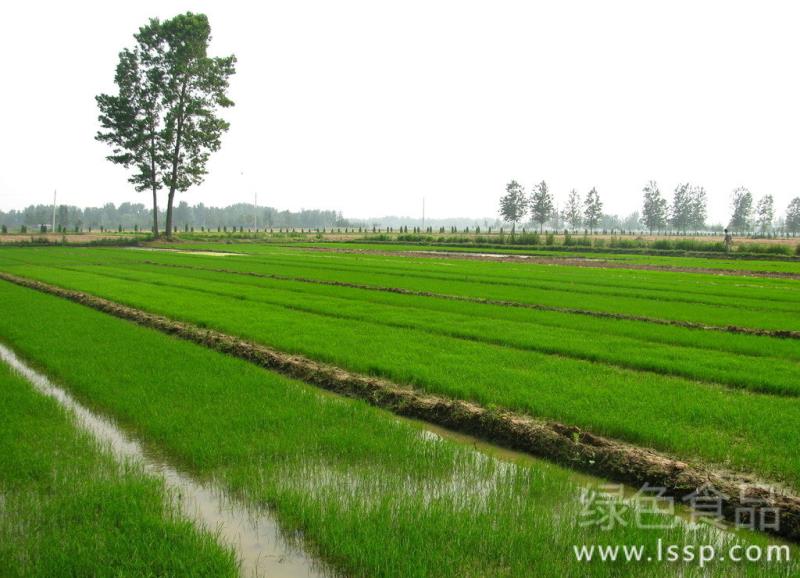
Detailed Explanation of Improvement Methods and Fertility-Building Measures for Saline-Alkali Paddy Fields
Improvement Methods and Fertility-Building Measures for Saline-Alkali Paddy Fields
-
Harlequin glorybower (Clerodendrum trichotomum) is salt- and alkali-tolerant and can grow in saline-alkali soil.
Harlequin glorybower, also known as stinking chun and paohuatong, is a landscape plant in the genus Clerodendrum, family Verbenaceae. It is native to East China, Central China and Northeast China, and has been introduced at horticultural centers in Beijing, Tianjin, Hebei, Shaanxi, North China and Yanqing. It mostly grows on hillsides, roadsides, stream banks and near villages. It is a deciduous shrub or small tree; young branches have short brown pubescence; leaves are simple and opposite, ovate, 5-16 cm long, apex acuminate, base mostly truncate, margin entire or wavy-toothed, nearly glabrous on both surfaces; petiole 2-8 cm; corymbose cymes borne at the top or in leaf axils; calyx purplish-red, five-lobed almost to the base.
-
Key Techniques for Water-Saving Cotton Cultivation in Semi-Arid Saline-Alkali Land
Cotton has always been an important economic crop, and continuously improving cotton yield and quality is of great significance for increasing agricultural efficiency and farmers' income. Over the years, through gradual exploration, a relatively complete set of cotton cultivation techniques for semi-arid saline-alkali land has been developed, achieving the goals of early maturity, high yield, and high quality in drought-resistant cotton planting. This has solved the problems of difficult emergence, difficult seedling retention, slow development, and late maturity when planting cotton in saline-alkali land due to lack of water resources. The cotton yield-increasing techniques for semi-arid saline-alkali land mainly include seed preparation, fertilization, chemical control, pruning, and other steps.
-
Key Techniques for High-Yield Cultivation of Honeysuckle (Lonicera japonica) in Saline-Alkali Soil
The Yellow River Delta is located in a warm temperate semi-humid region with a continental monsoon climate, and the climatic conditions are suitable for the growth of honeysuckle. In recent years, the honeysuckle planting area has gradually expanded, but due to the high degree of soil salinization and insufficient cultivation experience, honeysuckle production has been characterized by small scale, low yield, delayed returns, and severe pests and diseases. Through research on large-scale high-yield cultivation techniques for honeysuckle in saline-alkali soil, the results show that the goals of raising seedlings in the same year, transplanting in the same year, and harvesting flowers the following year can be fully achieved. After 3 years, the yield per mu (667 sq
条件筛选