-

Succulent plants in summer: controlling your hands and managing water well is key
Cause of death 1: High temperature and humidity In summer, plant deaths are mostly due to sunburn and bacterial infection. Many people say that in summer plants need shade to avoid sunburn, but this is not entirely true. Succulent plants grow in their native habitat on mountain...
-
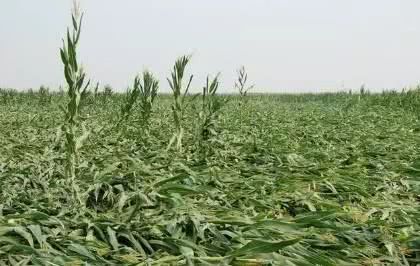
Corn lodging causes huge losses, so how can it be effectively prevented and controlled?
Generally speaking, lodging can be divided into root lodging and stem lodging. The former is related to cultivation measures and the environment, while the latter is more related to variety-specific characteristics. But no matter which type of lodging occurs, it causes huge losses to crop yield...
-
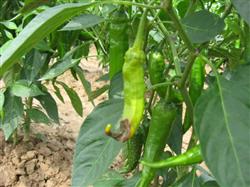
Detailed Explanation of Methods for Preventing and Controlling Blossom-End Rot in Summer Peppers
How to prevent and control blossom-end rot in summer peppers? Please introduce the methods. The symptoms of blossom-end rot in peppers are very similar to those of bacterial soft rot in peppers. Blossom-end rot in peppers mainly damages the fruit, initially appearing as dark green or dark gray water-soaked lesions, which then expand into lesions that can reach 2-3 cm in diameter. As the fruit develops, the diseased area becomes grayish brown or white...
-

What diseases need to be prevented and controlled in the cultivation of yardlong beans?
What diseases need to be prevented and controlled in the yardlong beans being grown? Please give an introduction. The main diseases of cultivated yardlong beans are as follows: 1. Identification and control of cercospora leaf spot. 1. Symptoms: It mainly damages leaves, stems and vines, and pods. In the early stage of the disease, purple-brown spots appear on both sides of the leaves. After they expand, they become nearly round dark brown lesions, 1~2 cm in diameter...
-
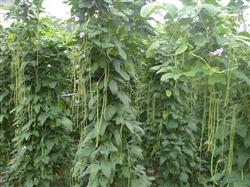
What are the methods for controlling cowpea rust in autumn?
How do you control rust when growing cowpeas in autumn? Here is an introduction to the control methods. The growing environment for autumn-planted cowpeas has high temperatures and relatively high rainfall, and in addition the inoculum (urediniospores) left behind in the field from spring-planted cowpeas is abundant. Therefore, autumn-planted cowpeas are prone to rust, and farmers should carry out integrated control early. 1. Main symptoms: the whole...
-
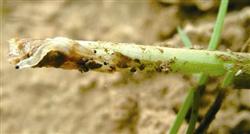
What pests and diseases should be prevented and controlled when growing chives in summer?
What pests and diseases should be prevented and controlled when growing chives in summer? Please explain. Chives should have the following two pests and diseases prevented and controlled in summer: prevent and control Fusarium wilt. In summer and autumn, high temperatures, or hot sun exposure after rain, make Fusarium wilt prone to occur. The symptoms are water-scalded lesions near the ground, and in severe cases the whole plant dies. In terms of management, pay attention to...
-
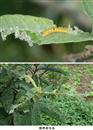
What are the methods for controlling pests and diseases of loquat?
What pests and diseases need to be controlled when growing loquat? Please provide an introduction and control methods. The pests and diseases that need to be controlled when growing loquat are: 1. Flower cluster rot. There are many causes of loquat flower cluster rot, but they are mainly due to two aspects: harmful organisms and climate. During the loquat flowering period (September-November), continuous autumn rain and high humidity accelerate the occurrence of flower cluster rot. Especially in the mid-to-late flowering period, the flower axis turns brown, soft and rotten, appearing mushy. When the diseased part is squeezed by hand, a viscous liquid flows out, and in the later stage the flower axis shrinks, dries up and appears wilted.
-
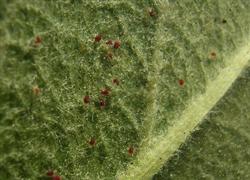
What are the methods for controlling summer mites on apple trees?
How to control mites on apple trees in summer? Please learn about the damage caused by summer mites on apple trees: I. Damage symptoms 1. Hawthorn spider mite. Also known as the hawthorn red spider, it mainly damages the leaves, tender buds and young fruit of apple trees. When leaves are damaged, the red spiders gather on the underside of the leaves, spin silk and form webs, with fine soil particles and eggs sticking to the webs, and many pale white spots appear on the upper surface of the leaves. When the damage is severe, rust-colored symptoms appear on the underside of the leaves, followed by dehydration and hardening, and the whole leaf turns yellow-brown and scorched, resembling being burned by fire. In severely affected orchards, most leaves may drop between June and July, causing a second round of flowering and budding, and severely damaged buds cannot continue to grow and die.
-
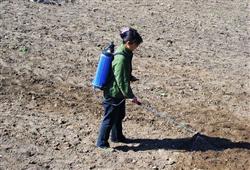
How can weeds be controlled effectively after sowing summer corn?
What is the best way to control weeds after sowing summer corn? Please give an introduction. Summer corn is generally sown in early June. During this period, temperatures are relatively high, and weeds grow quickly. Generally, 10 days after sowing, the peak of emergence is reached, and after 15 days, the number of emerged weeds can reach 90% of the total. Because corn plants are small during the seedling stage, they are vulnerable to weed damage. If not controlled in time, it can very easily...
-
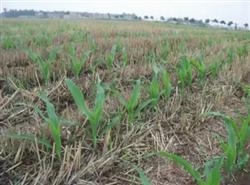
What are the methods for controlling pests and diseases in summer corn at the seedling stage
Which pests and diseases need to be controlled in summer corn at the seedling stage? Please introduce the control methods. The following pests and diseases need to be controlled in summer corn at the seedling stage: 1. Seedling-stage pest control. The main pests at the corn seedling stage are: armyworm, cotton bollworm, small brown planthopper, thrips, Swedish fly, etc. To control armyworm and cotton bollworm, 5% beta-cypermethrin or 2.5% cyhalothrin 50-75 g/mu can be used, sprayed with 30 kg of water. For the control of Swedish fly, when corn has just emerged (i.e. one leaf and one heart), spray 15% beta-cypermethrin·chlorpyrifos emulsifiable concentrate 50 mL per mu. If damaged plants appear in the field, those with severe damage should be pulled out promptly, and for lightly damaged ring-shaped plants, the tip of the plant should be cut off. To control the grain mealybug, use 50% phoxim emulsifiable concentrate 500-1000 mL/mu or 48% Lesiben emulsifiable concentrate 200-400 mL/mu for root drenching.
条件筛选