-
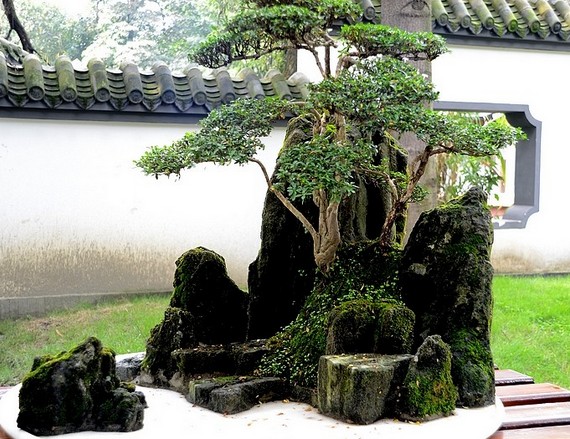
Why is the Sichuan-style bonsai rooted in the mountains and rivers of Sichuan?
Sichuan-style bonsai is one of the five major schools of traditional Chinese bonsai, deeply rooted in the majestic and beautiful mountains and rivers of Sichuan. The bonsai-making techniques represented by the Chengdu region are the foundation and core of Sichuan-style bonsai-making techniques. Sichuan-style bonsai has a long history, profound cultural heritage, exquisite craftsmanship, and strong local characteristics.
-

Detailed explanation of the steps for making a landscape bonsai, creating the "Fishing Alone in the Cold River Snow" scene
A landscape bonsai can be set up outdoors for viewing or placed indoors for appreciation, but before making it we must first clarify what theme the creation is meant to express, then conceive it according to the preliminary artistic effect, and then choose materials such as stones, plants, and even accessories
-
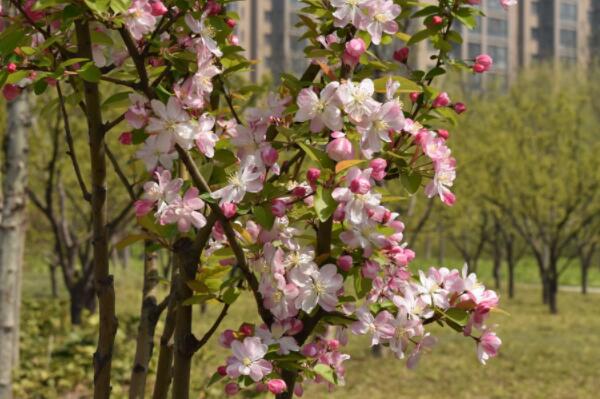
How much does a Malus spectabilis 'Riversii' sapling cost? Blooming period, cultivation techniques and bonsai introduction
Malus spectabilis 'Riversii' is a plant in the Rosaceae family, Malus genus, a small tree reaching 2.5-5 m tall, with strong upright branches, and is endemic to China. How much does a Malus spectabilis 'Riversii' sapling cost? When does it bloom? What are its cultivation techniques? How do you care for a bonsai? According to Rosaceae records
-

Taro enters harvest season, vegetable farmers on the west bank of the Wei River rush to harvest
Xiangzhou Town in Zhucheng City, located on the west bank of the Wei River, has a tradition of vegetable cultivation all year round. This is a vegetable farmer at the vegetable base rushing to harvest the planted taro. According to the vegetable...
-

How to control cotton aphids? Detailed control measures for the Yellow River basin
Aphids, also called greasy bugs or honey bugs, are one of the main pests on cotton in our country. The cotton aphids that damage cotton fields are divided into seedling aphids and summer aphids. Seedling aphids occur from emergence to before squaring, prefer lower temperatures, and when the temperature exceeds 27°C their reproduction is inhibited and the population drops rapidly; the aphids that commonly occur from early July to mid-August are called "summer aphids." When the 3-day average temperature is 24-28°C and the relative humidity is 55%-85%, it favors the multiplication of "summer aphids"; weather that alternates between sunny and rainy is most suitable for "summer aphids" to reproduce; continuous rainy
-
Camellia uraku is a top choice for evergreen trees that bloom in winter in the green spaces of the Yangtze River Delta region
Camellia uraku, of the family Theaceae and the genus Camellia. An evergreen small tree. The plant can reach 5 m in height. The leaves are glossy, the flowers are single-petaled and pink, and the flowering period runs from December to March of the following year. Plants of the genus Camellia mostly prefer acidic soil, so when planting camellias in Shanghai, the soil often has to be replaced with acid soil such as hill soil. Camellia uraku is highly adaptable to the slightly alkaline soil of Shanghai, growing and flowering well, and is worth promoting.
条件筛选