-
When does Cymbidium goeringii produce flower buds|How to make the flower scape grow taller
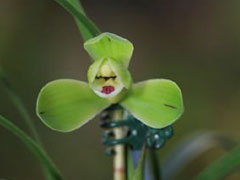
Many novice orchid growers are very eager for blooms, so quite a few are searching for when Cymbidium goeringii produces flower buds. Generally, Cymbidium goeringii begins flower bud differentiation in May and June after the new shoots grow, and by September and October the flower buds have formed and break through the soil, which means the flower buds can be seen....
-

How to water orchids in summer? Mastering the correct method is key
Sanyun has read quite a few posts about whether to water in the evening or in the morning in summer. Some say morning, some say evening; each side holds its own view, and both make sense. To sum it up, you should not water in summer when the potting soil is too hot. So in the past, as far as I was concerned, there was no difference between watering in the morning and watering in the evening. Personal habit...
-
Introduction and Main Characteristics of the Cymbidium goeringii 'Mitang Mei' Variety
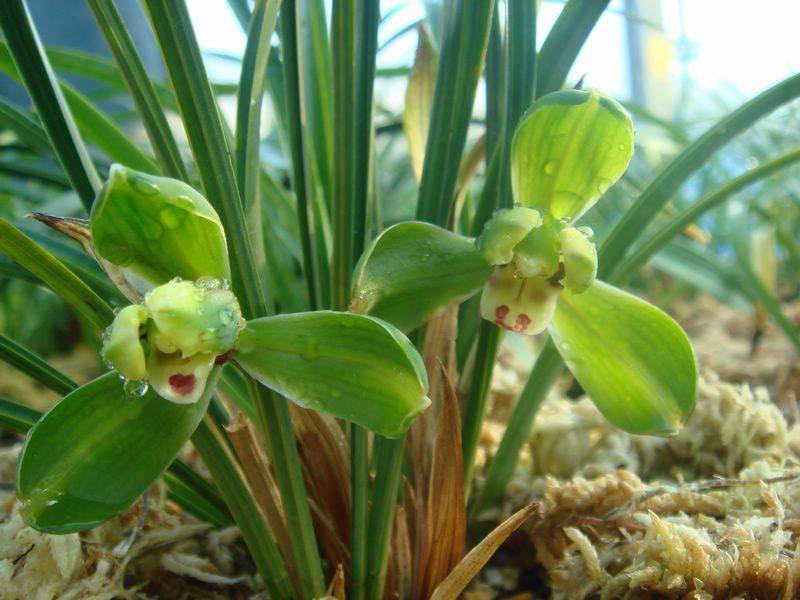
A new plum-petal flower discovered in Hunan in 2005, first exhibited at the Anhui Hefei Orchid Exhibition in 2008, and appeared again at the Zhejiang Orchid Exhibition in 2009! The Cymbidium goeringii from Yongzhou has a taller plant type than those from Jiangsu and Zhejiang, relatively more rugged and graceful. In the spring of 2006, the predecessor of this Cymbidium goeringii, 'Mitang Mei', was found by an old farmer, at that time 3 seedlings with a few old pseudobulbs...
-
Many people get orchid watering habits backwards
For so many years, Lao Luo, influenced by orchid-growing ideas learned through various channels, has gone back and forth many times on the issue of watering, always obsessing over whether to water heavily or lightly, and even foolishly summing up some care creeds about what happens with heavy watering and what happens with light watering. But in the past two years, especially last year, the plants were grown very poorly, and it could be described as being burnt...
-
Orchid watering has its finer points: understanding orchid watering methods in one article
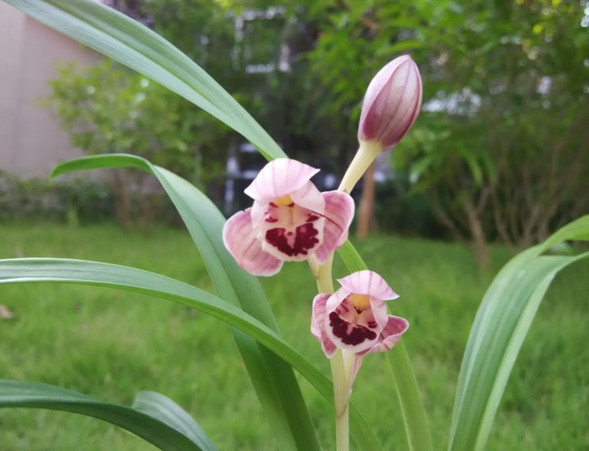
It is a half-sibling of Hongyue, sharing the same mother, which is Shizhang Hong, just like Hongyue; as for who the father is, you would have to ask the person who did the pollination.
-
An introduction to the characteristics of the Chunlan (Cymbidium goeringii) cultivar Sheng'an Mei
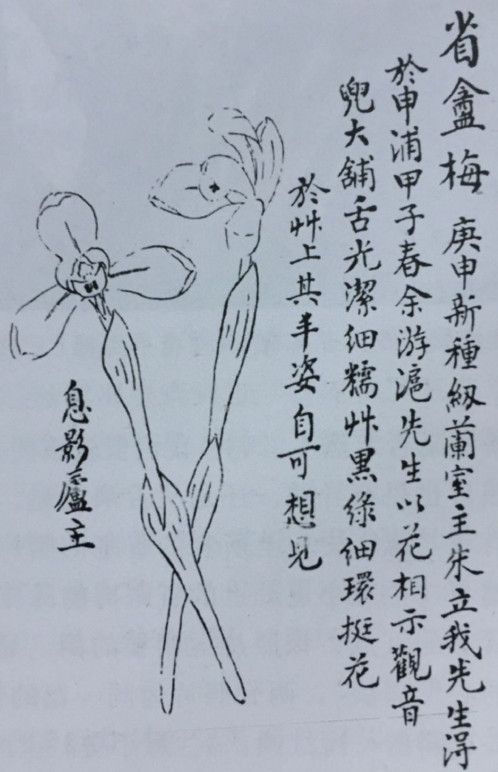
"A Brief History of Orchids and Huis": "In the Gengshen year of the Republic of China, a new variety obtained by Zhu Sheng'an of Shanghai. The three petals have large heads and fine taper, tightly rolled edges, thick flesh, a large and round lip, level shoulders, and a long stem; if the color could be pure green, it could be called absolutely perfect." A single black-and-white photograph remains. "Continued Record of Orchid and Hui Harmony": "Sheng'an Mei, a new variety of the Gengshen year. Mr. Zhu Liwo, master of the Renlan Studio, obtained it at Shenpu...
-
How do the fragrances of Cymbidium goeringii (spring orchid) from different regions differ?
There are indeed some small differences among Cymbidium goeringii varieties from different regions. Jiangsu and Zhejiang spring orchids generally have paler petal colors, with more of them having purple veins on the bud sheaths; spring orchids from Hubei, Henan, Shaanxi and Anhui are the same, mainly with deeper petal colors and more white bud sheaths; spring orchids from Sichuan, Guizhou and Yunnan come in two types: one with thinner petals and even thinner bud sheaths, and the other with thick petals known as douban. Among these four types of spring orchids, the thin-petaled spring orchids from Yunnan, Guizhou and Sichuan are the most fragrant and the most mellow; next come the Jiangsu and Zhejiang spring orchids; among the spring orchids from Hubei, Henan, Shaanxi and Anhui, those with noticeably strong fragrance are the Anhui spring orchids and the more southerly Hubei spring orchids, whose fragrance differs little from that of Jiangsu and Zhejiang spring orchids, and some are also very fragrant, but on the whole their fragrance is a little lighter than that of Jiangsu and Zhejiang spring orchids. Whether Anhui and Hubei spring orchids are fragrant also depends on temperature and moisture during the flowering period; here the temperature during the flowering period of spring orchids is lower, which is not conducive to the volatilization of the aromatic oils, so it is not entirely a matter of the spring orchid itself. Douban spring orchids are generally not fragrant. The spring orchids of southwestern Hubei, namely the Enshi region, belong to the same strain as those of Yunnan, Guizhou and Sichuan, and are very fragrant and mellow. This also reflects the geographical complexity of Hubei and the diversity of orchids.
-
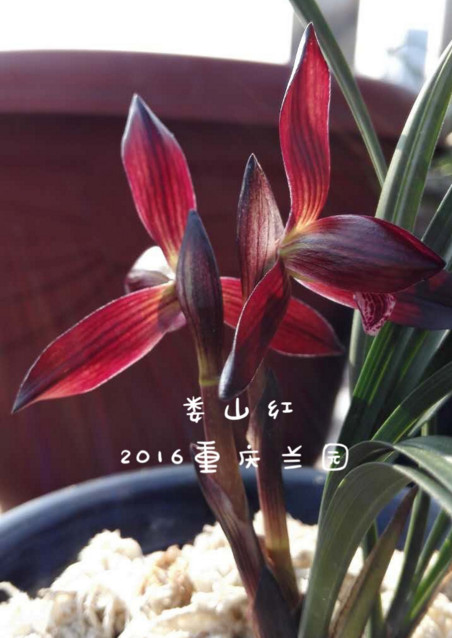
Introduction to the Characteristics and Care Methods of the Loushan Red Cymbidium goeringii Variety
It was discovered in the wild at Loushan Pass in Zunyi, Guizhou, so it is named Loushan Red. Its red petals are deep red, without any showy flamboyance; it looks plain, quiet, noble and elegant. Its stability remains to be verified, and whether the pictures match the actual flowers also needs consideration!
-
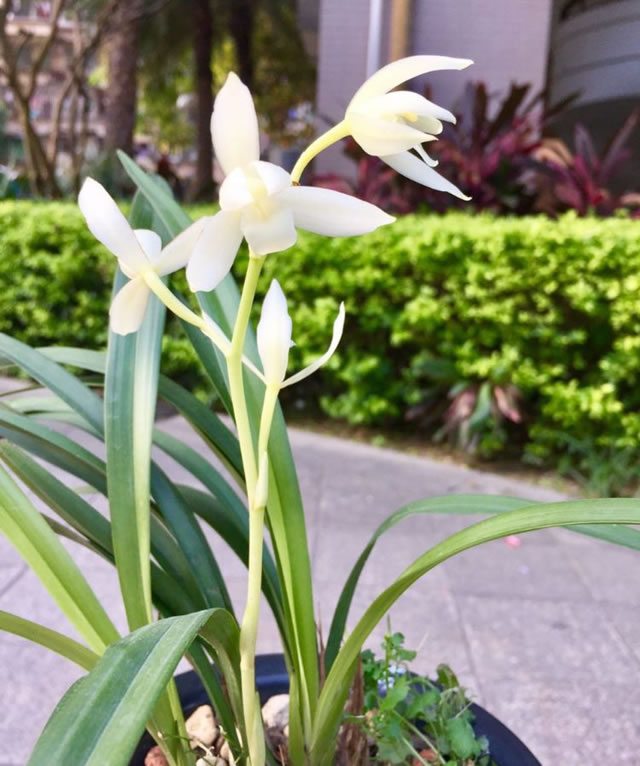
What are the key points of dividing Cymbidium faberi? Sharing my experience
Rosa Baiyusu has a moderate plant type (similar to Datang Gongfen), large flowers (one size larger than ordinary Four Seasons Orchid), white plain, lotus type, thick petals, does not turn its petals when open for a long time, and the tongue hangs down without curling back when open for a long time. White plain, large flowers, flower diameter about 4.5CM. After Mr. Huang Zhixiong divided several leafless old pseudobulbs from this plain, the 1234 structure (4 shoots) was collected by Qiuxin...
-
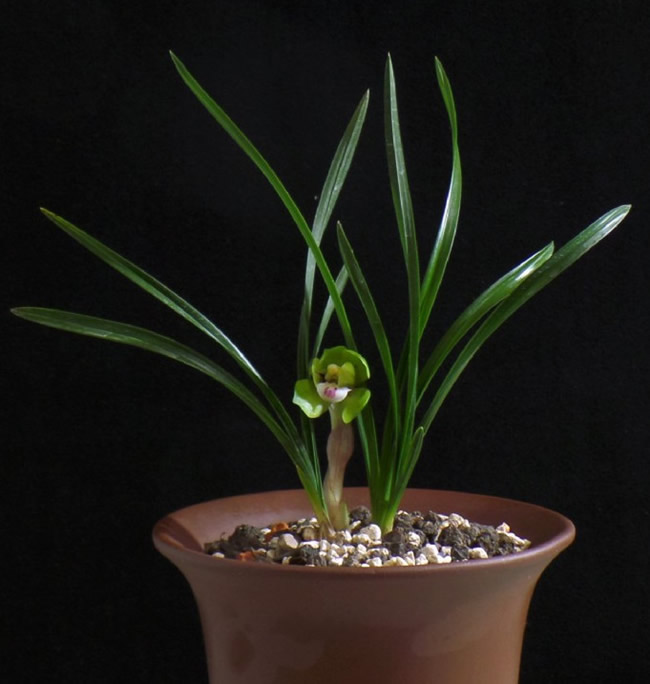
Cymbidium goeringii 'Lüyun': True or False Identification, Latest Prices, and How Many Years Until It Blooms Explained
Jingbo himself has around 70 pots of Lüyun, with more than 150 heads. This year, 3 pots produced double dragon shoots, giving a probability of 4.3% for double dragon shoots. Two pots produced autumn shoots, giving a probability of 2.9% for autumn shoots. Both pots that produced autumn shoots were cases where the shoots emerged from the soil last autumn, and one of them was a Tongxin tissue-cultured Lüyun. 1. The history of starter seedlings reigning supreme may be coming to an end...
条件筛选