-
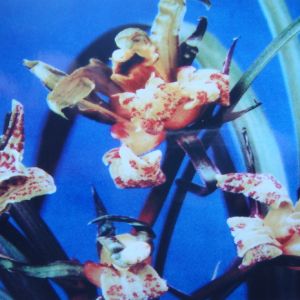
Premium red peony orchid blooms in late spring, the perfect time for spring flower viewing
This orchid is a new wild-collected variety, has rebloomed many times, and blooms stably. It is the only multi-tongued red peony among the late spring varieties. The flowers are strongly fragrant. When the flowers open well, each one usually has five to eight tongues. The flowers stand above the leaves, with five to eight blooms per flower spike, and the quantity is very small.
-
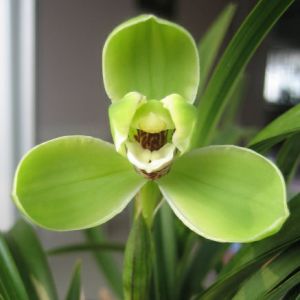
Is the Songmei orchid easy to grow? Characteristics, price and flowering process explained
In his book "300 Questions on Chinese Orchid Art", Mr. Ding Yongkang's assessment of Songmei is: for over 200 years, no single variety in plum-petal orchid art has surpassed her, and these words are truly not false. She, with her rich and delicate fragrance and unmatched elegance, embodies the essence of Chinese orchid culture, carrying people's pursuit of perfection, purity and ideals, and is precisely the representative of the orchid as a symbol of personality...
-
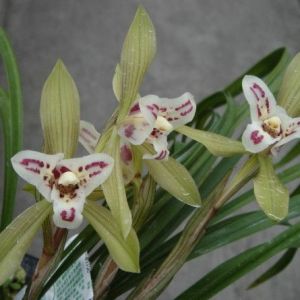
Introduction to the Characteristics of the Qianlong Ruidie Cymbidium goeringii Variety
Qianlong Ruidie - discovered in the mountains of Qianjiang, Chongqing a few years ago, a very beautiful new wild-collected ruidie (stamen-petal butterfly) cultivar. Cymbidium goeringii three-star butterfly Qianlong Ruidie, discovered in the mountains of Qianjiang, Chongqing, has won awards at multiple orchid exhibitions.
-
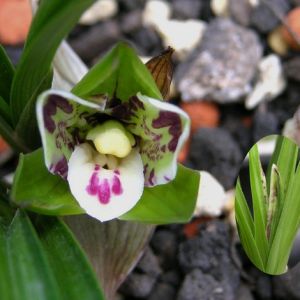
Introduction to the Cymbidium goeringii cultivar 'Zhonghua Shuangjiao' (Zhonghua Shuangjiao)
Cymbidium goeringii 'Zhonghua Shuangjiao': a premium rui-die (staminal petal butterfly) variety discovered in Zhoushan, Zhejiang. A new flower discovered in Zhoushan, Zhejiang in 2004, bearing lotus-petal rui-die flowers, selected by orchid enthusiast Lü Deyun. It won the gold award at the 2008 National Orchid Exhibition; selected by orchid enthusiast Lü Deyun. Gold award at the 2008 National Orchid Exhibition, the most beautiful leaf butterfly among Cymbidium goeringii, a legend of seedling prices in the hundreds of thousands in 2006.
-
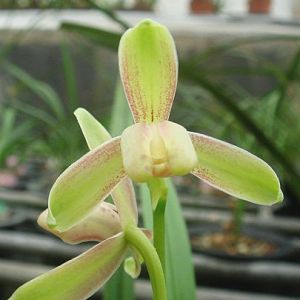
Detailed Explanation of the Root-Drying Method for Orchids During Introduction and Repotting
A New Cymbidium Variety: Hetang Xianzi
-
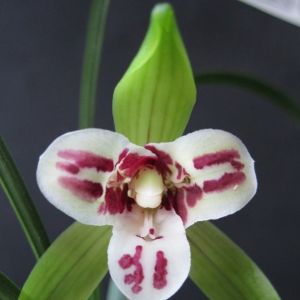
Introduction to the Characteristics and Care Methods of the Honghe Die Cymbidium goeringii Variety
Honghe Die, originating from Zhoushan, Zhejiang, has an elegant grass-like form, large and brightly colored flowers, and symmetrical butterfly-like transformations. The overall beauty of the flowers and leaves is excellent, a marvel of nature's exquisite craftsmanship! It won the gold award at the 2011 Zhejiang Province Cymbidium goeringii Exhibition!
-
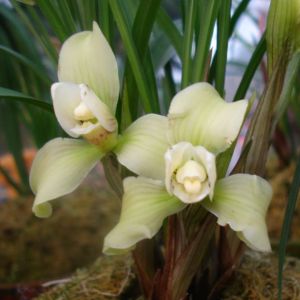
Cymbidium goeringii 'Yujie Mei' (also known as Yu'e) cultivar introduction
New Cymbidium goeringii cultivar Yujie Mei Yu'e (also known as: Yujie Mei)
-
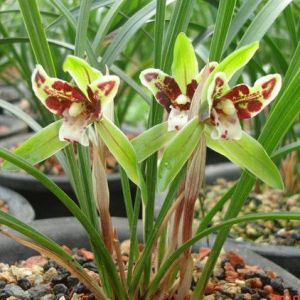
Introduction and Appreciation of the Cixi Ruibian Cymbidium goeringii Variety
Cixi nestles against the mountains and the sea. The mountains are an offshoot of the Siming Mountains, once rich in orchids and cymbidiums; the sea is the East China Sea, facing the Zhoushan Archipelago. After the orchid capsules of Cixi split open, thousands upon thousands of orchid seeds rode the wind east across the sea to the islands and multiplied there, which is why today Zhoushan has produced so many fine flowers! (Just a playful tale?) Historically, the tradition of growing and appreciating orchids in Cixi was far less developed than in Yuyang, Shaoxing and other places that were also production areas...
-

What is the difference between Cymbidium tortisepalum and Cymbidium goeringii var. longibracteatum?
You cannot distinguish them by leaf width. Neither has a leaf stalk scar. Both have broad-leaf and narrow-leaf varieties. Both bloom with multiple flowers. Both have a very good fragrance. The germination rate of Cymbidium tortisepalum is much higher than that of Cymbidium goeringii var. longibracteatum. Most of its flower colors are more vibrant than those of Cymbidium goeringii var. longibracteatum. The root system of Cymbidium tortisepalum is more developed than that of Cymbidium goeringii var. longibracteatum. The leaves of Cymbidium goeringii var. longibracteatum are relatively rough. Those of Cymbidium tortisepalum are more delicate. There are many other differences as well. Once you have seen enough of them, they become obvious at a glance....
-
How to care for orchids in spring? A full breakdown of the key cultivation points
Water. In spring, avoid "wet" - "moist" is enough! For my orchids grown in granular medium, a thorough watering once every 4-5 days; those grown in New Zealand peat moss generally get watered about once every 5-8 days! After watering, please use a fan to dry the leaf surfaces, so as to eliminate water standing on the leaves breeding bacteria and water pooling in the hearts of new shoots! Choose a late afternoon with moderate temperatures and plenty of sunlight to water...
条件筛选