-

What are the control methods for potato ring rot?
Ring rot is caused by the bacterium Corynebacterium sepedonicum (potato ring rot corynebacterium). It can occur on stems and leaves as well as on tubers, and can continue to cause damage during storage, causing tuber rot in severe cases. In recent years, with the promotion and application of virus-free seed potatoes, the occurrence of ring rot has decreased significantly. 1. Symptoms Ring rot is also a vascular bundle disease. Aboveground symptoms generally appear after the flowering stage. Initial symptoms appear on the lower leaves of the plant, showing chlorosis between the veins, appearing mottled
-
Symptoms and control methods of potato ring rot
This disease is a bacterial vascular disease, characterized by stunted and wilted aboveground stems and leaves, and ring-shaped rot of underground tubers along the vascular ring. Early and severe infection leads to dead seedlings; most diseased plants grow slowly, are stunted and thin with few branches and small leaves, and the leaves are wrinkled and do not expand; when infection occurs late and is mild, plant height, leaves, and branching grow normally, but the top leaves become smaller, and later one or two branches or the whole plant wilt. Symptoms are most obvious after flowering, with the lower leaves first wilting, drooping, and dying; the upper leaves roll inward from the edges, appear dehydrated, turn grayish green, and then
-
How to prevent and control ring rot in potatoes before sowing?
Potato ring rot is a common disease, but because the symptoms on the tuber, especially the external symptoms, are not obvious, it easily causes infection during seed cutting; and as the disease develops during storage, the tubers often rot in large quantities, resulting in abundant sources of inoculum. The following situations often occur in production: seed potatoes rot during sprouting; no seedlings emerge after sowing; seedlings die after emergence; diseased plants form, with few tubers set and small tubers, and seed potatoes rot away, causing serious gaps in the rows. This disease is a bacterial disease, survives only a short time in the soil, mainly overwinters in the tubers, and can spread over long distances with diseased potatoes, making it a seed-borne disease
-
How to control potato ring rot? Key points of control techniques in high-altitude cold regions
Potato ring rot is extremely widespread, occurring in almost all areas where potatoes are cultivated, and is especially severe in the Northeast region, where it can reduce potato yields by 20%-30%. It is a very serious bacterial disease that not only affects potato yield but also affects potato quality, with poor edibility, causing serious economic losses to agricultural production. Therefore, management should be strengthened and timely prevention should be carried out. 1 Distribution and harm Potato ring rot occurs in Asia, Europe, North America, South America and other regions, and in China it is found throughout the country
-
After spring tea is picked, the tea plant branches and stems need even more protection
Whether or not tea plants are managed after the spring tea harvest makes a big difference, because after the spring tea harvest the plant body has already consumed a large amount of nutrients. If management cannot keep up at this time, it will not only affect the yield and quality of summer and autumn tea, but also affect the yield and quality of next year's spring tea. Based on our farm's practical experience, the following key points should be carried out after the spring tea harvest: 1. Reasonable topdressing. According to measurements, producing every 50 kg of dry tea requires absorbing about 2.5-3 kg of nitrogen, 0.9-1.2 kg of phosphorus, and 1.1-1.5 kg of potassium from the soil. Between the tea plants, 30 cm
-
When is the covering time for protected cultivation of apricots?
For most apricot varieties, they must undergo a low-temperature period of 700-1000 hours below 7.2°C to break dormancy. Therefore, protected cultivation must raise the temperature only after the apricot's chilling requirement has been met, for success to be possible. If the temperature is raised too early, the apricot trees cannot sprout and bloom normally, and in severe cases it will cause a large number of flower buds to drop, uneven flowering, and severe flower and fruit drop. The timing of temperature increase should also be carefully decided based on the variety's chilling requirement and weather conditions. 1. Covering time for plastic greenhouses: Plastic greenhouses have poor insulation performance, so apricot trees must pass dormancy under natural conditions. The suitable covering time is generally from late January to early February, and the covering time is the temperature-raising time. If the weather is abnormal, such as a warm winter, the covering time should be appropriately delayed. For plastic greenhouses, ground film should be applied 15-20 days before covering to allow the soil temperature to rise slowly.
-
How to prevent and control anthracnose and ring rot in golden privet
During the rainy season, black spots appear on the leaves and they drop rapidly. How should this be prevented and controlled? Reply: 1. To prevent and control anthracnose: 1:1:200 Bordeaux mixture. 2. Thin out excessive spring shoots, following the principle of removing one out of three and two out of five. 3. Spray fungicides such as carbendazim for prevention and control.
-
How to overwinter figs: reduce watering, provide appropriate light, and pay attention to frost protection
The fig is a highly ornamental plant, and people grow it in many regions of our country. However, like many plants, winter is also the most difficult season for figs. So how can figs overwinter more safely? There is a detailed introduction below. Now the editor will walk you through it.
-
-
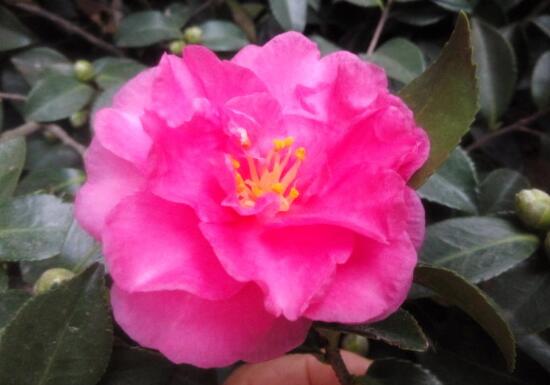
What to Do When Camellia sasanqua Loses All Its Leaves? Frequent Watering, Frost Protection, and Pest and Disease Control Are Key
Camellia sasanqua, which many people should recognize, combines the merits of camellia and beauty, making it a very beautiful flower. However, because many people do not follow the proper cultivation methods for Camellia sasanqua, various problems arise, such as yellowing leaves and leaf drop. So what should you do when Camellia sasanqua loses all its leaves?
条件筛选