-
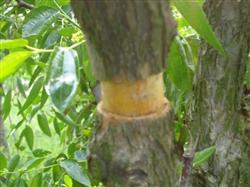
How to Preserve Flowers and Fruits on Jujube Trees? A Detailed Guide to Practical Management Techniques
How to preserve flowers and fruits on jujube trees? Please provide guidance on methods. Jujube trees generally have a high self-fruitfulness rate and do not need pollinator trees, but they suffer from severe flower and fruit drop and low yields, so management should be strengthened during the flowering and fruiting period. For detailed methods, refer to the following list: 1. Trunk girdling. At a distance of 10-20 cm from the ground on the trunk...
-

-

Preserved Apricot
1. Raw material selection: Choose green apricots with a diameter of more than 2 cm, whose flesh is turning white and whose pits have hardened (i.e. 50-60% ripe). Varieties with thick flesh and small pits should be used, and windfallen, defective, red-haired, scarred, over-unripe, overripe or rotten apricots should be discarded. 2. Making the base: Rinse the selected fresh apricots clean with clear water, then add 12-16% salt. While the rinsed green apricots are still not dry, preserve the green apricots by sprinkling salt in layers. After preserving for 7-10 days, take them out and sun-dry them; once dried, the apricot base is ready.
-
How to Store and Preserve Fresh Peaches? Practical Methods Shared
1. Cold storage. Peaches are prone to chilling injury during low-temperature storage, and there is a risk of freezing at -1°C. Therefore, the suitable storage temperature for peaches is 0°C, and the suitable relative humidity is 90%-95%. Under these storage conditions, peaches can be stored for 3-4 weeks or longer. However, when peaches are stored at low temperature for a long time, the flavor gradually becomes bland, and long-term cold storage can cause chilling injury to the peaches, with the flesh turning brown. In particular, when the peaches are moved to a high-temperature environment for ripening, the flesh becomes dry, mealy, and soft, and the flesh around the pit turns noticeably brown. In cold storage, using
-
Preserved Jujube
Preserved jujube belongs to the category of preserved fruits. It has a well-balanced flavor blending sugar, acid, spices and salt, tasting sweet and sour, with a rich aroma and a long-lasting aftertaste. Process flow: material selection → peeling → salting → desalting → sugar soaking → drying → packaging. Main technical points: ① Material selection. Choose varieties with large fruit, small pits and thick flesh; remove diseased, insect-damaged and bruised fruit; grade into 3 grades: large, medium and small. ② Peeling. Pour fresh jujubes into a boiling 5% sodium hydroxide solution, boil for about 30 seconds, remove,
-
How to Store and Preserve Fresh Peaches? A Detailed Guide to Practical Techniques
I. Cold storage. Peaches are prone to cold injury during low-temperature storage, and there is a risk of freezing at -1°C. Therefore, the suitable storage temperature for peaches is 0°C, and the suitable relative humidity is 90%-95%. Under these storage conditions, peaches can be stored for 3-4 weeks or longer. However, when peaches are stored at low temperature for a long time, the flavor gradually becomes bland. Long-term low-temperature cold storage will cause cold injury to the peaches, with browning of the flesh. In particular, when the peaches are moved to a high-temperature environment for ripening, the flesh becomes dry, mealy, and soft, and the flesh around the pit clearly
-
Detailed Processing Technology for Wild Apricot Preserves Stuffed with Almonds
(1) Process flow: Raw material selection → washing, soaking → sulfur fumigation → sugar boiling → sugar steeping → baking → shaping and almond stuffing → packaging → finished product (2) Explanation of key operation points (1) Raw material selection: Choose dried wild apricots with thick flesh, large size, low fiber content, slight browning, and free from mold and insect damage as raw materials. For almonds, whole, large, and plump kernels are preferred. (2) Washing and soaking: Thoroughly wash the selected dried wild apricots and almonds with clean water, then soak for 30 minutes.
-
Detailed Explanation of the Processing Method and Production Steps of Apricot Preserves
(l) Main raw materials (calculated for producing 100 jin of finished product): 350-360 jin of apricots, 60-65 jin of granulated sugar. (2) Material selection and pre-processing. The fruit used for producing apricot preserves should be golden yellow in color, easy to separate from the pit, fine-textured, resilient, storable, and should not become soft and mealy after ripening; it should be whole, unblemished fruit free from pests and diseases. In production, "Tiebada" and "Shanhuangxing" are generally considered ideal. After harvesting, crack the fruit open along the suture line, remove the pits and wash clean. However, for green apricots used to produce green plum-style products, they should be soaked in 15% salt water for 3 days,
-
How is carambola preserved? A detailed guide to the production method
This product is a preserved fruit and candied fruit food made from fresh raw materials. The processing technique is as follows: 1. Raw material preparation: After washing the fresh carambola, remove the ridges and cut lengthwise with a knife into 2-5 long strips. 2. Hardening and color protection: Use alum or calcium oxide as the hardening agent. If alum is used, 0.5% is needed, and the color-protecting agent is 0.1% sodium bisulfite. Mix the two additives together and soak the carambola strips for 8 hours, then remove them, rinse clean with clear water, and drain the water for later use. 3. Sugar solution preparation: The amount of white sugar used is
-
How to Make Candied Pear Preserves and Detailed Steps
Selection of materials: choose pears that are uniform in fruit shape and size, at 70% to 80% ripeness, with thick flesh, low moisture content, and free from insect damage and mechanical injury. Peeling and coring: boil an approximately 3% sodium hydroxide solution, put the pears into the pot and boil for 15 minutes, remove them and rinse in clean water to remove the peel. Then use a fruit knife to cut the pears in half and remove the cores. Sulfur fumigation: put the pear pieces into a sulfurous acid solution containing 0.1% to 0.2% sulfur dioxide and fumigate for 4 to 8 hours (if the solution concentration is high, the time should be shorter). Then rinse with clean water and drain
条件筛选