-

Pear storage methods are different and require tailored treatment
Master the storage characteristics of pears. Generally, early-maturing varieties do not store well, while mid- and late-maturing varieties and white pear varieties (such as Ya pear) store relatively well. The storage temperature for pears is generally -1°C to 3°C, and the relative humidity is 90% to 95%. Ya pear, Xuehua pear, Ci pear, Changba pear and others are extremely sensitive to carbon dioxide and low oxygen, and are not suitable for controlled atmosphere storage. During storage, be careful to prevent water loss. Pear fruits contain a lot of water, and once they lose water severely during storage, rotten spots, rotten fruit or hollow dried fruit will appear. Therefore, attention should be paid to increasing the humidity in the warehouse
-
What are the growing condition requirements for ginger? A detailed explanation of key cultivation points
Ginger originated in tropical rainy forest regions and requires a shady, moist and warm environment. The suitable temperature during the growing period is 22-28°C. It is not cold-tolerant, and the aboveground parts die when exposed to frost. The underground parts also cannot tolerate low temperatures of 0°C. It is also not heat-tolerant; if the temperature is too high and sunlight is direct, growth is hindered, so shading should be provided in summer during cultivation. It has strict requirements for soil moisture and is not strongly drought-resistant. If drought persists for a long time, the stems and leaves wither and the ginger rhizome cannot expand, but if there is too much rain and field drainage is poor, it will cause excessive vegetative growth and ginger rhizome rot. Ginger's requirements for nitrogen, phosphorus and potassium fertilizers: with
-
A Detailed Explanation of Pigs' Mineral Nutrition Requirements and Supplementation Methods
It has now been proven that pigs have about 40 kinds of essential mineral elements, which are divided into two major categories according to their content in the pig's body: macroelements and microelements. Elements with a content of 50 mg/kg or above are macroelements, mostly expressed as a percentage; elements below 50 mg/kg are microelements, mostly expressed in mg/kg. Pigs need at least 14 inorganic elements, including the macroelements calcium (Ca), phosphorus (P), sodium (Na), chlorine (Cl), potassium (K), sulfur (S), magnesium (Mg) and
-
What are the requirements for Pu'er tea processing? These points are key
Pu'er tea refers to loose tea and compressed tea made from large-leaf sun-dried green tea (mao cha) produced within Yunnan Province as raw material, processed through traditional techniques or post-fermentation. Farmer processing refers to tea farmers picking or purchasing fresh leaves themselves, fixing them in iron woks or crucibles, rolling the leaves into strips, and sun-drying them to make sun-dried green tea (mao cha), which is then further processed. 1. Raw material requirements 1. Raw material procurement. The raw material purchased for Pu'er tea must be large-leaf sun-dried green tea (mao cha) that complies with GB9676 "Hygienic Standard for Tea". 2. Raw material transportation. The packaging containers and transport vehicles for holding raw materials shall meet hygiene requirements, and must not be transported together with toxic or harmful substances. Fresh leaves shall be held in clean, well-ventilated bamboo-woven or mesh tea baskets or crates; bags previously used for feed, chemical fertilizer, or pesticides must not be used to hold fresh leaves. The picked tea leaves shall be transported to the tea factory promptly to prevent deterioration of the fresh leaves and contamination by toxic or harmful substances. 3. Raw material storage. The raw material warehouse must be ventilated, dry, and clean, with a level floor, good drainage, and rodent-proof facilities; it shall have dedicated personnel for management, and a management system shall be established.
-
Earthing up ginger requires attention to technique; master the skills for a steady high yield
Earthing up is an important measure that determines ginger yield and quality. Only with proper earthing up can ginger grow vigorously and yield high. The rhizome of ginger needs to grow in a dark, moist environment, and stops growing when exposed to light. Therefore, earthing up should be carried out as the ginger grows. If earthing up is not done in time, the ginger rhizome becomes exposed to the air, which seriously affects ginger quality and yield. What methods should be mastered for earthing up ginger? How should earthing up be carried out to better promote rhizome expansion and increase yield? Li
-
What are the growing environment requirements of the yew (Taxus)?
The yew is suitable for planting in both northern and southern regions. It is shade-loving, drought-tolerant and cold-resistant, and requires a soil pH of 5.5 to 7.0. It prefers a cool, humid climate and can withstand low temperatures below minus 30°C, showing strong cold resistance; its optimum temperature is 20°C to 25°C, and it is a shade-tolerant tree species. It likes moisture but fears waterlogging, and is suited to being planted in loose, moist, well-drained sandy loam.
-
How to keep zebrafish? These care requirements are worth knowing
Zebrafish, also known as blue-striped fish, flower-striped fish, blue zebrafish, Indian fish, and Indian zebrafish, belongs to the Cyprinidae family. It originates from India in South Asia and is distributed in Myanmar, Bangladesh, Singapore, and other places. Zebrafish grows 4-6 cm long, with a spindle-shaped body that is slightly laterally compressed. The head of the zebrafish is somewhat pointed, and its body has zebra-like stripes, hence the name zebrafish. Its back is olive-colored, and multiple blue stripes cover the sides of its body from head to tail. Males have dark blue stripes alternating with lemon yellow, while females have blue stripes alternating with silver-gray. The iris around the zebrafish's eye socket is yellow with a reddish glow. Zebra
-

What conditions are needed for cherry cultivation? A full analysis of growing requirements
Cherry cultivation conditions
-
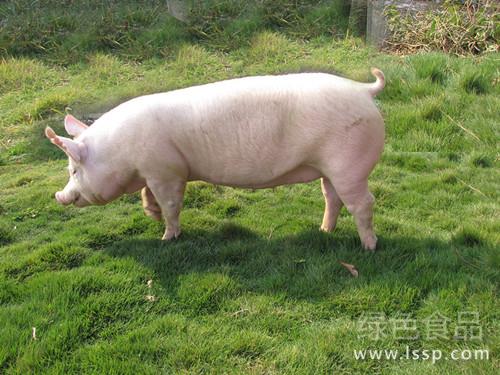
Nutritional Requirements and Feeding Methods for Pregnant Sows: Only with Sufficient Nutrition Will Piglets Be Healthy
Only with Sufficient Nutrition Will Piglets Be Healthy: Nutritional Requirements and Feeding for Pregnant Sows
-
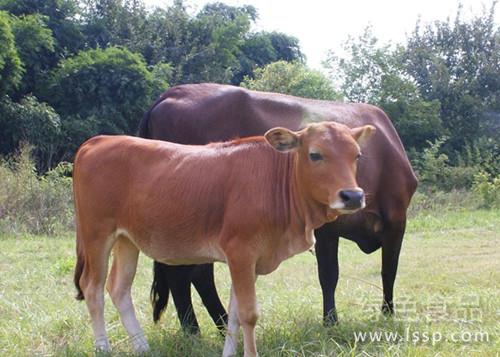
What causes diarrhea and loose stools in cattle? Effective prevention and treatment require targeting the cause
Targeted treatment is what makes prevention and control effective: causes of diarrhea and loose stools in cattle and their prevention and treatment
条件筛选