Nutritional Requirements and Feeding Methods for Pregnant Sows: Only with Sufficient Nutrition Will Piglets Be Healthy
A sow's pregnancy begins at mating and ends at farrowing. The goal of feeding management is to ensure the normal development of the fetus in the mother's body, prevent miscarriage and stillbirth, and produce sturdy piglets with strong vitality and high birth weight, while also keeping the sow in above-average body condition. The nutritional level of pregnant sows should be controlled appropriately. According to China's feeding standards, during early pregnancy (the first 80 days after conception), when a sow weighs 90 kg to 120 kg, the daily intake of compound feed is 1.7 kg; for a body weight of 120 kg to 150 kg, the daily intake is 1.9 kg; for a body weight above 150 kg, the daily intake is 2 kg. During late pregnancy (1 month before farrowing), for body weights of 90 kg to 120 kg, 120 kg to 150 kg, and above 150 kg, the daily feed intake is 2.2 kg, 2.4 kg, and 2.5 kg of compound feed respectively. The dietary nutritional level is 12% to 13% crude protein, 2.8 Mcal to 3.0 Mcal digestible energy per kg, 0.4% to 0.5% lysine, 0.6% calcium, and 0.5% phosphorus. In addition, besides feeding compound feed, in order to give the sow a sense of fullness and supplement vitamins, it is best to pair it with high-quality green fodder or roughage.
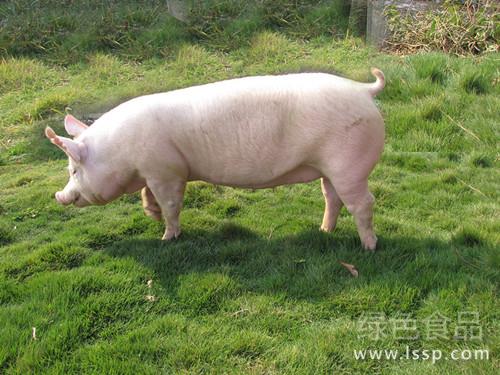
Sow
Corresponding feeding systems and nutritional plans should be adopted according to the different characteristics of pregnant sows. For multiparous sows that are thin after weaning, a feeding system and nutritional plan of "supporting both ends while attending to the middle" should be adopted. After going through farrowing and lactation, a sow consumes considerable energy and has poor body condition. In order to better undertake the reproductive task of the next stage, nutrition must be strengthened in early pregnancy to rapidly restore reproductive body condition. During this period (including the 10 days before mating, about 1 month in total), nutrition should be strengthened and the supply of concentrate should be increased, especially feed high in protein. After body condition is restored, the nutritional level should be gradually reduced and feeding should follow the feeding standard, mainly with green and rough fodder, until day 80 of pregnancy, when concentrate is added to strengthen nutrition. This forms a high-medium-high feeding system and nutritional plan, and in particular the nutritional level in late pregnancy should be higher than in early pregnancy.
For first-litter sows and sows mated during lactation, a "step-by-step climbing" feeding plan should be adopted. This is especially true for first-litter sows, whose bodies are still in the stage of growth and development and which have relatively large nutritional requirements. Lactating sows also have very large nutritional requirements because of their heavy reproductive task, so the nutritional level should increase according to the fetal weight gain, reaching its peak 1 month before farrowing. Generally, the nutritional level in early pregnancy can be somewhat lower, mainly with green and rough fodder; afterward the proportion of concentrate is gradually increased, especially the supply of protein and mineral feed, to raise the nutritional level; from 3 days to 5 days before farrowing, the daily ration should be reduced by 10% to 20% to allow normal farrowing.
For multiparous sows in good body condition before mating, a nutritional plan of "low first, high later" should be adopted. In early pregnancy, the fetus is small and the sow is in good condition, so the nutrition supplied before mating can basically meet the nutrients needed for fetal growth and development. In late pregnancy, the fetus grows and develops rapidly and needs more nutrients, so the nutritional level of the daily ration should be raised.
Attention should be paid to hygiene and quality assurance in sow feed. Moldy, spoiled, frozen, toxic, or strongly irritating feed must not be used, otherwise it can easily cause miscarriage, stillbirth, and weak fetuses. Feed should not be changed frequently, as this is also unfavorable for pregnant sows. In addition, pregnant sows have strong metabolism and a good appetite, so more nutritionally complete green and rough fodder can be used to reduce feeding costs. However, green and rough fodder has high moisture and large volume, while the gastrointestinal capacity of pregnant sows is limited. At the same time, green and rough fodder has a high crude fiber content and poor palatability, which conflicts with the physiological characteristics and nutritional needs of pregnant sows. Therefore, attention should be paid to the processing and preparation of green and rough fodder and to increasing the number of feedings.
The nutritional needs of sows also differ at different stages of pregnancy.
Early pregnancy (within 1 month after mating): at this stage the embryo hardly needs extra nutrition, but there are two peak periods of death, so the feed amount should be correspondingly small and the quality requirements high. Generally, 1.5 kg to 2.0 kg of pregnant sow feed is fed daily, and the dietary nutritional level is 2950 kcal to 3000 kcal digestible energy per kg, 14% to 15% crude protein. The amount of green and rough fodder given should not be too high, and moldy, spoiled, and toxic feed must not be fed.
Mid-pregnancy (day 31 to day 84 of pregnancy): feed 1.8 kg to 2.5 kg of pregnant sow feed daily. The specific feeding amount is determined by the sow's body condition. A large amount of green, succulent feed can be fed, but the sow must be fed until full to prevent constipation. Strictly prevent overfeeding, which can lead to obesity in the sow.
Late pregnancy (1 month before farrowing): at this stage the fetus develops rapidly, and at the same time nutrients must be stored for lactation, so the sow's nutritional needs are high. 2.5 kg to 3.0 kg of lactating sow feed can be supplied daily. At this stage, green succulent feed or silage should be relatively reduced. From 5 days to 7 days before farrowing, the feed amount should be gradually reduced until feeding is stopped on the day of farrowing. Nutritional level of lactating sow feed: 3050 kcal to 3150 kcal digestible energy per kg, 16% to 17% crude protein.