-

Latest precautions for intercropping with pear trees, a full analysis of planting key points
Intercropping and relay intercropping are traditional planting models in our country, and with the continuous development of agriculture, this model has attracted the attention of many farmers and is widely used. Pear orchards are very suitable for intercropping, but when intercropping, some issues must also be noted, otherwise it will affect both crops
-
What Is Intercropping and Relay Cropping? Suitable Crops and the Technique of Intercropping Maize with Potatoes
Planting means cultivating plants, including the cultivation of various crops, forest trees, fruit trees, flowers and grasses, medicinal and ornamental plants, and so on, including food crops, cash crops, vegetable crops, green manure crops, fodder crops, forage grasses, etc. So what is intercropping (relay cropping)? Which crops
-
What are the intercropping and relay intercropping patterns of vegetables in mulberry orchards? Introduction to planting methods
It is understood that intercropping and relay intercropping in mulberry orchards can both increase farmers' income and help eliminate overwintering mulberry pests, increase soil fertility in mulberry orchards and improve soil permeability. In recent years, more and more farmer friends have adopted this intercropping method, which has not only stabilized the mulberry orchard area but also improved
-
Key Points of High-Yield Cultivation Techniques for Intercropping and Relay Cropping of Medicinal Tree Peony
Tree peony is a precious Chinese medicinal herb with a long growth cycle, high yield and stable and considerable economic benefits. In recent years, market demand has been increasing. In order to improve economic benefits, the Bozhou Municipal Institute of Rare Medicinal Herb Cultivation has, through years of trial planting, successfully developed a new technique for
-
"Nanfeng'ao Local Chronicle" Revived: A Local Relay Sends Letters and Starts a Dialogue for Nanfang'ao
A vibrant local relay, "Nanfeng'ao Local Chronicle" revived, sending letters and starting a dialogue for Nanfang'ao
-
Detailed Explanation of Key Points of Potato Intercropping and Relay Cropping Techniques
Intercropping and relay cropping of potatoes with grain, cotton and vegetable crops can greatly improve the utilization of light energy and land, and increase the economic benefit per unit area. Test results from Zhangqiu City, Shandong Province show that cotton-potato relay cropping can yield more than 260 kg of lint cotton and more than 2,100 kg of potatoes per mu; spring potato - corn - autumn potato intercropping and relay cropping can yield 2,100 kg of spring potatoes, 590 kg of corn and 1,300 kg of autumn potatoes per mu. The net benefit of these two cultivation models can be 100 percent higher than that of monoculture cotton or corn.
-
Cotton-lily intercropping: a commonly used cotton field intercropping and relay cropping pattern
Cotton-lily intercropping is a cotton field intercropping pattern widely used in dryland sandy loam areas along the coast and along rivers. The two crops have little mutual influence and are mutually beneficial in fertilizer use, but note that lilies cannot be continuously cropped and must be rotated to a different crop. This intercropping pattern generally has a bed width of about 3 m, with cotton planted in wide and narrow rows, wide row spacing 140 cm, narrow row spacing 50 cm, and 4 rows of cotton per bed. In the wide cotton rows, 6 rows of lilies are planted, with row spacing 20 cm and plant spacing 20-25 cm, 5000-6000 plants per mu. Cotton is raised as seedlings and transplanted, planted separately on both sides of the bed, per mu
-
Detailed Explanation of Key Techniques for Lily Intercropping and Relay Cropping
In the Taihu Lake region of southern China, lily production often uses intercropping and relay cropping to increase income per unit area. Practicing intercropping and relay cropping has some effects on lily growth, and bulb yield decreases somewhat, but the total income per unit area is higher than the returns from monocropped lilies. If the timing and management of intercropping and relay cropping are arranged properly, it is beneficial to lily growth and can also achieve high yields at the same time. Yixing lilies are propagated from daughter bulbs, require a large amount of seed, multiply only 2.5-3.5 times in one year, and the ground space is idle for a considerable period. Local experience in arranging intercropping and relay cropping
-
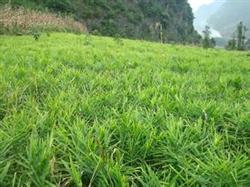
Intercropping and Relay Cropping Technique for Lettuce, Ginger, Watermelon and Bok Choy
1. Topdressing: generally 2 to 3 times. The first is in early to mid-June, applying 1000 kg of barnyard manure plus 15 kg of urea per mu between the rows, covered with a thin layer of soil. The second is in early to mid-July after the mother ginger is dug, applying 150 kg of decomposed rapeseed cake or 30 kg of compound fertilizer per mu; the third is in early September after the frame is removed, applying another dose of human excrement and urine to prevent nutrient deficiency...
-

Detailed explanation of the double-low rapeseed minimal and no-tillage relay direct seeding cultivation technique
Controlling rapeseed powdery mildew well is a prerequisite for obtaining high yield and high quality in rapeseed, while autumn-sown rapeseed at the final flowering stage and the middle-to-late pod stage is precisely in the March-April period of high temperatures and shading between plants, when powdery mildew occurs rather commonly, greatly reducing the 1000-grain weight of rapeseed and thereby affecting yield; therefore, the control of rapeseed powdery mildew is very important. 1. Harm...
条件筛选