-

Red-leaf ornamental peach: propagation and cultivation techniques and key points for pest and disease control
Red-leaf ornamental peach is a variant of ornamental peach, produced in Zhejiang, Anhui, Jiangsu Changmei Flowers, Shandong, Huangchuan in Henan and other places. Red-leaf ornamental peach prefers a warm, sunny environment and a suitable growing temperature of 15-30 degrees. It can be propagated by sowing or grafting, mostly using wild peach as rootstock
-

How to Improve the Survival Rate of Red-Leaf Cherry Blossom Cuttings
The most effective method for rapid propagation of red-leaf cherry blossom is to use grafting propagation techniques
-
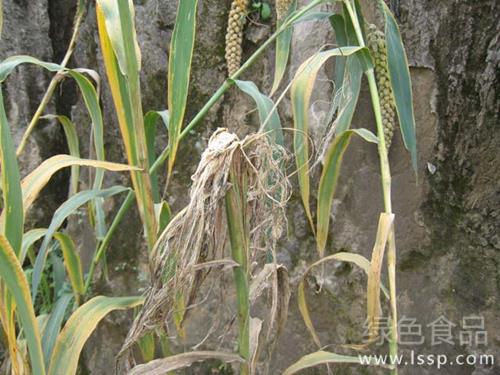
Control methods for foxtail millet downy mildew with mold on the leaf underside and dry, withered leaf tips
Control methods for foxtail millet downy mildew with mold on the leaf underside and dry, withered leaf tips
-
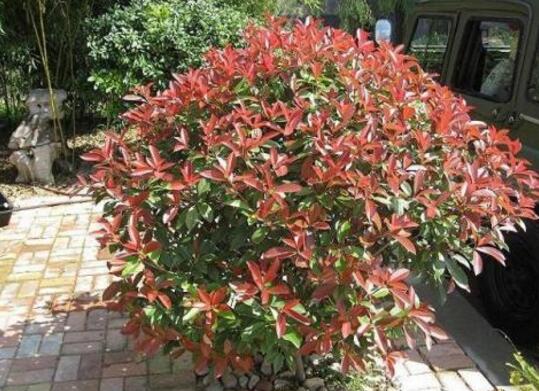
Is red-leaf photinia toxic? Key points of bonsai production techniques, soil is crucial
Red-leaf photinia is a common landscaping plant because of its high ornamental value, but for those who want to grow it indoors, the question they care about most is its toxicity. So is red-leaf photinia toxic? Is red-leaf photinia suitable for indoor potting? Let's find the answers to these questions together.
-

Cotton red leaf blight is prone to outbreak after heavy rain, growers need to be vigilant
Recently, cotton regions have generally experienced heavy to torrential rain, and for cotton that has endured a long drought, red leaf blight is extremely prone to outbreak. Cotton red leaf blight is a physiological disease. It starts from the main stem growing point or the top of the fruiting branch, and generally develops from top to bottom and from outside to inside. The main stem withers and dies, but the dissected vascular bundles show no discoloration. The root system is thick and short, with few fibrous roots and poor development. The causes of cotton red leaf blight outbreaks are: first, extensive farming in cotton fields, resulting in poor cotton root development; second, cotton fields with poor drainage; third, excessive application of nitrogen fertilizer, vigorous cotton growth,
-
What are the control methods for cotton red leaf disease?
Cotton red leaf disease is a physiological disorder that has a relatively large impact on cotton yield and quality. This disease usually begins to occur at the early flowering stage. If control is not timely, by the full flowering stage to the boll-setting stage the affected area expands and the condition worsens. When the disease first appears, the leaves take on a dark green color, then gradually thicken and wrinkle, becoming brittle, with yellow spots appearing between the veins while the veins remain green. As the disease worsens, the leaf edges begin to curl downward and turn from yellow to purplish red, withering and dropping off, until the cotton plant is left as bare stalks and dies. The main causes of cotton red leaf disease
-
What medicine is effective for controlling cotton red leaf disease?
Control the top and promote the bottom to enhance the stress resistance of cotton plants. First, for cotton with vigorous growth, apply the plant growth retardant succinic acid or mepiquat chloride to control excessive growth; use 2-3 grams of mepiquat chloride or 8-12 milliliters of mepiquat chloride per mu, mixed with 50 kg of water for spraying. Second, for cotton fields with compacted soil, cultivate and aerate in time to enhance permeability. Third, for cotton fields in low-lying areas, pay attention to clearing ditches and beds at any time to promote cotton roots to grow downward. Fourth, for cotton fields using plastic film mulching cultivation, remove the plastic film immediately so that cotton roots develop deeper. Apply more potassium fertilizer to improve fertilization efficiency. For soil
-
How to prevent and control cotton red leaf stem blight? A full analysis of control measures
I. Symptom identification After the plant is affected, the leaves turn dark green and become thick and brittle, then small red dots are scattered on the leaves, and finally the whole leaf turns red while the veins remain green, which is red leaf stem blight. When the disease is severe, the base of the petiole becomes soft, loses water and shrinks, causing the leaves to wither and fall off, and the top of the stem becomes scorched and dry. At the same time, it easily triggers repeated infection by target spot and brown spot, causing the diseased plant to scorch and die. Some plants can still grow adventitious buds after the diseased leaves fall off. Plants with severe and early onset are short, with poor root development, and both the main root and lateral roots are
-
How to prevent cotton red leaf stem blight? These integrated measures must be mastered
Cotton red leaf stem blight is a physiological disease. In recent years, it has occurred in large amounts in the cotton region of the Yangtze River Basin in our area. It begins at the early flowering stage, and is more severe and widespread from the full flowering stage to the boll-setting stage. In our area specifically, it occurs sporadically in July and August. It reaches its peak from mid-to-late September to October. Lightly affected plants are yellow and thin, with few and small bolls, short fiber, and poor boll opening; severely affected plants die prematurely, and the bolls cannot mature, greatly affecting yield. 1. Disease symptoms. At the early stage of the disease, red and purple spots appear on the leaves, gradually spreading until the whole leaf turns red
-
What are the three main causes of cotton red leaf stem blight?
Cotton red leaf stem blight is a physiological disease caused by potassium deficiency. It occurs in the middle and late stages of cotton growth, and in dry years the occurrence and severity of damage are more serious. In the field, cotton generally begins to show symptoms at the bud stage, and the disease is most severe during the boll-setting and boll-opening stages. Symptoms mainly appear on the leaves. Diseased leaves develop from top to bottom and from the outside inward. Diseased leaves begin to lose green color from the edges, first turning yellow, then producing red spots, and finally the whole leaf turns red, the mesophyll thickens, wrinkles and becomes brittle, while the veins remain green. In severe cases, the leaves of the whole plant lose green color, then turn red and brown, the leaves scorch and fall off, leaving bare stems, and the plant
条件筛选