-

Yellow Sand Soft-shelled Turtle Farming Techniques: Juvenile Turtle Rearing Methods and Turtle Egg Incubation Tips
1. Selection of a New Turtle Pond The area is 1 mu to 5 mu, the water depth is about 1.5 m, a 20 sq m to 50 sq m egg-laying sand bed is built on one side of the pond, a "T"-shaped escape-prevention wall about 0.6 m high is built around the perimeter, and a 20 sq m to 50 sq m basking platform and feeding platform are set up on the water surface.
-
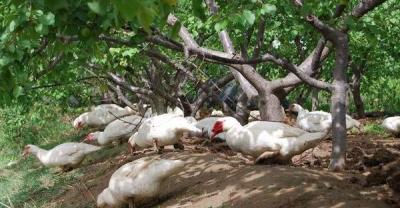
A Complete Guide to Duckling Rearing Methods and Management
Ducklings are young ducks from hatching to 30 days of age. At this stage, their bodies are still relatively delicate, and their ability to adapt to external conditions is relatively poor. In addition...
-
Key Points of Gosling Rearing Techniques and Detailed Daily Management Methods
1. Select good goslings. Healthy goslings are lively in behavior, have large bright eyes, respond quickly, have good yolk absorption, can stand firmly after their down dries, and have strong calls; when held up by the neck with the hand, their feet quickly tuck in. Weak goslings with large bellies or crooked heads should be culled. 2. Suitable temperature. For 1-5 days of age, 25-28°C; for 6-10 days of age, 23-26°C; for 11-20 days of age, 20-24°C; after 21 days of age, 17-20°C. 3. Careful feeding. Feeding should be done at fixed times and in fixed amounts, and it is best to feed small amounts frequently to 80% fullness.
-
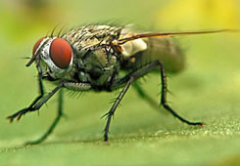
How to Raise Fly Maggots? Fly Maggot Farming Techniques and Adult Fly Rearing Methods
Nowadays, anything can be farmed, and even flies can be farmed, but how do you farm flies? And there are many things to pay attention to during fly farming, did you know? Let's take a look together. 1. Equipment: Fly cage: each fly cage must be equipped with a
-

Musk Deer Farming Techniques: Rearing Methods and Nutritional Requirements for Young Musk Deer
The goal in rearing young musk deer is to ensure that all newborn fawns survive without disease and to develop in them excellent production performance. So how should they be reared? Let us take a look together. During growth and development, young musk deer steadily gain body weight and body measurements, and their metabolism is very vigorous.
-
How to raise nursing puppies? A complete guide to scientific rearing methods
Puppy: refers to a dog from birth to weaning (around 45 days of age); puppies do not open their eyes until 12-15 days after birth, have poor mobility, but grow fast and have relatively high nutritional needs. Therefore, the rearing of puppies should be done as follows: 1. Get colostrum in time. The milk secreted by the mother dog within 1 week after giving birth is colostrum. Colostrum is rich in gamma globulin, which after being absorbed by the intestinal tract forms antibodies in the puppy's body and can enhance the puppy's disease resistance. Puppies must get colostrum in time, otherwise the gamma globulin will be destroyed by digestive juices
-
Rabbit Rearing Methods and Breeding Techniques
Size: total body length 40-45cm. Origin: native to south of central Europe. Diet: herbivorous. Although they are all commonly called rabbits, what general pet shops sell are domestic rabbits improved from wild European rabbits through selective breeding. There are many breeds; the most familiar to the public is the all-white Japanese White breed. In recent years, rabbits of other coat colors have gradually increased on the market and are also very popular. There is also a breed called the mini rabbit; in fact, it is not a true mini rabbit, but a cross between small rabbits such as the Dutch breed and the Belgian breed and the white Japanese rabbit.
-
Queen bee rearing method: rearing queens using natural supersedure queen cells
Select excellent colonies with old queens as breeding stock; when they build supersedure queen cells, select and retain them. Move the comb with natural queen cells up into the super, place unsealed brood combs on both sides, insert a queen excluder between the brood box and the super, confine the queen to the brood box, and record the emergence date of the queen from each natural queen cell. Natural supersedure queen cells can be taken successively from this old-queen colony; queens from natural supersedure allow the excellent traits of the stock to be passed on more stably. When this natural supersedure occurs, the colony generally builds only a few queen cells, and the reared queens are of relatively good quality
-
Rearing Methods and Management Key Points for Male Silkworm Larvae
I. New Hybrid Male Silkworm Varieties (1) Variety characteristics. The new autumn-rearing male silkworm variety Qiuhua x Ping 30, bred by the Sericulture Research Institute of the Zhejiang Academy of Agricultural Sciences, has the advantages of a strong constitution, uniform molting and rising in each instar, and being easy to rear. The number of silkworm larvae per gram is about 2310, the 5th instar lasts 6 days and 18 hours, the whole instar lasts 22 and a half days, the two-day hatching rate is 49.34%, the silk length is about 1240 m, the cocoon shape is oval, large and uniform, the cocoon color is pure white, and the cocoon shell rate and silk yield are high. (2) Key points of rearing technology. For gathering newly hatched silkworms, light exposure can be
-
How are common diseases of Silkie chickens diagnosed? With a detailed explanation of rearing methods
1. Newcastle disease (fowl pest) [Diagnosis] Sick chickens are listless, have reduced appetite, elevated body temperature, tremors, head tilted backward, opisthotonus, and circular movement, etc. Difficulty breathing, drooping wings, greenish watery droppings, death after 2 to 3 days, with a relatively high mortality rate. [Treatment] At 7 to 8 days of age, chicks are given Newcastle disease strain II vaccine by nasal or eye drops; at 28 days of age, the vaccine is administered once more; at 50 to 60 days of age, Newcastle disease strain I vaccine is injected intramuscularly. If the disease breaks out suddenly, Newcastle disease strain I vaccine should immediately be injected intramuscularly.
条件筛选