-

Detailed Explanation of Key Points for Integrated Pest Management in Edible Fungi
Integrated Pest Management Techniques for Edible Fungi
-
What are the integrated pest and disease control measures for edible fungi?
Integrated measures to control pests and diseases of edible fungi
-
Integrated Prevention and Control Measures for Edible Mushroom Cultivation Techniques and Pests and Diseases
Integrated Prevention and Control Measures for Edible Mushroom Pests and Diseases
-
Detailed Explanation of Key Points of the Aerated Composting Technique for Straw Mushroom Culture Material
Under suitable temperature conditions, the production cycle of straw mushroom is about 20 days. From sowing to harvesting the first flush of mushrooms takes about 10 days, and the yield is mainly concentrated in the first flush. In our province, it can be cultivated from May to September every year. Based on this production characteristic of straw mushroom, the author, in the work of promoting straw mushroom cultivation in rural areas, summarized a new composting method - the aerated composting method, and achieved very good results. Straw mushroom can be cultivated using rice straw plus some supplementary materials or solely cottonseed hulls. Before building the pile, sun-dry the rice straw or cottonseed hulls for 1 day, then soak them thoroughly in lime water at pH 11-12, and scoop
-
What are the integrated pest and disease control measures for mushrooms?
Mushrooms are the main cultivated edible fungus variety in Zhangpu County, Zhangzhou City, Fujian Province. However, pests and diseases have long plagued the vast number of mushroom growers. The integrated control measures are described below: (1) Strengthen cultivation management. 1. Disinfection of the cultivation house. For disinfection of the cultivation house, a mixed solution of formalin and dichlorvos can be used for fumigation. Before fumigation, first moisten the floor, walls, bed frames and daily tools by spraying, and seal up cracks. For every 100 sq m, use 1 jin of formalin and 150-200 g of dichlorvos in a pot, add 5 times the amount of water, then place it on a stove and heat. After lighting the fire
-
How to prevent and control pests and diseases of edible fungi? A detailed explanation of integrated control techniques
Edible fungi belong to the macrofungi, and the environmental conditions required for their growth and development are also suitable for the occurrence, growth and reproduction of many pests and diseases. If the control of the ecological environment is not taken seriously, and necessary preventive measures are not taken in the early stage, contaminant microorganisms and various insect pests will occur in large numbers. In cultivation, following the integrated control policy of giving priority to agricultural control, reasonably combining biological and physical methods, and using chemical control as a remedial measure, and giving full play to the complementary advantages of various control methods, will be of very great significance for achieving high quality and high yield of various edible fungi. 1 Edible
-
Detailed Explanation of Key Points for Integrated Pest Management of Edible Fungi
I. Eliminating pests starts from the source. Before the growing season each year, thoroughly clean the mushroom yard and eliminate pest breeding grounds. The cleaning scope includes mushroom houses and courtyards. All spent mushroom bags, straw pile garbage, compost and all organic waste from the previous year should be centrally burned or transported away, and weeds and peat soil should be removed. In the evening, spray with 15 ml of 80% dichlorvos and 5 ml of 1.8% abamectin mixed with 40 kg of water. After an interval of 1 week, apply once more, and after another week, whitewash the mushroom house with bleaching powder and lime slurry, and spread dry lime powder throughout the courtyard
-
Detailed Explanation of Key Technical Points for Dehydrated Shiitake Mushroom Processing
1. Process flow: raw material selection → sun-drying → oven-drying → grading and packaging → finished product. 2. Operational key points. Material selection: shiitake mushrooms used for drying should be selected at moderate maturity, intact, free from disease, insects and damage; they are generally harvested when the caps are 80% mature. Sun-drying: after harvest, place the shiitake mushrooms on drying trays with the stems facing down and sun-dry them in sunlight; the time depends on the moisture content of the raw material, generally 5-8h. Oven-drying: oven-drying can be carried out in a drying room or a dehydrator. Temperature control during the oven-drying stage. Grading: after oven-drying, the shiitake mushrooms should be graded promptly. The grading standard
-
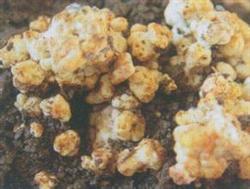
What to Do When Oyster Mushrooms Get Walnut Meat Fungus Disease? Occurrence Patterns and Integrated Control
Recently, many readers have reported that the oyster mushrooms they cultivate have been affected by walnut meat fungus (Diehliomyces microsporus). We are therefore reposting an article titled "Occurrence Patterns and Control Techniques of Walnut Meat Fungus in Oyster Mushrooms" published by Yang Yongheng, An Xiurong and others of the Tai'an City Institute of Agricultural Sciences, Shandong, for growers' reference: In recent years, Tai'an City and its surrounding...
-
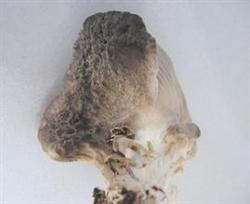
How to prevent and control green mold in oyster mushrooms? A detailed guide to integrated control techniques
1. The tall-stemmed mushroom has a small cap and poor differentiation, with a relatively long stem. The cause is that during the primordium formation and differentiation stage, the mushroom house is short of oxygen and light, while the temperature is on the high side, which affects the normal differentiation and development of the cap. Control method: increase ventilation and adjust light and temperature. 2. The tumor-capped mushroom's cap appearance is mainly at the edge...
条件筛选