-
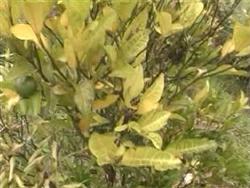
A Detailed Introduction to the Asian Citrus Psyllid and Its Control Methods
Asian citrus psyllid [Diaphorina citri Kuwayama] belongs to the order Homoptera, family Psyllidae. It is an important pest during the tender shoot stage of citrus, mainly damaging citrus, and can also damage Rutaceae plants such as orange jasmine (Murraya paniculata) and wampee (Clausena lansium). Damage characteristics: adults and nymphs gather in groups on tender shoots, young leaves and new buds to suck sap. The damaged tender shoots...
-

Identification and Control Methods of the Russian Olive Psyllid
Scientific name Trioza magnisetosa Log. Homoptera, Psyllidae. Hosts: Russian olive (Elaeagnus angustifolia), jujube. Damage characteristics: adults and nymphs pierce and suck the sap of young buds, tender twigs and leaves; infested young buds often die, infested leaves mostly curl toward the underside, and in severe cases the twigs and shoot tips die, weakening the tree's vigor, with heavy flower and fruit drop. Morphological characteristics: adult body length 2.5-3.4 mm, dark green to yellowish brown. Compound eyes large, protruding, reddish brown. Antennae filiform, 10 segments, the terminal 2 segments black
-
Winter control of psyllids in pear orchards leads to good pears in autumn
The pear psyllid is the most important pest on pear trees. It can damage pear leaves, causing blighted spots, weakening tree vigor, and reducing fruit quality and yield. It produces 4-5 generations per year. Adults are divided into winter and summer forms. Winter-form adults overwinter in the cracks of pear tree branches and trunks, with a few in weeds, fallen leaves, and soil. Integrated control should target their overwintering sites. 1. Orchard sanitation. Clear away fallen branches, fallen leaves, and weeds in and around the orchard, bury them deeply or burn them, to reduce the overwintering pear psyllid population. 2. Bark scraping. Spread plastic film on the tree tray
条件筛选