-
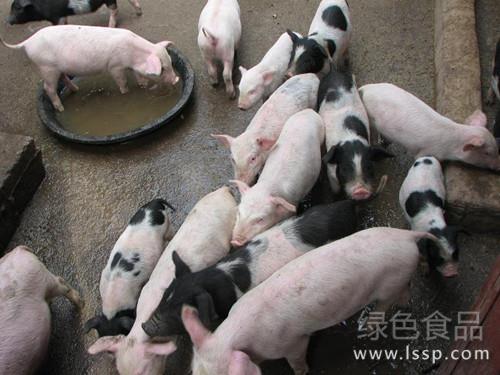
Why is it hard to raise finishing pigs in winter yet still profitable, and how can management be done well?
Raising pigs in winter is difficult but profitable; how to best manage finishing pigs
-

Why is intercropping tree peony root bark with Gastrodia elata so profitable?
Tree peony root bark (the root bark of the tree peony) and Gastrodia elata are both precious Chinese medicinal herbs. Intercropping Gastrodia elata in tree peony root bark fields is a new high-yield, high-efficiency cultivation model that is worth promoting to herb growers in Chinese medicinal herb growing regions everywhere. The most notable features of intercropping Gastrodia elata in tree peony root bark fields are: first, it makes full use of the land; second, the two are complementary; third, it eliminates the trouble of having to weed the tree peony root bark field frequently. The cultivation method is described below: 1. Planting tree peonies. 1. Site selection: The tree peony field for intercropping Gastrodia elata requires fertile, deep soil, and a slight slope is best.
-
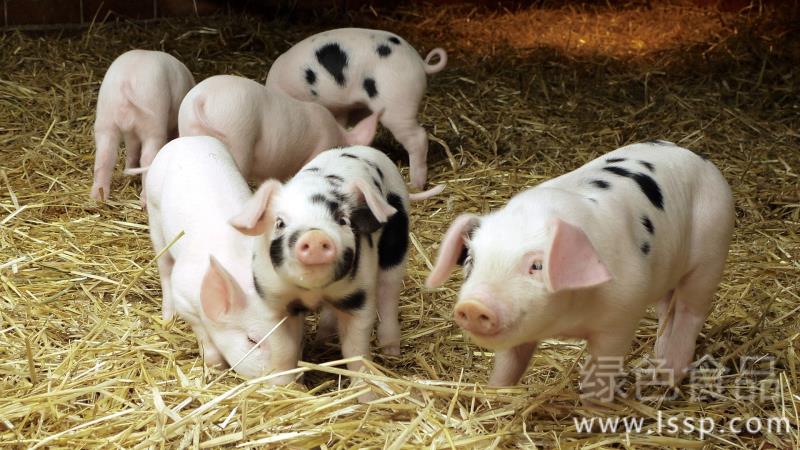
Pork prices are so high, so why is pig farming still not profitable?
Why is pig farming still not profitable when pork prices are high?
-
How profitable is Gastrodia elata cultivation? A planting income analysis
Question: How profitable is cultivating Gastrodia elata? Is it guaranteed? Answer: It can be said with certainty that the production benefit of Gastrodia elata is relatively high. At present, the purchase price of fresh Gastrodia tubers is generally around 40 yuan per kilogram. Calculated at a yield of 10 kilograms per square meter, the output value is about 400 yuan. In the first year of planting, the input cost is about 200 yuan, and the production benefit is about 200 yuan; from the second year onward, using self-produced tuber seeds to expand the cultivation area, about 5 times the cultivation area of the first year, and at the same time using first-generation high-quality fungal strains to self-cultivate fungal wood, that is,
-
Why is courtyard cultivation of Gastrodia elata so profitable?
Opening remarks: The artificial cultivation of Gastrodia elata follows special rules, and the level of technical skill directly affects the yield of Gastrodia elata. Comrade Zhang Youyun of the Heze City Yunzhou Gastrodia elata Research Institute began studying Gastrodia elata cultivation techniques in 1992 under Mr. Xu Jintang, the father of Chinese Gastrodia elata and a researcher at the Institute of Medicinal Plant Development, Chinese Academy of Sciences. Over ten years, he has worked out in practice a complete set of effective Gastrodia elata cultivation techniques and accumulated rich practical experience. To enable more Gastrodia elata enthusiasts to learn and master Gastrodia elata cultivation techniques, this newspaper is opening from today the "Gastrodia elata Cultivation Techniques Lecture" column
-
How profitable is it to grow honeysuckle on hillside land?
Honeysuckle is cold-resistant, drought-resistant and tolerant of poor soil, and growing it does not take up cultivated land. When honeysuckle is planted on hillsides or as part of the Grain for Green program and soil and water conservation efforts, the returns can be quite good as long as the techniques are right, making it a good way for farmers in mountainous areas to earn income. According to surveys, when honeysuckle is planted on field ridges with a clump spacing of 70-80 cm, it can cover the ridges within 3 years, protecting earth ridges from gullying and stone ridges from collapsing. At the same time, honeysuckle is not strict about climatic conditions and has strong drought resistance; there is a farming saying that "wild grass may die of drought, but honeysuckle will not die of drought." Its cultivation characteristics are: 1. Site selection and land preparation. Honeysuckle likes sun
-
Why is mushroom basket and box cultivation so profitable?
If a farmer's family does not have the conditions to use sunken-bed cultivation for mushrooms, they can adopt the economical and practical basket and box cultivation method. This method is simple and easy to carry out and can be used year-round. The method is: 1. Prepare baskets or boxes. Use old broken bamboo baskets, wicker baskets or miscellaneous wooden board packing boxes, and coat the bottom and all four sides with wheat straw mud mixed with a small amount of lime powder. The purpose is to keep warm, retain moisture, and prevent pests and diseases. After that, put the mud-coated baskets and boxes in a ventilated place to dry for later use. 2. Formula and ingredients. Put clean cottonseed hulls without mold in the sunlight
-
Off-season cultivation of edible fungi is highly profitable, with broad market prospects
So-called off-season cultivation refers to cultivation carried out in seasons when normal growth is not possible. In edible fungi production, this is essentially a matter of timing, that is, cultivation carried out in natural seasons when normal production is not possible through improved facilities and equipment, artificial regulation of conditions and other auxiliary means, and it can also achieve production results similar to those of normal-season production; for example, the relatively typical summer cultivation of enoki mushroom (Flammulina velutipes) and winter cultivation of straw mushroom, and so on. For example, the low-temperature variety enoki mushroom should fruit from November to February, but with facility-based automatic controlled cultivation
-
Why interplanting dry Pinellia ternata in fruit orchards is highly profitable
Dry Pinellia ternata is best suited for interplanting in fruit orchards, because it prefers shaded environments. During hot seasons with direct sunlight, the plants are prone to lodging (seedlings turn yellow, wither and shrink), causing tuber growth to stop. In the hot summer, the lush foliage of fruit orchards serves as a natural protective umbrella that provides shade during the vigorous growth period of dry Pinellia ternata, offering favorable conditions for normal tuber growth. Interplanting dry Pinellia ternata in each mu of fruit orchard can yield about 120 kg of dried product, and its cultivation benefit increases by 3-5 times compared with interplanting conventional crops. 1. Sowing. Spring March-May
-
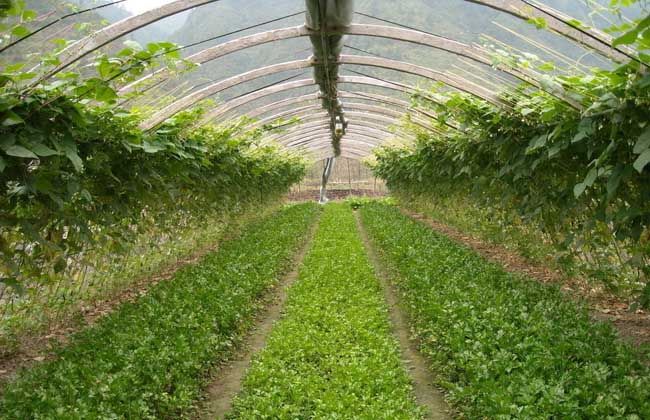
What is most profitable to grow in greenhouses in 2018? High-yield project recommendations
What is most profitable to grow in greenhouses in 2018?
条件筛选