What is most profitable to grow in greenhouses in 2018? High-yield project recommendations
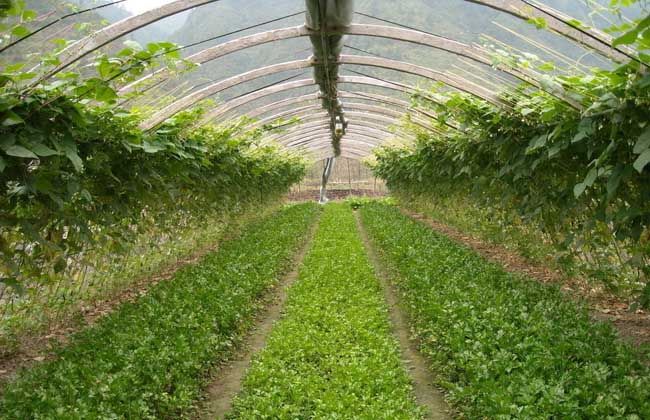
Greenhouses were originally specialized equipment for vegetable production, but with the development of production they have become more and more widely used. At present they are used for potted flower and cut flower cultivation; in fruit tree production they are used to cultivate grapes, strawberries, watermelons, melons, and so on; in forestry production they are used for forest tree seedling raising, cultivation of ornamental trees, and so on; in the breeding industry they are used for raising silkworms, chickens, cattle, pigs, fish, and so on. Now let us take a look together at what is most profitable to grow in greenhouses!
Wild vegetable cultivation
Wild vegetables are edible plants that are not artificially cultivated. Nowadays people always feel that vegetables that should be fresh are not fresh, those that should be sweet are not sweet, and those that should be fragrant are not fragrant. The root cause is the excessive use of chemical fertilizers and hormones, which naturally changes the quality of the vegetables. Therefore, growing all kinds of wild vegetables that people love to eat is a good way to make money.
Greenhouse fruit
Common greenhouse-grown fruits are mainly divided into two types. One is local fruits grown in greenhouses to bring them to market earlier, such as greenhouse strawberries, watermelons, cherries, nectarines, and so on, achieving the advantage of early harvest and high prices. The second is using greenhouse temperature control to grow southern fruits in the north, such as dragon fruit, blueberries, papayas, and so on.
Succulent plants
Succulent plants come in a great many varieties. Most are small in appearance, extremely cute, and have tenacious vitality; a leaf inserted into soil can survive. Nowadays they can be said to be one of the most popular types of potted plants. Their plump, fleshy appearance is very appealing, and today succulents can be seen everywhere on home balconies and office desks.
Mushroom cultivation
Common mushrooms include shiitake, straw mushroom, button mushroom, wood ear, silver ear, lion's mane, bamboo fungus, matsutake, Tricholoma mongolicum, red mushroom, reishi, cordyceps, truffle, Bailing, and porcini, and so on. Since the "SARS" period, people's awareness of green, pollution-free food has been relatively strong, so mushrooms are viewed favorably. Moreover, as people's living standards rise day by day and their understanding deepens, the health effects of mushrooms on all aspects of the human body cannot be replaced by any medicine.
Strawberry cultivation
Strawberries have high nutritional value, are sweet and sour and suitable for all ages, and are in good market demand. In winter, strawberry prices can reach more than ten yuan per jin, and in spring they are at least five or six yuan per jin. In spring many people also go to strawberry gardens to play, picking and eating at the same time, so they can both eat strawberries and experience the fun of picking them. Many people are willing to go pick strawberries, so growing strawberries in greenhouses is the most profitable.
Reishi cultivation
Since ancient times, reishi has been regarded as a symbol of auspiciousness, wealth, beauty, and longevity, and has been called the immortal herb and the auspicious herb. For a long time it has been regarded as a precious Chinese herbal medicine that nourishes and strengthens the body and supports the vital essence. Folk legends even say it has the effects of bringing the dead back to life and granting immortality. Therefore, choosing to grow reishi is absolutely a good entrepreneurial choice.
Growing roses
In the fresh flower market, roses are the flower variety with the largest sales volume. A small flower shop of ten to twenty square meters can sell 200,000 rose stems in a year. Growing roses in greenhouses, one mu can plant 4,500 plants, produce 4 to 5 crops a year, with an annual output of 70,000 to 80,000 stems, and a net income of about 35,000 yuan.
Herb cultivation
Herbs have strong adaptability and can be grown throughout our country. Cultivation and management are extensive, and they can be grown both in the ground and in pots. From sowing to potting, they generally take 2 months to reach the market. The cost of seeds plus a flower pot is only one yuan, while the market price is as high as more than 10 yuan. Generally, one mu can produce 8,000 to 10,000 potted herb plants, with a net income of 60,000 to 70,000 yuan.
Off-season fruit
Off-season fruit refers to varieties cultivated in greenhouses using high-tech means, not ripened by the use of hormones. The selling point lies in having what others do not, fully solving the problem that many people want to eat them but cannot get them, so market demand is considerable. In addition, the price of off-season fruit is generally much higher than that of seasonal fruit, so the profit margin is also very large.
Yellow-fleshed watermelon
Yellow-fleshed watermelon is a rare watermelon variety. The fruit is small, with high and uniform sugar content, and it is in relatively good demand on the market. From fruit setting to ripening takes only 33 days, two crops can be harvested a year, and the yield per mu is 3,000 kg. Even in June the lowest price is about one yuan per jin, and in winter the price is higher, reaching as much as ten yuan per jin in some places. If it is grown well in greenhouses and there is a sales channel, growing yellow-fleshed watermelon is the most profitable.