-
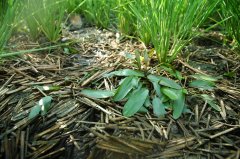
When is the flowering season of Taiwan water-fern? Reproduction methods and whether it has a dormant period
The genus name of Taiwan water-fern (family Aponogetonaceae), in Latin, refers to the plant's growing environment being swampy wetlands. Because its tubers are rich in starch, in the early era of material scarcity, farmers would remove the outer skin of the tubers, cook them with sugar as a snack, hence it is also known as "
-
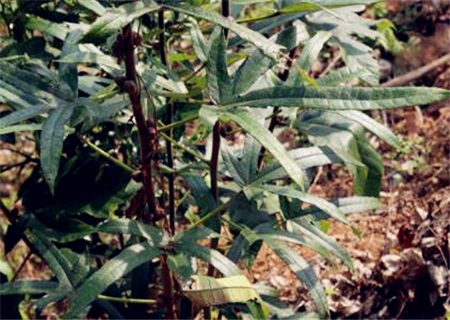
Price per jin of Wuzhimaotao and its planting prospects, production areas and planting methods
Wuzhimaotao (hairy fig, Ficus hirta) belongs to the Moraceae family and is not a peach. It is widely distributed in the mountains mainly in the Hakka areas of Meizhou, eastern Guangdong. It is named for its leaves that look like five fingers, its leaf blades that bear fine hairs, and its fruit that resembles a hairy peach when ripe. So how much does Wuzhimaotao cost per jin? ? What are its planting prospects? How is it planted? How much does Wuzhimaotao cost per jin
-

How to Stimulate Milk Production in Ewes: Practical Methods for Getting Ewes to Produce Milk
How to Stimulate Milk Production in Ewes
-

How to make a Podocarpus bonsai? Detailed explanation of production methods and techniques
Podocarpus (Podocarpus macrophyllus) is evergreen all year round, relatively shade-tolerant, and prefers well-drained yet moist sandy soil. Its posture is graceful and dancing, deep green and richly fragrant; the seeds resemble a monk's head, and the seed receptacle looks like a monk's robe, so the whole form is like an arhat, hence the name. Varieties include: small-leaf Podocarpus, short-leaf Podocarpus, narrow-leaf Podocarpus, etc. These dwarf small-leaf Podocarpus are most suitable for making bonsai
-

Weekly Production Planning and Turnover Scheduling Methods for Large-Scale Pig Farms
Weekly production planning and turnover scheduling for large-scale pig farms
-
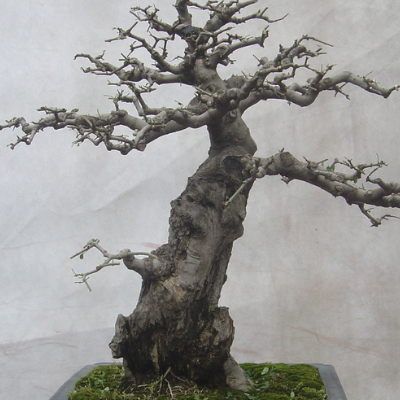
Production Methods and Price Introduction of Chinese Ash Bonsai
Chinese ash bonsai is extremely expensive and made from a rare tree species. What are the production methods of Chinese ash bonsai? What is the price of Chinese ash bonsai: Chinese ash bonsai production: (1) It is necessary to judge whether the selected Chinese ash stump can survive after transplanting.
-
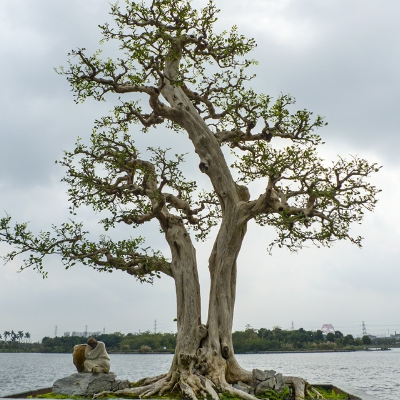
Lingnan bonsai: production methods and price introduction
Lingnan bonsai, this is a bonsai association, that is, one specializing in this area of bonsai, and many people like it
-

Detailed Explanation of the Production Techniques and Methods for Candied Straw Mushrooms
1. Material selection and processing. Choose straw mushrooms with plump fruiting bodies, unopened caps, and no mechanical damage. Immediately after harvest, place them in a 0.03% sodium metabisulfite solution and treat for 6-8 h (hours), then rinse clean with clear water. 2. Blanching and hardening. Put the treated straw mushrooms into boiling water and blanch for 2-3 min (minutes) to destroy enzyme activity. After blanching, immediately remove them, place them in cold water to cool, then after cooling remove them and place them in a 0.5%-1% calcium chloride solution to soak for 10-12 h (hours
-
Detailed Explanation of the Production Methods of Shrimp Paste and Its Products
Shrimp paste is one of the traditional shrimp foods of China and the coastal regions of Southeast Asia. Its rich nutrition and unique flavor are deeply favored by diners at home and abroad. (1) Raw material shrimp for shrimp paste production The shrimp used for shrimp paste are several species among the planktonic crustaceans, of which the main varieties are: (1) Acetes chinensis; (2) Acetes japonicus; (3) mysid shrimp; (4) gammarid shrimp. The salt used for shrimp paste production must be water-washed edible salt that complies with national hygiene standards. (2) Shrimp paste production process The modern fermentation method is currently the most scientific production process.
-
Detailed explanation of the production process for canned braised fish: Methods for making seasoned aquatic canned products
The processing of canned braised fish mainly adopts the braising technique characteristic of Chinese cooking. The fish pieces may first be fried and then canned with seasoning liquid poured in; or dehydrated and then canned with seasoning liquid poured in; or directly packed raw and then filled with seasoning liquid; or the fish pieces may be braised and roasted together with the seasoning liquid, then canned and an appropriate amount of seasoning liquid poured in, etc. Depending on the cooking method, the product name also differs. Examples include crispy, braised, and oil-braised. The finished product generally has a relatively large amount of broth, a deep red color, and the flavor of braised fish. Common varieties include canned braised chub mackerel, canned braised common carp, canned braised mixed fish, crispy yellow croaker,
条件筛选