-
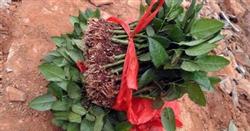
Rose seedling production and pruning techniques
I. Seedling production. Modern rose seedling production all uses the single-node cutting propagation method, or the graft-cutting propagation method to produce seedlings. (1) Single-node cutting: Cuttings are taken from second-grade cut flower branches, cutting single-node stem segments with plump axillary buds from the branches as cuttings. About 0.5 cm of stem segment is left above the axillary bud, ...
-

Introduction to Saffron and Its Distribution of Producing Areas
Introduction to Saffron and Distribution of Producing Areas
-

Production and Care Methods for Chinese Fringe-flower (Loropetalum chinense var. rubrum) Bonsai
Production and Care of Chinese Fringe-flower Bonsai
-

-

How Do Rhododendrons Reproduce? A Detailed Guide to Common Propagation Methods
Propagation Methods for Rhododendrons
-

Tongzi magnolia slices are a bamboo shoot product specialty of Guizhou.
Among Guizhou's magnolia slices, those from Tongzi County have the largest output and the best quality. The Tongzi magnolia slice series is carefully processed from fresh moso bamboo shoots. Production method 1. Harvesting: The season for harvesting bamboo shoots runs from the winter solstice of the lunar calendar to the Qingming Festival of the following year. Dig out the bamboo shoots, shake off the mud and sand (do not wash with water), and cut off the old root base. 2. Steaming: Put the cleaned bamboo shoots with their shells into a wooden steamer and steam them. During steaming, the heat must be even, and they must be cooked to the proper degree. 3. Baking: After steaming, take them out, dry them in the shade, peel off the outer shells, place them in a sieve, and bake them again. Baking
-
Production Methods and Care Management Techniques for Boxwood Bonsai
Boxwood alias: Japanese spurge, Masaki. Scientific name: Buxus microphylla Sieb. et Zucc. Family and genus: Buxaceae. Tree species characteristics: Boxwood, also known as seed boxwood and thousand-year dwarf, is an evergreen shrub or small tree of the Buxaceae family. The trunk is grayish-white and smooth, the branches are densely grown, and the branchlets are four-angled. The leaves are opposite, leathery, entire, elliptical or obovate, with a rounded or slightly notched tip, bright green on the surface and yellow-green on the underside. The flowers are clustered in the leaf axils or at the branch tips, opening from April to May, and are yellow-green. The capsule is ovoid.
-
Producing Rhododendrons for Landscaping: Topiary Is the Direction, Don't Use Wild-Collected Rootstock
Regarding the phenomenon of some nursery growers using wild rhododendrons as rootstock to cultivate topiary rhododendrons for landscaping projects, Li Yong, secretary-general of the Rhododendron Branch of the China Flower Association, recently stated: topiary is currently an effective way to increase the added value of landscaping rhododendrons, but the practice of using wild-collected rootstock for grafting is not advocated. It is understood that although there are not many nurseries in China mainly growing rhododendrons for landscaping projects, many places in the south have already achieved year-round supply. Therefore, in the absence of disasters, the domestic supply of landscaping rhododendrons is currently basically saturated
-
Detailed Explanation of the Cultivation Techniques for Qinghai Spruce Seed Production Stands
Qinghai spruce (Picea crassifolia) is the main native tree species in the Qilian Mountain area, with a long history of cultivation, wide distribution and large area, and is one of the main afforestation tree species in Tianzhu and indeed the entire Northwest region. The main advantages of this tree species are cold resistance, drought resistance, tolerance of barren soil and strong resistance, and it can withstand extreme low temperatures of -30°C; it is a lateral-root tree species with good soil-fixing performance and a strong ability to conserve water sources and maintain soil and water, making it an excellent water-conservation tree species; it is evergreen in winter and summer with a graceful crown shape, and is also a main tree species for urban, courtyard, park and roadside greening; its trunk is straight and full, and its wood is soft and rich in
-
Detailed Explanation of Efficient Production Technology for Phalaenopsis Test-Tube Plantlets
Phalaenopsis is an orchid with high ornamental value, known as the "Queen of Orchids." Its plant form is very peculiar, being a monopodial epiphytic orchid, with roots that prefer to be exposed above the potting medium or extend out of the bottom of the pot, absorbing water and nutrients from the air. The flower stalk emerges from the leaf axil, curving in an arc, possessing great curvilinear beauty. The stalk has nodes, and flowers bloom on the upper nodes, opening one after another in succession. Flower colors vary endlessly, including crimson, pure white, light purple, goose yellow, and azure blue, among others; some varieties have bicolor or tricolor flowers with stripes or variegation,
条件筛选