-

Detailed explanation of the processing and production method of almond milk beverage
(1) Process flow: sweet almond (or bitter almond) → disinfection and washing → drying → crushing and oil pressing → grinding → blending → homogenization → pasteurization → canning and sealing → sterilization → cooling and can wiping → heat preservation → inspection → packaging → finished product. (2) Key operation points: ① Almond disinfection: put the washed almonds into peracetic acid at a concentration of 0.35% for disinfection, soak for 10 minutes, then remove, rinse clean with clean water, remove and drain the water, then put the almonds into a drying room for drying. The drying room temperature is 65-70°C, and the drying time is 20
-
Detailed Explanation of the Processing and Production Technology of Barley Grass Extract
The tender leaves of barley and wheat are rich in barley grass extract, enzymes, natural vitamins, minerals, amino acids and other components; barley grass extract is not a medicine, yet it can eliminate toxins that have accumulated in the blood over a long period, and has good auxiliary therapeutic effects on asthma, constipation, diabetes and many other diseases, making it an excellent food therapy product. In addition, barley grass extract can also prevent the occurrence of coronary heart disease, cerebral hemorrhage, liver disease, poor eyesight and many other diseases. Foreign countries have already researched and developed a series of wheat leaf products, such as wheat leaf fiber food, wheat leaf health food, wheat grass juice beverage, barley grass extract cola, etc. Market
-
Detailed Explanation of the Oil-Immersion Smoking Processing Technology for Canned Ribbonfish
(1) Raw material handling: Remove the fins, tail, and belly meat from fresh or frozen (thawed) ribbonfish. Control the tail width at 2.5-3 cm. Blanch in hot water at 70-75°C for 2-6 s, scrape off the scales, cut off the head, and wash away blood, black membrane, and impurities with running water. Split into fillets, remove the backbone, and rinse again with running water for 40 min to remove blood. (2) Salting: Immerse the fillets in 4.5-5.5°B6 brine for salting. The ratio of fillets to brine is 1:2, and the salting time is 20 min. (
-
Detailed Explanation of Longjing Tea Processing Techniques and Production Flow
Longjing tea is a tea category unique to Zhejiang. Besides the West Lake Longjing tea area, there is also a small amount of production in Chun'an and Lin'an. In 1960, production of a portion of high-grade Longjing tea was expanded in some areas of Fuyang, Xiaoshan, and Yuhang, with an annual output of 250 tons. In 1965, in order to maintain the reputation of the famous Longjing tea, production was limited to the West Lake Longjing tea area in Hangzhou, the tea produced in the Wenjiayan and Changhe areas of Xiaoshan was renamed "Xianghu Qiqiang," and tea produced in all other areas was no longer regarded as Longjing tea, with output correspondingly reduced. In 1981, in order to meet market demand for Longjing tea,
-
Detailed Explanation of Instant Tea Processing Methods and Production Techniques
Instant tea, also known as extracted tea, dates back to the 18th century when European tea merchants imported from China a dark strip-cake made from concentrated tea extract, each piece weighing about 6 to 7 grams, which dissolved into a drinkable tea. This may be the prototype of today's instant tea. Instant tea is a deep-processed tea product with a wide range of raw material sources, not limited by production area. It can be made directly from low- to mid-grade finished black or green tea, or from fresh leaves or semi-finished products. In instant tea production, the selection of raw materials is crucial, as it not only has an important impact on quality but
-
Harvesting and Processing Methods and Key Technical Points for Pinellia ternata
Those propagated from tubers are harvested in the same year or the following year, while those grown from seeds can only be harvested in the 3rd to 4th year. Harvesting is generally carried out in summer or autumn after the stems and leaves wither and the plants fall over. After digging them out, pack them in baskets, wash off the mud and sand while they are still fresh, put them into gunny sacks and shake off the outer skin, then pour them out and wash the outer skin clean with clean water. Scoop them out and dry them in the sun to obtain raw Pinellia ternata. Generally, the yield of fresh tubers is 500-750 kg per mu, with a drying ratio of about 30%.
-
A Detailed Guide to the Harvesting and Processing Methods of Camellia Oil
I. Harvesting: There are many varieties of camellia oleifera, and the fruit ripening period is generally from October to early November. Ripe fruit has the following characteristics: the camellia fruit is bright in color, red or yellow, with a glossy sheen; the fuzz on the fruit skin has fallen off completely; the hairs at the base of the fruit are hard and coarse; the fruit shell is slightly split; the seed shell turns black and shiny; and the kernel shows oil. Camellia fruit should be harvested promptly once ripe. For different varieties, harvest early-ripening fruit first and late-ripening fruit later, picking as they ripen; for ripe fruit of the same variety, harvesting should also be completed within about 7 days. The harvested camellia fruit should be piled indoors for 6 to 7 days to let
-
Harvesting, Processing Methods and Technical Key Points for Pinellia ternata
Those propagated from tubers are harvested in the same year or the following year, while those propagated from seeds can only be harvested in the 3rd to 4th year. Harvesting is generally carried out in summer and autumn after the stems and leaves have withered and fallen over. After digging them out, pack them in baskets, wash off the mud and sand while they are still fresh, put them into gunny sacks and rub off the outer skin, then pour them out and wash the outer skin clean with clear water. Scoop them out and dry them in the sun to obtain Pinellia ternata. Generally, the yield of fresh tubers is 500-750 kg per mu, and the drying ratio is about 30%.
-
Detailed Explanation of Harvesting and Processing Methods for Pinellia ternata
I. Harvesting is generally carried out in summer and autumn after the stems and leaves have withered and the plants have fallen over. In the southern provinces, it can be done in July-August. The method is: choose a sunny day, use a hoe to dig a furrow 12-20 cm deep along the rows, dig out the Pinellia ternata tubers one by one, shake off the soil, and remove the coarse skin and fibrous roots from the surface of the medicinal material. II. Processing: Wash the fresh Pinellia ternata clean of mud, grade them into large, medium, and small sizes, put them into burlap sacks separately, first tap them lightly on the ground a few times, then pour them into a vat of clean water and rub them repeatedly, or put the tubers into a bamboo basket and beat them with a wooden stick in running water or use a peeling machine to remove the skin. After washing
-
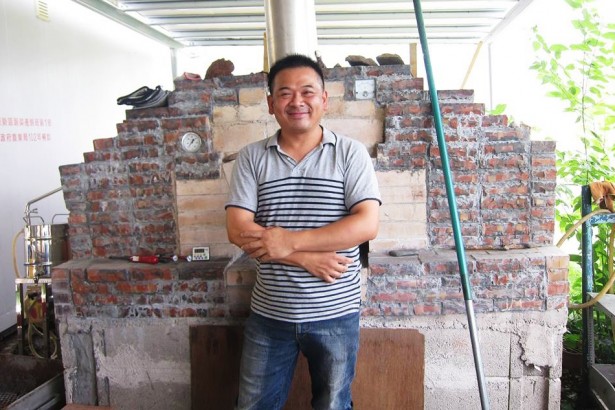
Zhang Shanfeng of Xinshe, Taichung, China offers one-stop agricultural processing services
One-stop agricultural processing by Zhang Shanfeng of Xinshe, Taichung, China
条件筛选