-
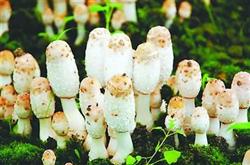
Harvesting Methods and Dried Product Processing Techniques for the Shaggy Mane Mushroom
The shaggy mane mushroom, also known as the shaggy ink cap, is a typical mesophilic variety. When the soil temperature is below 8°C, it cannot fruit normally; when the soil temperature is above 30°C, the mycelial vigor declines, the parasitic fungus Coprinus comatus pest mushroom appears in large numbers, and the shaggy mane crop is nearly lost entirely. By adopting measures to cool down in summer and warm up in winter, shaggy mane mushrooms can be produced year-round, but in summer...
-

A Detailed Guide to Post-Harvest Handling and Processing Methods for Wine Cap Mushroom
Wine cap mushroom, also known as King Stropharia, is a domesticated wild mushroom species, and in recent years there has been a trend of gradual expansion. Its mushrooms have a delicate fragrance, crisp and tender flesh, good palatability, high yield, high selling price, and very considerable economic benefits. However, its fresh products have a short storage time and are not easy to preserve. If not sold fresh in time, huge losses will be caused. In order to ensure that economic benefits are not lost, the salting processing and dried product processing techniques for wine cap mushroom are now introduced. 1. Salting processing of wine cap mushroom. 1. Harvesting. The mushroom bodies of wine cap mushroom used for salted export should be at 6-7
-
Detailed Explanation of Harvesting and Processing Techniques for Nameko Mushrooms
7-10 days after the mushroom buds emerge, when the stems are 4-5 cm long and the caps are about to open, they should be harvested promptly. The harvested mushrooms should immediately have their aged root portions cut off, then be sold fresh or sent to a factory to be made into canned products or processed into brine mushrooms. If processing into brine mushrooms, a 10% salt solution can be used; after bringing it to a boil, pour in the fresh mushrooms and stir them up and down for about 10 minutes. When the pot is boiling and rolling, quickly scoop them out, place them in cold water to cool, and finally pickle them in a saturated salt solution of 20 degrees Baume. Alternatively, use salt equal to 35% of the mushroom weight to layer mushrooms and salt in a jar, one layer of mushrooms and one layer of salt. After filling, sprinkle 2
-
Full process detailed explanation of the processing technology for Baizhi mushroom strips
I. Origin of the name: Baizhi mushroom strips, whose full name is "Siwei Baizhi mushroom strips," are named after the beef tripe-like food. They are made by cutting oyster mushroom caps into long mushroom strips 0.5-1 cm wide, resembling white beef tripe, and the flavor is mildly salty, mildly spicy, mildly sweet, and mildly sour as a ready-to-eat food or convenience food. II. Process flow: rinse oyster mushrooms -> shred and rinse -> color protection and blanching -> cool and fill jars -> pour in broth and seal -> sterilize and cool. III. Basic operating procedure: (1) Shred the caps. Harvest large oyster mushrooms at less than 80% maturity,
-
Detailed Explanation of the Production Process and Processing Methods of Candied Mushrooms
1. Raw material selection: Choose fresh mushrooms with medium-sized caps, natural color, intact shape, and no disease or insect spots as processing raw materials. 2. Pretreatment: ① Brine soaking: Remove attached impurities from the harvested fresh mushrooms and immediately immerse them in 1%-2% salt water for 4-6 hours to increase the firmness of the mushroom bodies. ② Blanching: Pour the cleaned and drained mushroom bodies that have been soaked in brine into boiling water and blanch for 7-9 minutes to destroy enzyme activity and prevent browning of the mushroom bodies. ③ Trimming: In order to make the candied mushrooms neat and attractive,
-
Harvesting Methods and Processing Techniques for the Tea Tree Mushroom
1. Scientific harvesting of the tea tree mushroom. When the color of the cap changes from dark reddish-brown to light flesh-brown and the partial veil has not yet broken, it is the optimal harvest time. If it cannot be sold or processed in time, or if you are unsure about the harvest timing, it should be harvested early. 2. Scientific processing and storage of the tea tree mushroom. After harvesting, the tea tree mushroom can be sold directly or sold after fresh-keeping, or sold after sun-drying or oven-drying. Dried tea tree mushrooms easily absorb moisture and become damp again, so they must be sealed in plastic bags for storage and kept in a dry place. At the same time, dried mushroom caps break easily and stems snap easily
-
Processing Methods and Technical Points for Candied Lion's Mane Mushroom
1. Material selection and handling. Select fresh lion's mane mushrooms (Hericium erinaceus) with normal shape, white or slightly yellow color, no mold, and no scars or damage as raw materials. Mycelium no more than 0.8 cm and diameter no greater than 5 cm is optimal. After harvesting, cut off the base, remove debris and impurities adhering to the spines, and immediately immerse in 2% saline solution; process as quickly as possible. 2. Blanching. Put clean water in a pot, add an appropriate amount of citric acid, place the lion's mane mushrooms in and boil for 5-6 minutes, then scoop out and quickly rinse with cold water. For larger specimens, cut them appropriately to make the mushroom bodies uniform
-
Detailed Explanation of Low-Sugar Processing Technology for Candied Lion's Mane Mushroom
This product is a new type of candied mushroom, and also a health food with a unique flavor suitable for all ages. The process is as follows: (1) Select fresh mushrooms of a variety with smaller caps, plump fruiting bodies, at 80-90% maturity, with normal color, no off-odor, no damage, and no pests or diseases, as raw material. Immediately put the selected raw material into a 0.03% sodium sulfite solution, and use a stainless steel knife to remove the browned part at the lower part of the cap, so that the lengths are uniform and the sizes are even. (2) Put the trimmed fresh mushrooms into boiling water, heat and boil for 1-3 min, remove them and immediately put them into cold water to cool
-
Detailed Explanation of 8 Edible Mushroom Food Processing Technologies
Fresh edible mushrooms have a high moisture content and cannot be stored for long after harvest; they soon open their caps, deteriorate, and become moldy, reducing or even losing their commercial value. At present, most edible mushrooms are sold fresh or as dried products, with very few deep-processed products, such as canned goods, which account for only 4%. In the future, people's requirements for the quality and varieties of edible mushrooms will become increasingly higher. Carrying out deep processing of edible mushrooms and developing a series of products is currently the main way to broaden the production field and sales market. 1. Mushroom preserves 1. Raw material selection: Select fresh mushrooms with medium-sized caps, natural color, intact mushroom shape, and no disease or insect spots as
-
Detailed Explanation of Key Points of Edible Mushroom Drying and Processing Technology
Almost all edible mushrooms, such as shiitake, wood ear, enoki mushroom, lion's mane, straw mushroom, oyster mushroom, button mushroom, silver ear, etc., can be made into dried products. Drying and processing can be divided into sun drying, oven drying, and hot air drying. Spring has more rainy days, so shiitake and wood ear are often mainly oven-dried; in summer and autumn, with scorching sun and high temperatures, which is the straw mushroom production season, sun drying is often the main method. Hot air drying is not affected by environmental conditions, can be carried out in all four seasons, is suitable for various mushrooms, and produces good drying quality. The quality of drying is also closely related to mushroom harvesting, grading, stem trimming, cleaning, and slicing.
条件筛选