-
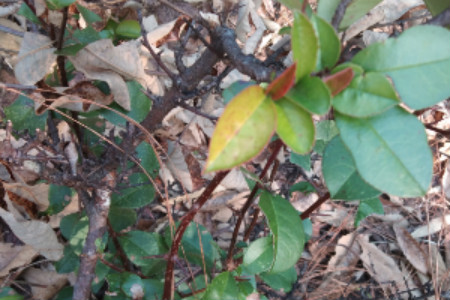
How to process freshly picked Rosa laevigata (Cherokee rose) fruit? A detailed processing method guide
How should freshly picked Rosa laevigata fruit be processed? Processing methods
-

Detailed Explanation of Tulip Harvesting and Processing Techniques
Harvest in late December of the year of planting. Dig out the underground part, pick off the tubers, and wash away the soil. Steam in a steamer until steam is everywhere, and after about 15 min, test the tubers with a finger; if no water comes out and there is no sizzling sound, the tubers are steamed through. Take them out, spread them on a bamboo mat, and sun-dry them. Generally, 667 sq m yields 75-100 kg of dried product.
-
What are the processing methods for geraniums?
Processing of geraniums: Potted geraniums are suitable for placement in public places such as halls, dining cars, and conference venues, creating a warm and lively atmosphere. They are even better for accenting home balconies, windowsills, and desks, blooming continuously all year round and presenting a thriving scene. Planted in scattered groups or arranged in the open ground, decorating rock gardens, flower beds, or flower borders, they can also show off the beauty of the geranium's plant form and color.
-
Harvesting, Processing Methods and Medicinal Uses of Mountain Lily
Harvesting and processing: In September to October, after the aboveground stems and leaves of the lily have withered, dig up the bulbs, remove the residual stems and fibrous roots, and peel off the scales (first cut off the basal plate of the bulb, and the scales will fall off naturally). Wash clean of soil, then boil in boiling water or steam in a steamer for 3 to 5 minutes, until the edges of the scales are soft while the center still retains some rawness, or until extremely small cracks appear on the back; then remove quickly. If there is mucus, rinse with clean water, spread out immediately on a reed mat and sun-dry until completely dry. In case of rainy weather, they may be dried on a heated kang or by artificial drying; when drying by heat, they need to be turned so as to be heated evenly. When turning, lift them with both hands and flip them over quickly to prevent them from forming into pasty clumps. When they are 70 to 80 percent dry, they may be fumigated with sulfur and then sun-dried until fully dry.
-
A Detailed Guide to Lily Storage Methods and Processing Techniques
I. Storage. Freshly harvested lilies have a high moisture content and vigorous respiration; if not stored properly, they easily become moldy, which affects their medicinal efficacy and value. If lilies are stored in fine sand, they can be kept both fresh and of good quality. 1. Raw material preparation before storage: Freshly harvested lilies should be placed in a shaded area, avoiding direct sunlight, to prevent the outer scales from discoloring and losing water. After digging out the lily bulbs, soil, stems and fibrous roots should be removed promptly, then complete lily bulbs that are white in color, large, fresh and free of disease spots should be selected and stored by grade. 2. Key operating points of the sand storage method: ① In a cool room or basement
-
Detailed Explanation of Key Processing Techniques for Lanzhou Lily
Lanzhou lily is a perennial herbaceous plant of the Liliaceae family, with a long history of cultivation in Lanzhou. Because its underground stem consists of dozens of scale leaves embracing each other, with the characteristic of a hundred pieces combining into one, it implies the meanings of "everything going as wished" and "a harmonious union lasting a hundred years," and it also has medicinal effects such as strengthening the stomach, tonifying deficiency, resolving phlegm, and nourishing yin, so it is deeply loved by consumers. Lanzhou lily is drought-tolerant and suitable for planting in high-cold mountainous areas above 2000 m in altitude. In producing areas with a cool climate, large temperature differences between day and night, and few pests and diseases, the lily accumulates more dry matter, and its color
-
Processing Methods and Technical Key Points for Lily Beverage
Process flow: sorting, separating scales → washing → draining, weighing → pulping → pretreatment → refining → coarse filtration, standing for sedimentation → drawing off clear liquid → blending → fine filtration → high-pressure homogenization → degassing → filling → can sealing → high-pressure sterilization → holding → wiping cans → inspection → labeling → warehousing. Key points of process operation: (1) Sorting, separating scales: sort the purchased fresh lilies, separate the scales, and remove rotten scales, stem bases and other impurities. (2) Washing: pour the sorted lily scales into a water tank for washing to remove mud, sand and other impurities,
-
Detailed Explanation of the Processing Technology and Production Method of Lily Powder
Processing fresh lilies into lily powder can greatly extend the storage period and also make them convenient to eat. The processing technology is as follows: 1. Grinding into slurry: Remove various impurities from fresh lily heads, wash them clean, put them into a pulping machine, add an appropriate amount of water, and grind into a thick lily slurry. 2. Filtering: Put the thick lily slurry into a cloth bag, place it in clear water in a vat, stir and rinse it, and filter it with a 55--57 mesh sieve or filter cloth until all the slurry juice is filtered out, there is no white juice in the residue, and the filtrate is clear water. 3. Rinsing: Rinse the filtered lily slurry twice with clear water in a vat. Each time
-
Detailed Explanation of the Processing Method and Production Steps of Lily Powder
① Prepare the processing tools first: baskets, winnowing baskets, knives and shovels, basins, stone mills, filter racks, filter cloth, clay jars, water buckets, water ladles, white cloth, drying mats, etc. Wash them clean, free of mud, sand and dust. Whether the powder is white and the yield is high depends on the water; choose clear, pure spring water or well water. Process during consecutive sunny days. ② The processing can be divided into five stages: slicing and washing: peel the lily bulbs into slices, and separate and pack them by outer slices, inner slices, yellow slices, and white slices. White slices (center slices) yield white powder, yellow slices (outer slices) yield yellow powder. Wash off the mud and sand,
-
Processing Methods and Detailed Steps for Dried Lily Bulbs
Selection of raw materials: Choose lily bulbs that are pure white, large-scaled, and tightly packed; discard those with "thousand-head" type (i.e., bulbs that are small and numerous, with small scales that are packed but not tight), insect damage, yellow spots, rot, or reddened outer skin; use a sharp knife to remove the fibrous roots, remove soil, impurities, and aged outer scales; divide the peeled scales into three grades: large, medium, and small (ratio of large to medium to small is 4:5:1), then rinse the sorted fresh lily material 2-3 times in clean water separately in the order of large, medium, and small. Processing key points: 1. Boiling in water. Wash the lily scales and grade them
条件筛选