-

Fresh Wax Gourds from Xinkou Town, Xiqing District, Tianjin Hit the Market in a Staggered Season
After months of fresh-keeping storage, the wax gourds from Bijia Village, Xinkou Town, Xiqing District, Tianjin, are now being sold in a staggered season, avoiding the peak wax gourd period. It is reported that Bijia Village has a wax gourd planting area of more than 400 mu and an annual output of more than 7 million jin. The "Qinmei" wax gourds it grows have not only won the "Jinnong Award" for high-quality agricultural products, but are also equipped with QR codes, making it convenient for residents to learn about the growing and cultivation process of the wax gourds and ensuring their quality.
-
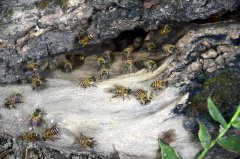
What is the whole process of how bees collect nectar?
With the rise of the health-preservation trend, eating natural honey has become a global craze, but people know only a little about honey and bee ecology. Wu Shuhui, an assistant researcher in the Botanical Garden Division of the Taiwan Forestry Research Institute who is in charge of curation, said that many people love eating honey but do not know where honey comes from.
-
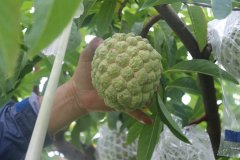
Where is the place of origin of sugar apple? Nutritional value, dietary taboos and preservation methods
Do you know the fruit sugar apple? Where did this fruit originate, and what are the nutritional values of sugar apple? Origin of sugar apple: The place of origin of the sugar apple cannot be determined with certainty; tropical America is where it was planted earlier and more widely. In the 16th century AD, it was introduced from South America to India, and by the early 17th century it was widely planted in India and southern China, and also spread to Australia, Polynesia, Hawaii, tropical America, Egypt and Palestine. According to documentary records, Taiwan, China's sugar apple was introduced during the Dutch occupation of Taiwan, and has been cultivated in Taiwan, China for more than 300 years.
-
A Detailed Guide to the Correct Methods for Storing and Preserving Ginger
Ginger is the fresh rhizome of the perennial herbaceous plant ginger (Zingiber officinale Roscoe) of the Zingiberaceae family, growing 40-100 cm tall. Its other names include ginger root, bailayun, gouzhuangzhi, yindixin, yanliangxiaozi, fresh ginger, and honey-roasted ginger. The rhizome (dried ginger), the cork layer (ginger peel)
-
Bamboo Shoot Preservation and Storage Techniques: How to Extend Shelf Life Without Spoilage
Bamboo shoots are the young shoots of bamboo, also known as bamboo sprouts. Bamboo is a perennial evergreen herbaceous plant, and the edible portion consists of the newly emerged, tender, plump, short and sturdy shoots or rhizomes. Bamboo originated in China, has many types, strong adaptability and an extremely wide distribution. Worldwide there are 30 genera and 550 species, growing abundantly in tropical
-
What are the technical measures for promoting flowering and preserving fruit in pomelo?
1. Promoting flowering: To make the fruit tree bloom early, in the year before fruiting, the tree's vegetative growth must be controlled, the growth center must be shifted toward reproductive growth, and flower bud differentiation must be promoted: 1. Control the vigorous growth of vertical roots, cultivate lateral roots and horizontal roots to grow abundantly, and promote flower bud differentiation;
-
How to raise earthworms in winter? Master the techniques of heat preservation and freeze protection
Summary During breeding, cut off the shade around the worm bed. After 10 a.m. on sunny days, reduce the covering to a thinner level so sunlight can reach the material bed, then cover it again after 4 p.m. In winter, heat preservation measures need to be taken. You can use double-layer film with 1 layer of straw curtain sandwiched in between, which is 6degC warmer than covering with 1 layer of thin
-
How to Raise Pigs in Winter? Key Points of Winter Pig Farming Techniques
Summary Heat preservation: When raising pigs in winter, be sure to keep them warm. You can appropriately increase the stocking density, add some straw curtains to the pigpen, and spread some straw mats on the ground. Ventilation: Although winter is relatively cold, proper ventilation is still needed, and exhaust fans can be used. Disease prevention: Usually
-
How to Do a Good Job in Overwintering and Seed Stock Preservation for Tilapia in Earthen Pond Aquaculture
Tilapia, commonly known as: African crucian carp, non-crucian, Vietnamese fish, Nanyang crucian, etc. It originally referred to the fish species of the genus Oreochromis with Mozambique as the type locality: Mozambique mouthbrooder (scientific name: Oreochromis mossambicus). It is now the collective common name for several fish species of the genera Oreochromis and Sarotherodon in the family Cichlidae; in English they are collectively called Tilapia. It is now a freshwater aquaculture fish that is a key research and breeding target of the world's aquaculture industry, and is hailed as one of the main future sources of animal protein. It usually lives in freshwater, can also live in salt water with different salinity levels, and can also survive in shallow water in lakes, rivers, and ponds. It has strong adaptability, can reproduce even in small water areas, can even grow in rice fields, and has extremely strong adaptability to water with low dissolved oxygen. The vast majority of tilapia are omnivorous, often eating aquatic plants and debris.</p><p></p><p>There are many methods for overwintering and seed stock preservation of tilapia, but some are limited by resource conditions, with no hot springs or no warm drainage, and some have complex equipment and high investment. In order to explore a mass-oriented seed stock preservation method with low investment and simple equipment. Its main facilities and techniques are: </p><p>1. Construction of the overwintering pond: The tilapia overwintering pond should be built in a low-lying area that is sheltered from the wind and faces the sun, close to a river. In a place with solid soil, dig an earthen pond 4 m to 5 m long, 1 m to 2 m wide, and 2 m to 3 m deep. Water from the river channel can gradually seep into the earthen pond through the gaps in the soil layer, keeping the pond water fresh and the oxygen content sufficient. </p><p>2. Heat preservation facilities: Build a bamboo frame on the pond surface sloping toward the south, and cover the bamboo frame with two layers of plastic film, like a greenhouse for growing vegetable seedlings. The height between the pond surface and the film should be kept at about 0.1 m to 0.8 m; if the space is too large, it is not easy to keep warm. When the northwest wind blows, windbreak walls made of reeds or straw curtains should be made on the west and north sides of the overwintering pond. In frost and snow weather, straw curtains should be added over the film. If a cold wave invades and the temperature drops, 2 to 4 electric lights of 100 W to 200 W should be hung inside the plastic shed to raise the water temperature. In short, the pond water temperature should be kept at around 15°C to 16°C so that the fingerlings can safely pass the winter. </p><p>3. Putting fingerlings into the pond: Before the fingerlings are put into the pond, the overwintering pond should be filled with water and soaked for 3 days to 5 days to eliminate the effect of pollutants on the pond water. The time for putting fingerlings into the pond is generally in early November, and the water temperature should preferably be around 16°C; if too late, they are prone to cold damage. Before the fingerlings are put into the pond, they should be soaked in 4% salt water for 3 minutes to 5 minutes to disinfect the fish body and prevent infectious diseases. The density of fingerlings is 5 kg to 7.5 kg per cubic meter. </p><p>4. Overwintering management: During the entire overwintering period, specially assigned personnel should be on duty for management. At the same time, attention should be paid to changes in water temperature, changes in water quality, and the dynamics of the fish. </p><p>(1) Feeding: During the overwintering period, a small amount of feeding may be done, generally once every 10 days to 15 days, with the feeding amount at about 1% of the weight of the overwintering fingerlings, but when the water temperature exceeds 16°C, they can be fed once a day. Feed includes sugar dregs, rapeseed cake, etc. It should also be flexibly controlled according to the feeding situation so that the fish eat enough and eat well, in order to increase the overwintering survival rate and reduce losses.</p><p>(2) Lighting: Throughout the winter, as long as it is sunny, remove the straw curtains covering the heat preservation shed from 9:00 to 15:00 to let in light and raise the temperature. On snowy days, the snow on the frame should be swept off promptly to prevent the frame from being crushed and collapsing.</p><p>(3) Prevention and treatment of fish diseases: The overwintering period of tilapia is relatively long, and attention should be paid to observing whether there is fish disease. Once discovered, it should be treated promptly. During the overwintering period, saprolegniasis is the most common, mostly occurring after entering the pond and before leaving the pond. Saprolegniasis is a common disease caused by the attachment of fungi such as Saprolegnia and Pythium. With the naked eye, a grayish-white, soft, cotton-wool-like substance attached to the fish body can be observed. Injured fish bodies are highly susceptible to infection, and it occurs more frequently in winter and early spring. For treatment, alkaline green at a concentration of 0.1 mg to 0.2 mg/L or a copper sulfate solution at a concentration of 1 mg/L can be splashed over the whole pond, and it is effective. If pond oxygen deficiency occurs and fish gasp at the surface, more fresh water can be exchanged. </p>
-
What are the essential things to pay attention to when raising rabbits in winter?
Heat preservation. In a low-temperature environment, rabbits lose a great deal of heat and grow slowly, which affects their development and reproduction. Therefore, the rabbit hutch should be well maintained, windows sealed tightly, and cracks plugged to keep the hutch warm. Supplementary greens. Feeding green, succulent feed in winter can boost rabbits' appetite and promote their growth, development and reproduction.
条件筛选