-

Big price differences in tea rolling machines? Key points for buying and subsidy facts you need to know
The tea rolling machine is a key piece of equipment for preliminary tea processing, and prices vary considerably depending on the model, brand and capacity. This article explains the role of the rolling machine, the factors affecting price and points to note when buying, to help you choose a suitable tea processing machine.
-
What preliminary preparations are needed for raising sika deer?
The sika deer is an animal whose entire body is a treasure, and the profits from farming sika deer are very high. Nowadays, many farms want to start raising sika deer. What preliminary work is involved in raising sika deer? 1. Site selection. The deer farm should be chosen in a place with relatively high terrain, dry
-
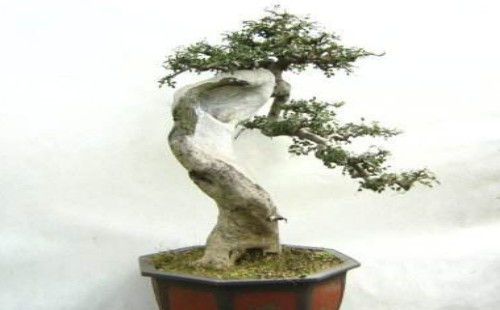
A Detailed Guide to the Preliminary Shaping Methods for Tree-Stump Bonsai
Tree-stump bonsai often adopt different shaping techniques depending on the tree species, and the resulting bonsai effects vary greatly as well. Although the shaping methods are not entirely the same, the finished tree-stump bonsai will each have their own merits because of their different forms. However, before making a tree-stump bonsai, you first need to dig up the stump.
-
Draft Act Governing the Management and Guidance of Farmland Factories Passes Preliminary Review; Feedback Levy Ratio Pending Negotiation
The draft amendment to certain articles of the "Act Governing the Management and Guidance of Factories," which is closely related to farmland factories, was deliberated on the 6th by the Economics Committee of the Legislative Yuan. Several amended articles were passed in accordance with the Executive Yuan version, while some articles were sent to cross-party negotiation. One of the key points of deliberation was when farmland is rezoned as land for a specified business purpose
-
Preliminary Processing Methods and Key Technical Points for Raw Rabbit Hides
After tanning, rabbit hides can be made into collars, hats, children's coats and clothing, etc. They are both lightweight and attractive, and are very popular. Below are some commonly used preliminary processing methods for raw rabbit hides. When selecting rabbit hides, the first step in deciding whether to keep the hide of a slaughtered rabbit is to look and then to feel. First, look at the size of the rabbit and whether the fur is glossy. Hides from malnourished or diseased rabbits should not be used; hides with sparse, messy fur should not be used; hides from rabbits that are too small should not be used. Choose hides whose coat hair is glossy. Second, feel whether the hair sheds and whether the hide is thick and feels good. If the hair sheds,
-
A Preliminary Study on the Small-Water-Body Aquaculture Technique for the Liaodong sculpin
The sculpin, known by local folk names such as "xiagaizi," "xiageda," "xiapangzi," and "datouyu." It is distributed in the Dandong Yalu River and its tributaries, the upper reaches of the Biliu River, the upper reaches of the Hun River, and other waters. In the first half of 2002, Liu Yuanzhi, a farmer from Shalizhai in Fengcheng, boldly contracted the village's "drought-resistant large-mouth well," which had been built during the period of "vigorously carrying out farmland capital construction." It had been abandoned and overgrown for many years, with a shallow pit and little water, covering an area of 6 mu. Based on his family's financial capacity, he invested 4,000 yuan that year, excavated and cleared a small fish pond with a water surface of 2 mu
-
Preliminary Report on the Results of Substrate Replacement Cultivation Trials of Gastrodia elata
Artificial cultivation of Gastrodia elata mainly uses the trunks of broadleaf trees such as oak, birch, hazel, elm, willow, jujube, pagoda tree, and wild cherry, and requires a diameter of more than 5 cm. For a long time, this has caused severe damage to forest resources, which are now on the verge of exhaustion. Therefore, research on substrate replacement cultivation techniques for Gastrodia elata has gradually become a hot topic. There are already precedents for substrate replacement cultivation using corn cobs, shrub stems, corn cobs, corn pith, branches, and straw, but no reports on the cultivation of Gastrodia elata with cottonseed hulls have been seen. For this reason, this trial was conducted, and the preliminary results are reported as follows: 1 Materials and
-
A Preliminary Study on the Prevention Methods of Two Abnormal Garlic Conditions in Cangshan Garlic
Cangshan garlic is renowned worldwide for its large bulbs, thin skins, pure white and neatly arranged cloves, and its pungent, rich flavor, with excellent qualities such as aroma, pungency, and stickiness. In recent years, due to improper planting and management methods, two abnormal garlic conditions have appeared in Cangshan garlic production. One is that the garlic simultaneously produces small garlic leaves (commonly known as "little braids") when bolting, causing difficulties during the harvest of garlic scapes and affecting the yield and quality of garlic scapes. This condition accounts for 5%-10% of the total garlic. The causes are mainly two: one is excessive nitrogen fertilizer, and the other is the effect of low temperature.
-
Preliminary Study on Propagation Methods and Technical Key Points of Taxus wallichiana var. mairei
Taxus wallichiana var. mairei, also known as beautiful yew, shan gongzi, and hailuo pine, is a rare evergreen tree under first-class national protection. It has a graceful form, with a purplish-red, straight trunk, and when the seeds mature they turn red, with a vividly colorful aril. It has strong regional adaptability and can be planted anywhere south of Shaanxi. This tree species prefers a humid and cool climate environment, and is suitable for growing in moist, loose, well-drained acidic to slightly acidic soil. It is a semi-shade-tolerant species; seedlings tolerate shade and grow slowly, with growth increasing after 3 years. Because it also tolerates poor soil and has strong resistance to pests and diseases, it is the preferred species for reforestation on mountain land in East China after pine species
-
Preliminary Report on the Effects of Applying Kebao Plant Super-Vitamin to Cotton
1 Materials and Methods 1.1 Test material Kebao Plant Super-Vitamin, produced and supplied by Zhejiang Kebao Biotechnology Co., Ltd.; the test variety was Xiangza Cotton No. 2. 1.2 Test site Dasha Lake Farm, Honghu City, Hubei Province. The soil texture was sandy loam; spring plowing and spring irrigation were carried out, and before land preparation, 300 kg/hm2 of 52% diammonium phosphate and 75 kg/hm2 of 46% urea were broadcast.
条件筛选