-
Symptoms and Control Methods of Mango Powdery Mildew
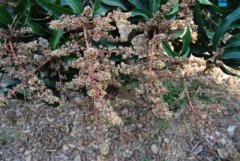
What do the symptoms of mango powdery mildew look like? What are the ecological causes of its occurrence? How should it be controlled, and what are the control methods? Symptoms: This disease can occur on mango inflorescences, young leaves, young fruit and young stems. Generally, a powdery fungal growth can be seen on the affected parts. On young stems and leaves, small lesions in the early stage are surrounded by a brown ring; later the lesions merge into large white patches, which then gradually turn blue-purple. Severely affected young stems and leaves often become deformed; when the lesions continue to develop and encircle the flower stalk, the small fruit on it will begin to turn yellow and drop, so a severely affected mango tree will bear no fruit at all. In the later stage of the disease, the fungal growth at the lesions turns grayish-black. After fruit that has previously been affected develops and grows, a purple network pattern appears on the surface, affecting the commercial value of the fruit.
-

How to Grow Chestnut Pumpkin: Do Pumpkins Need Pollination? Controlling Pumpkin Powdery Mildew
To grow chestnut pumpkin, the seeds must first be sterilized, then kept warm to promote sprouting, then placed in a seedling pot filled with potting soil. Once the cotyledons and two true leaves have grown, they can be transplanted. They sprout in one week; plant them into a seedling pot, and after another week or so, transplant them into
-
A Detailed Explanation of Tomato Powdery Mildew Symptoms and Key Control Techniques
Tomato is a nutrient-rich vegetable and is grown everywhere. During tomato cultivation, diseases can strike due to various reasons or climatic conditions, and powdery mildew is a common one. So what symptoms does tomato powdery mildew have? What are the key control techniques? 1. Tomato
-
Tomato Powdery Mildew: Symptoms, Identification and Key Points of Control Techniques Explained
The tomato is a common vegetable that can be eaten raw or cooked, and can also be processed into foods such as tomato paste and tomato juice. Tomatoes are grown all over our country, prefer to grow in warm places, and are not very demanding about soil. However, if management is improper, it is very easy
-
Which pesticides are effective for controlling powdery mildew?
Powdery mildew is a common disease of many vegetables and melons, but beginner growers may not know how to deal with it. Today let us take a look at which pesticides to use for powdery mildew! 1. Which pesticides to use for powdery mildew When powdery mildew appears on plants, you need to figure out the specific cause
-
Identification of Clover Powdery Mildew Symptoms and Introduction to Control Methods
Clover is actually quite common in our daily lives, and it has high ornamental value. In China it is generally used for lawn construction in landscaping. Clover has strong vitality and very low soil requirements, so it is one of the more easily surviving plants.
-
A Detailed Introduction to Fennel Powdery Mildew and Its Control Measures
Both large fennel and small fennel are commonly used seasonings, and are essential when cooking fish, stewing meat, and making braised foods. Because they can remove the unpleasant odor from meat and restore its fragrance, they are called "fennel." Large fennel is star anise, whose scientific name is star anise (Illicium verum). The seed fruit of small fennel is a seasoning, while
-
Symptom Identification and Control Methods for Powdery Mildew on Kidney Beans
Kidney beans are suitable for cultivation in temperate and tropical high-altitude areas. They are relatively cold-tolerant and light-loving, belonging to cross-pollinated common beans and short-day crops. Kidney beans have a well-developed root system, green leaves that are alternate and heart-shaped, and flowers that are papilionaceous, arranged in racemes, with pedicels 15-18 cm long. Growth of kidney beans
-
What are the control methods for powdery mildew on melons?
I think many people have eaten melon. It is a kind of melon that looks a bit like a pumpkin. It does not belong to vegetables, but should belong to a fruit. There are many people growing melon on the market, because melon is not only tasty but also relatively cheap. Therefore
-
Control Methods and Technical Key Points for Mango Powdery Mildew
Mango is prone to powdery mildew during the flowering stage, young fruit stage and tender leaf stage. If not controlled in time, it will cause massive fruit drop and reduce yield. Mango powdery mildew is a fungal disease that mainly affects inflorescences, young fruits and tender leaves. On affected organs, scattered small white moldy patches first appear,
条件筛选