-

How is bee pollination carried out for tomato cultivation in greenhouses?
How is bee pollination used for tomato cultivation in greenhouses? Fund project: Qinghai Provincial Department of Science and Technology "Agricultural Science and Technology Achievement Transformation and Extension Program - Experimental Demonstration and Extension of New Space Vegetable Varieties" project (project number: 2012-N-507)...
-

-
Bees die en masse in Puli, pollen contaminated with pesticides poisons the ecosystem, melons and fruits left without bee pollination
Bee Mass Death 0826"The Silent Summer of Puli, pollen contaminated with pesticides poisons the ecosystem, melons and fruits left without bee pollination
-
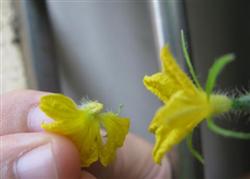
Why can cucumber pollination increase yield?
Introduction: Cucumber pollination can increase yield! Cucumber is a monoecious vegetable. On each vine, every 3 to 4 nodes produce one female flower, and between the female flowers there is a cluster of male flowers. (10 to 12) flowers. When the female and male flowers are open, select mature male flowers to pollinate the female flowers. After pollination, keep 2 to 3 male flowers near the female flower to ensure full pollination...
-
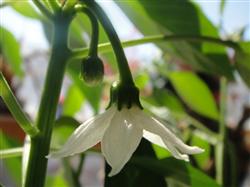
What is the suitable temperature for flowering and pollination in pepper cultivation?
What temperature is suitable for flowering and pollination in peppers? Please give an introduction. The suitable temperature for flowering and pollination is 20 to 27°C; below 15°C or above 35°C is unfavorable for pollination and fertilization (it affects pollen germination), and easily causes flower and fruit drop. Therefore, when cultivating peppers in high-temperature seasons such as summer, especially in weather with temperatures exceeding 3...
-
What are the benefits of using bumblebees for tomato pollination?
Using bumblebees for tomato pollination
-
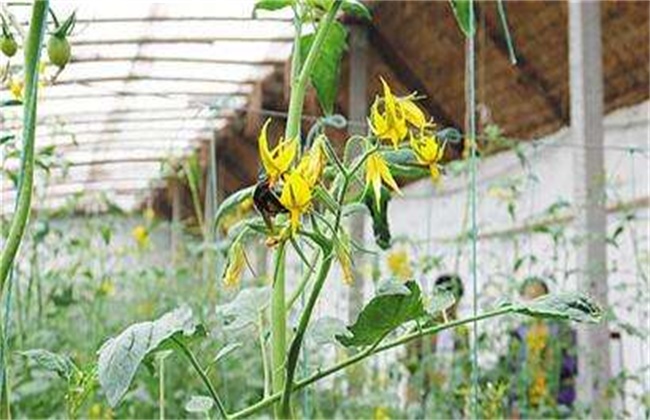
What are the precautions for bumblebee pollination in winter?
Precautions for using bumblebees for pollination in winter
-
How is artificial supplementary pollination carried out for dawn redwood (Metasequoia glyptostroboides)?
The artificial supplementary pollination method for dawn redwood (Metasequoia glyptostroboides) is: the dawn redwood has unisexual flowers and is monoecious; when the male cones turn from green to yellow, select individual trees that are robust and bear many inflorescences, pick inflorescences with branches and cultivate them indoors to collect pollen. Cut the flowering branches into lengths of about 20 cm, whittle the base into a straight cross-sectional cut, tie every 20 to 30 branches into 1 bundle, align the bases of the branches, attach 1 ball of absorbent cotton soaked in nutrient solution to the cut surface of the branches, wrap the outside of the cotton ball with plastic film (to prevent the nutrient solution from evaporating), hang the bundled inflorescences indoors, lay white glossy
-
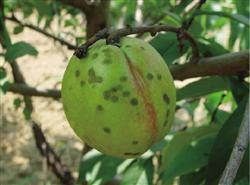
What measures are there for supplementary pollination of peach trees
Peach scab, also known as black spot, is one of the common diseases of peach trees. When a peach tree is affected, black spots appear on the surface of the diseased fruit and cracking may even occur, seriously affecting its commercial value. 1. Symptoms of damage: It mainly damages the fruit, followed by the branches and leaves. When the fruit is affected, small brown round spots first appear, and then gradually...
-
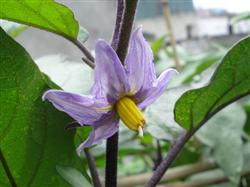
How to do cross-pollination in eggplant? A detailed explanation of the management technique key points
The most suitable temperature for eggplant flowering and fruiting is 25-30°C. Below 17°C or above 40°C, fertilization and fruiting cannot occur. The flowers open at around 6 a.m., and the anthers begin to split after 7 a.m., so the suitable pollination time each day is after 8 o'clock. For cross-pollination, on the afternoon of the day before the female parent's flower opens, select buds whose corolla has emerged to 1/2 of the bud, light purple, and not yet open, and emasculate them. Emasculation must be thorough to avoid false hybrids. On the next day, when the male parent's flowers open, collect pollen (pollination with pollen from flowers opening on the same day gives the highest fruit-setting rate), and smear the pollen onto the stigma of the female parent. The paired eggplant (2 fruits) and the four-door fruit (1 fruit) should be selected for crossing. After the crossed fruit sets, all other buds should be removed. According to experiments, repeated pollination can increase the seed yield of F1 (i.e., the first hybrid generation) by 10%.
条件筛选