-
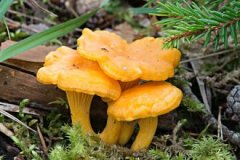
Are chanterelles poisonous? Toxicity level and price per jin explained
What kind of mushroom is the chanterelle? Some people say it is poisonous, so is it actually poisonous or not? It does have a certain level of toxicity, but at the same time it is also an edible mushroom, and people with itchy skin should avoid it. In the wild mushroom trading market, chanterelles currently cost 100 yuan per kilogram
-
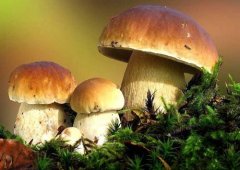
Is the porcini mushroom poisonous? Why does eating porcini cause poisoning, and how much does fresh porcini cost per jin?
Porcini mushrooms are mainly produced in Yunnan, so the price of porcini in Yunnan is somewhat cheaper than porcini from other places; the market price of Yunnan porcini is around 25 to 50 yuan per kilogram. As for the claim that porcini is poisonous, what is your view? If it really is toxic,
-
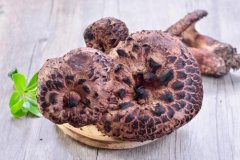
Is the tiger palm mushroom poisonous or bitter? What is the market price per jin?
Do you know the tiger palm mushroom? The nutritional value of this mushroom is extremely high. In our country it is mainly produced in the Chuxiong Yi Autonomous Prefecture and the Lijiang Naxi Autonomous County. This mushroom currently cannot be artificially cultivated, because its growing conditions are very demanding. Every year from August to September it grows deep in the grass on high mountain cliffs.
-
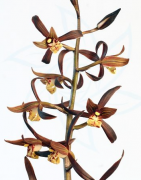
Is Golden-mouth Cymbidium sinense good and how is it? Is Golden-mouth Cymbidium sinense a precious flower? Is the fragrance of Golden-mouth Cymbidium sinense poisonous?
Golden-mouth Cymbidium sinense is a type of Cymbidium sinense. Its name comes from the fact that the tip of its leaves is golden yellow, so it is called Golden-mouth Cymbidium sinense. Its fragrance is not poisonous. Its fragrance is rather strong, and some people feel dizzy after smelling it, possibly because
-

Is the bird of paradise poisonous? Potted cultivation methods and precautions
The bird of paradise likes to grow in places with plenty of sunlight, and it is not demanding about temperature, with strong adaptability. Especially when it blooms, its flowers are a perfect combination of blue petals and yellow sepals, making people like it even more. Growing such a beautiful plant is
-
Is the Spring Grass (Albuca) Poisonous? A Detailed Guide to Propagating Spring Grass
When reading posts online, I have seen many people who grow spring grass (Albuca) experience some unpleasant sensations after accidentally eating it, so I believe most people will have the same question as I do: does spring grass have a certain level of toxicity? So what
-
Is the Bergeranthus multiceps succulent poisonous? Detailed explanation of watering methods and techniques
Watering is a very important part of the succulent growing process, because succulents themselves contain a large amount of water and are very drought-tolerant. Once they are watered too much, it is easy to cause a series of problems, while watering too little may also cause the succulent to shrivel, so watering is a task
-
Is the Red Moon Jellyfish Poisonous? Breeding Methods and Characteristics
Summary First prepare seawater; after preparation it must sit for 24-48 hours before it can be used for the Red Moon Jellyfish. After that, change about 1/5 of the seawater each week, clean the particles on the filter cotton every 2-3 days, feed once every 2-3 days, and routinely observe the water quality to prevent bacteria from breeding. When it comes to jellyfish, surely
-
How to keep freshwater jellyfish (Craspedacusta)? Are they poisonous? Explained clearly in one article
Summary Environment: Add seawater to the aquarium; for natural seawater, a jellyfish protectant needs to be added, and it should be left to settle for about 24 hours before use. For artificial seawater, add artificial sea salt to purified water at a ratio of 1:0.032; seawater salinity is generally 3.5%. Management: Starting from the 2nd day after entering the tank
-
Where do poisonous mushrooms generally grow?
There are relatively many species of poisonous mushrooms in China, and they are widely distributed. More than 10 species can cause severe poisoning, while most poisonous mushrooms have low toxicity and cause mild poisoning symptoms. Where are the locations of poisonous mushrooms? 1. Locations of poisonous mushrooms. Poisonous mushrooms generally grow in woodland, on ground with decaying organic matter such as weeds, and on the dung of livestock such as cattle and horses. Most prefer dark and damp environments. There are about 100 species of poisonous mushrooms in China, and different varieties have different growing locations.
条件筛选