-

-
-
-
-
-
What kind of growing environment is suitable for reeds
"Thick grow the reeds, the white dew turns to frost." The jianjia described in the Classic of Poetry is the reed. The reed is a tall perennial aquatic or wetland grass, generally common beside irrigation ditches and on riverbank swamps, and it grows all over the world. The reed's stems are upright, the plants are tall, swaying in the wind with a wild charm.
-

Can Wild Rhododendron molle Be Transplanted? Transplanting Methods and Precautions
This flower looks very beautiful growing in the wild, so many friends want to know whether it can be moved into the home. Actually, it can, and the process is not difficult either! The specific operation time is generally chosen from November to April of the following year. First, we need to cut its roots and branches, removing all the old and diseased parts, and then prepare its potting soil in a ratio of red soil : leaf mold : sandy soil = 6:2:1. After that, put part of the potting soil into the pot, fix the plant in the center of the pot, and finally fill in the soil, firm it down, and water it thoroughly.
-
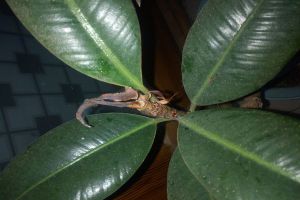
How to grow a rubber plant (Ficus elastica) so it grows thick? Detailed care tips
Many plant lovers worry that their rubber plant is rather thin and do not know how to make it grow thick. In fact, the method is very simple: we can pinch it back appropriately by pinching off the topmost branch with our fingers, and we can also prune its semi-woody parts where the buds are densely packed. These methods can all make it grow thicker and sturdier.
-
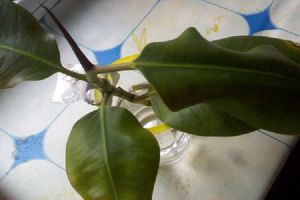
What to Do If Your Rubber Plant Grows Too Tall? Learn the Correct Way to Handle It
For most plants, growing tall is a good thing, but sometimes when plants that shouldn't naturally grow tall do so, it's not such a good thing. For example, the rubber plant (Ficus elastica) can sometimes grow very, very tall, so what should you do then? We can simply cut it short from the top by pruning off the branches and leaves at the top, or we can pinch out its growing tips to control its growth, but the most important thing is to reduce the amount of fertilizer applied, so as to directly eliminate the possibility of it growing too tall through its nutrient supply.
-
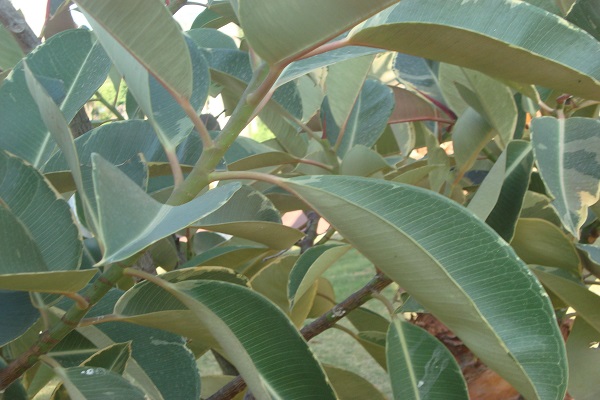
What to do if your rubber plant is growing crooked? A few methods to straighten it up
When we look at rubber plants, we notice that some of them do not grow straight, so what should we do in that case to help them grow better? The first method is to rotate the pot, because the plant itself is phototropic, meaning it grows toward the light, and rotating the pot helps change the direction of growth so it grows upright. The second method is tying, correcting it through external force; the specific method is to take a long, straight wooden stick and tie it tightly to the main trunk with rope so that it grows upright.
条件筛选