Potted plants suitable for the kitchen: absorb cooking fumes for better health and a happier time cooking
The kitchen is an unavoidable part of daily life. Busy in the kitchen every day, grease stains and cooking fumes not only leave people looking sallow and thin, but even the potted plants placed in the kitchen cannot escape their fate, mostly wilting and looking listless. Therefore, to keep the kitchen environment fresher, placing the right potted plants in the kitchen is very important. They can not only absorb cooking fumes and purify the air, but also refresh your senses, and even make the dishes you cook taste better. So, which potted plants are suitable for the kitchen? Below we introduce some potted plants suitable for the kitchen. Let's take a look together.
The kitchen is an unavoidable part of daily life. Busy in the kitchen every day, grease stains and cooking fumes not only leave people looking sallow and thin, but even the potted plants placed in the kitchen cannot escape their fate, mostly wilting and looking listless. Therefore, to keep the kitchen environment fresher, placing the right potted plants in the kitchen is very important. They can not only absorb cooking fumes and purify the air, but also refresh your senses, and even make the dishes you cook taste better. So, which potted plants are suitable for the kitchen? Below we introduce some potted plants suitable for the kitchen. Let's take a look together.
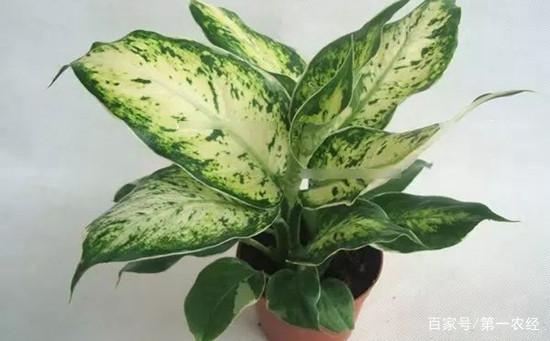
1. Aglaonema 'Silver Queen'
The leaves of Aglaonema 'Silver Queen' have beautiful markings. It truly deserves the name "Queen" - it just grows differently from other plants. Its air-purifying ability is also super strong, so it would be a real loss not to place one in the kitchen. Aglaonema 'Silver Queen' likes humidity and tolerates partial shade. It can also be grown hydroponically; just remember to change the water once a week. Aglaonema 'Silver Queen' likes to grow in humid, semi-shaded environments. Once the air is too dry and sunlight is unobstructed, and if the temperature is above 30°C, the leaf tips of the plant can very easily wither. When cultivating outdoors in summer, pay attention to shading so the light is not too intense, otherwise sunscald can easily occur. When overwintering in a shed or indoors in winter, pay attention to lighting to prevent the leaf color from fading due to insufficient light. Do not let water accumulate in the pot of Aglaonema 'Silver Queen' (watering too frequently), as this easily causes root rot. It is best to water only when you see the potting soil is dry. If the pot is relatively deep, the watering frequency should be reduced even more. In summer, you can appropriately water and spray more to maintain humidity. There is a saying, "whether it lives or dies depends on water," which shows the importance of watering. A lack of water can be made up for, but once roots rot from waterlogging, it is very hard to remedy.
2. Golden Pothos
Golden Pothos is practically a godlike existence; it is everywhere. Yes, today it is here again to absorb cooking fumes. We all know that Golden Pothos likes semi-shaded environments and is especially suitable for the kitchen. That is because it can absorb grease stains and carbon monoxide, and it is also very easy to clean - just wipe it with a damp cloth and it immediately shines. Every time you cook and see the bright green, it feels like life is full of vitality. During care, it can be placed in a ventilated spot, such as the windowsill by the sink, or it can be hung. Golden Pothos prefers moisture, so water it once every 2-3 days. Generally, newly purchased Golden Pothos has an adaptation period of about 1 month in a new environment; yellow leaves at the bottom are normal. However, remember: do not directly peel off yellow or dead leaves. Cut them off from the middle of the petiole. This avoids excessive water loss and extra wounds caused by direct peeling, which can lead to the upper leaves also turning yellow. Although Golden Pothos is not afraid of shade, a very dark environment can also cause yellow leaves, so you can periodically move it to a place with good light. At the same time, it cannot be exposed to harsh sun; excessive exposure under strong light will not only cause yellow leaves and leaf drop, but can also cause the whole plant to die. If the potting soil is too dry or too wet, both conditions can cause metabolic disorders, root damage, and yellow leaves and leaf drop. Too much topdressing can also easily cause root burn, leading to yellowing and withering leaves. You can dilute the fertilizer with water so the nutrients flow away with the water.
3. Spider Plant
Besides Golden Pothos and Aglaonema 'Silver Queen', Spider Plant is also a very good kitchen flower. It can filter out carbon monoxide, sulfur dioxide and other substances, making the air fresher and cleaner. It is practically the "fresh and clean" plant among plants. Spider Plant likes humid and diffused-light environments. You can place it in a ventilated, bright spot and avoid harsh sun. Water once every 2-3 days and spray the leaves. Although Spider Plant is a semi-shade-loving flower, it still needs at least four hours of diffused light every day; otherwise chlorophyll decreases and the leaves turn yellow. If the potting soil has poor air permeability and water permeability, and the potting soil remains waterlogged for a long time without drying, root respiration becomes difficult and the leaves turn yellow. Loosen the soil in time and control moisture. If the pot and soil have not been changed for a long time, the various nutrient elements contained in the potting soil have been exhausted, and the three elements nitrogen, phosphorus and potassium have not been replenished in time. The plant lacks nutrients and the leaves appear thin and yellow. Replace the soil in time with fertile loam and water with alum fertilizer water. If too much fertilizer is applied, exceeding the plant's needs, at first the leaves become shiny and uneven, and later the roots rot and the leaves turn yellow. Stop fertilizing, water more with clear water, or repot and clean the roots and replace with new soil. If watering has long failed to penetrate, the roots lose water and the lower old leaves turn yellow. Water thoroughly and keep the potting soil warm and moist.
4. Small Scallions
Things like small scallions are better planted in the kitchen than in the ground. They can not only be enjoyed as ornamentals, but also picked and tossed into the pot at any time - both attractive and convenient. Small scallions with roots can have the bottom ends cut off and buried directly in soil. Water every 2-3 days and place by the window; they will soon grow out. In your own kitchen, growing a pot of small scallions is not only attractive as a green potted plant for viewing, but can also be eaten as a seasoning for stir-fries - truly endless fun. After sowing small scallions and before they grow leaves, keep the soil moist. When small scallions grow to about 15 cm, ensure sufficient water to promote rapid growth. In the middle growth stage, water can be appropriately reduced. For growing small scallions, fertilize once every ten days. The fertilizer can be ordinary compound fertilizer or flower fertilizer. The most economical and practical fertilizer is rice-washing water. Rice-washing water is not only environmentally friendly, but also provides water and nutrients, making it very suitable as fertilizer for small scallions.
5. Calla Lily
The calla lily can be said to be a plant that is "fit for the hall and the kitchen." It looks pure and elegant, blooms with pure white flowers, and placed in the kitchen it can simply light up your mood. If grown in soil, water calla lily once every 3-5 days. It can also be grown hydroponically, changing the water once every 15-20 days and adding nutrient solution to the water once a week, placed in a ventilated place with sufficient sunlight. For calla lily cultivation, the potting soil should preferably be sandy acidic soil with good air permeability and drainage. It is best to place a layer of coarse sand grains at the bottom of the pot to benefit the growth of calla lily, then mix in one third garden soil and leaf mold, and add a small amount of organic fertilizer. For planting calla lily, it is best to choose a shallow pot. Watering calla lily should be based on the dryness of the potting soil. Before watering, first check the condition of the potting soil. Usually you can spray water on the surface of the potting soil and on the flowers to keep the potting soil moist. During the growth period, calla lily likes sufficient moisture. Frequently sprinkle water on the leaves and ground, and pay attention to keeping the leaves clean. During the growth period, fertilize calla lily once every 20 days, choosing fermented soybean cake water. During the peak growth season, apply thin fertilizer frequently, once every 10 days. When fertilizing, do not pour fertilizer water in from the leaf sheaths, to avoid causing calla lily rot and death. Too little fertilization may cause leaves to yellow and malnutrition, while too much fertilizer can also easily cause yellow leaves in calla lily.
6. Inch Plant
The Inch Plant has purple leaves and very strong vitality. It can casually grow into a waterfall in the kitchen - a breathtaking sight. Inch Plants like humid environments. Water once every 2-3 days to keep the potting soil moist, and apply nitrogen fertilizer once a month. If there is too much light, it will easily become leggy, so it is best to place it in a ventilated place with diffused light. The Inch Plant does not have high soil requirements, but grows better in fertile, loose soil. It is best to use a mix of 40% leaf mold, 40% garden soil and 20% river sand. The Inch Plant is afraid of direct strong light and needs to be kept in semi-shade, or given 70% shading. If kept indoors, place it in as bright a spot as possible. The Inch Plant has high fertilizer and water needs, but it is most afraid of indiscriminate fertilizing, concentrated fertilizer, and one-sided application of nitrogen, phosphorus or potassium fertilizer. It should follow the fertilization (and watering) principle of "light fertilizer applied frequently, small amounts but many times, complete nutrition." For Inch Plant plants that have been cultivated for too long, the basal leaves often fall off, affecting ornamental value. At this time, the overly long branches and leaves should be cut off to encourage new buds to sprout from the base of the stems and grow new branches and leaves.
7. Garlic Sprouts
Garlic sprouts are similar to small scallions - plant them casually and they will live, practically an endless supply of ingredients. This fits the concept of "low-carbon and environmentally friendly" very well. Both soil culture and hydroponic culture work. Place by the window, keep moist, and the seedlings grow rapidly; in one or two months they can go into the pot. When making a potted plant, choose sprouted garlic, which is more conducive to making a potted plant. Peel off the garlic cloves and arrange them in a small container. You can also peel off the outermost skin of the garlic head, directly exposing the garlic cloves, and place it in a larger container. After planting, directly add water, soaking only past the bottom of the garlic. This helps rooting. After that, generally change the water once every 1-2 days to keep the water fresh. In the initial stage, you can avoid changing the water for 3 consecutive days to help it stabilize. After rooting and stabilizing, the water can be changed more frequently. Generally, after hydroponic planting, roots can form the same day, and green can be seen after 2-4 days. Once grown, the green garlic sprouts can be harvested directly, and you can taste the pollution-free vegetables you made yourself. Generally, you can harvest 2-3 times in succession. For the first few harvests, you can take only the white stems above the garlic cloves; for the last harvest, pull up the whole plant with roots.
8. Mint
Mint is not only a good potted plant, but also a good ingredient. When the dish is coming out of the pan, toss in two leaves and it instantly becomes fragrant. Find a few small buckets and hang them by the wall, stuff them full of mint, and life becomes fragrant too. During care, pinch the tips frequently to make the mint bush out more. Herbs like moisture, so spray them often to keep the taste fresh and tender. Mint does not have very strict soil requirements. Apart from overly sandy, overly clayey, excessively acidic or alkaline soils, and low-lying poorly drained soil, it can generally be grown in ordinary soil, with sandy loam and alluvial soil being best. The suitable soil pH is 6-7.5. Mint likes a moist soil environment and is relatively moisture-tolerant, especially during the growth period, when the soil should be kept moist, but the amount of water must not be too large, and waterlogging is strictly prohibited. Usually when watering, maintain the habit of "do not water if not dry; when watering, water thoroughly." If you use rice-washing water, it will be even more beneficial to mint growth. In winter, reduce the frequency and amount of watering. Mint cultivation requires fertilizer, and mint likes fertilizer. During its growth period, apply fertilizer once a month, mainly nitrogen fertilizer, and phosphorus and potassium fertilizer can be appropriately applied. If branches and leaves need to be harvested during the growth period, topdressing should be carried out at harvest time to promote the plant's recovery to a good plant shape.
[Editor's Conclusion] Golden Pothos, Aglaonema 'Silver Queen', Spider Plant and others are common potted plants in daily life and are very suitable for care in the kitchen. They can not only absorb cooking fumes, but also green the environment and freshen the air, making the kitchen environment more beautiful.
For more professional agricultural science and technology information, please scan the QR code to follow WeChat: NongXunNET

Please indicate the source when reprinting.