What kind of growing environment is suitable for reeds
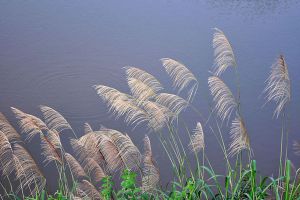
Reed family and genus
Poaceae, genus Phragmites
Other names for reed
wei, lu, lu sun, jianjia, Latin scientific namePhragmites australias Trin
Distribution range of reed
It grows all over the world, beside irrigation ditches, in riverbank swamps and other low wetlands or shallow water. It is distributed very widely in our country; the reed's reproductive capacity is relatively strong, and it easily forms continuous stretches of reed marsh.
Morphological characteristics of reed
Reed is aperennial plant of the grass family, with very well-developed rhizomes. The culm is upright, with20or more nodes; the internodes at the base and upper part are shorter, and the longest internode is at the4-6th node counting upward from the stem base, with a waxy powder below the node. The edge of the ligule is densely covered with a ring of short fine hairs that fall off easily; the leaf blade is lanceolate-linear, hairless on the surface, with the tip tapering gradually into a threadlike form. The reed has a large panicle with many branches, each branch bearing dense, drooping spikelets; the caryopsis is about1.5mm long.
Reedgrowing environment
The reed's reproductive capacity is very strong, and it grows better where there is water. Reeds in the North China region generally sprout in early4month, then enter a period of vigorous growth;8month first heads and then flowers;10month the seeds mature, and the seeds can spread with the wind. The reed's rhizomes are very well developed; in natural habitats it mainly reproduces by rhizomes, and the rhizomes have very strong vitality, so when they meet suitable conditions they can quickly grow new shoots to reproduce.
Related Articles
- How to prevent and control pests and diseases on desert rose? Ventilation and dryness are the key to prevention
- The three main causes of cotton diseases: climate, seeds and cultivation
- How to Grow Bird's Nest Fern in Water? Master Temperature, Light, and Water Change Techniques
- A Complete Guide to Identifying and Controlling Common Potted Flower Pests
- Do Carnivorous Plants Need Watering? Pot Watering and Wet/Dry Assessment Methods
- How to manage cotton during the flowering and boll-setting stage? Apply flowering and boll fertilizer heavily, use chemical regulation and pruning to prevent premature senescence
- How to Grow Chinese Hibiscus? Master These 5 Key Points for Blooms All Year Round
- How to Grow Tulips in Water? The Complete Process from Bulb Preparation to Blooming