-

Detailed Guide to Apricot Storage and Fresh-Keeping Methods and Techniques
Storage and Fresh-Keeping of Apricots 1. Determining the Suitable Harvest Maturity of Apricots Determining the suitable harvest maturity is key to storing apricots. The judgment of maturity can be determined based on factors such as the number of days of fruit development, changes in fruit color, the texture of the peel and flesh, the aromatic flavor of the fruit, and the firmness of the fruit's attachment. Apricots intended for storage should be harvested when the fruit has reached the inherent size of the variety, the fruit surface has turned from green to yellow, the sun-facing side shows the variety's inherent color, the flesh is still firm, nutrients have been fully accumulated
-
Detailed Explanation of Short-Term Storage and Fresh-Keeping Methods for Ginger
If the ginger is to be processed and used, short-term storage and fresh-keeping are needed. Choose a sheltered spot indoors, first spread a layer of moist sand on the ground, then arrange the stored ginger upright and closely packed on top, covering each layer with 5-6 cm of moist sand; in this way it can be stacked 0.8-1 m high, with the topmost layer covered with 10 cm of moist sand, then cover with plastic film to retain moisture. Note that water must not enter the ground, and the film may be left off for the first half month.
-
Breeding Methods and Key Keeping Techniques for the White Cloud Mountain Minnow
Morphological Characteristics of the White Cloud Mountain Minnow The White Cloud Mountain minnow, also known as the Baiyun Mountain fish, Tang fish, red-tailed fish, and colorful golden-line fish, belongs to the Cyprinidae family and originates from Guangdong, China. The White Cloud Mountain minnow was first discovered in the Baiyun Mountain in the northern suburbs of Guangzhou, Guangdong Province, China, hence the name Baiyun Mountain fish. The White Cloud Mountain minnow is about 3-4 cm long, with a spindle-shaped, slender body that is slightly laterally compressed, a small head, large eyes, and a bluntly rounded snout. The back of the fish is tea-brown with a slight blue tinge, the belly is silvery white, the dorsal fin and caudal fin are bright red, the tips of the pelvic fins are yellow, and the center of the tail is also red.
-
What are the prevention and control methods for chicken embryos dying before pipping?
During incubation, it is very common for normally developed chicken embryos to be suffocated before pipping due to various factors such as an overly hard eggshell, limited space for the chick embryo's head to move, or its beak tip being too far from the eggshell. So, how can this phenomenon be prevented? 1. Turning the eggs. The first 10 days of incubation are the critical period for blastoderm positioning. To ensure the embryo's eye spot and head develop along the blunt-end shell edge of the hatching egg, so as to help the chick's beak tip pip the shell, the eggs should be turned frequently during this stage. During operation, the blunt end of the hatching egg should be kept facing up
-
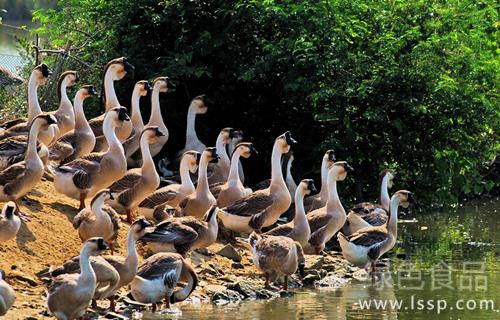
The goose is completely paralyzed with a drooping head and weakness; how to prevent botulism poisoning?
The goose is completely paralyzed with a drooping head and weakness; how to prevent Clostridium botulinum poisoning in geese
-
Key Points of Cotton Chemical Topping and Detailed Explanation of Application Methods
Cotton chemical topping is the use of chemical regulation measures to shape cotton into an ideal plant architecture and create a high-photosynthetic-efficiency population. 1. Status and role of chemical topping. Cotton is a typical light-loving crop. High yield, early maturity and high quality in the early-maturing cotton region of eastern Hebei need to be achieved through rational close planting, but rational close planting will inevitably intensify the contradiction between individual plants and the population in terms of space and light energy utilization in the middle and late stages. Therefore, cotton chemical topping has become an important supporting measure for rational close planting, and is also the core content of early promotion and stress resistance, especially the simplified cultivation technology system. At present, mepiquat chloride in cotton chemical topping
-
Methods and Techniques for Leaf Pruning and Shaping of Bonsai
Leaf pruning can make bonsai trees that normally produce leaves once a year sprout and leaf out multiple times. Leaf pruning can make bonsai send out green leaves again, restoring their vibrant and lively appearance, making them more beautiful and more ornamental. About 1 month before leaf pruning, fertilizer and water management should be strengthened to prompt new buds to sprout quickly after leaf pruning and grow into tender leaves. The timing of leaf pruning varies depending on the tree species and the viewing period. However, except that leaves cannot be pruned during natural spring budding, leaf pruning can be done at other times, and generally spring and autumn are the best times for leaf pruning. The number of leaf prunings can also be determined according to the tree species and the ornamental
-
Detailed Guide to the Care Methods and Techniques for Creeping Juniper Bonsai
Creeping juniper has a long lifespan, and the older the bonsai specimen, the higher its ornamental value, but attention must be paid to routine care and management. (1) Watering: Creeping juniper likes moisture, so potted plants should be watered frequently, but they should not be waterlogged. During drought, the foliage can be misted frequently to keep the leaf color fresh and green. (2) Fertilizing: During the growing season, a dilute, well-rotted cake fertilizer solution can be applied once a month. In winter, apply an organic fertilizer once as a base fertilizer. (3) Pruning: Pruning should be done in early spring before new branches sprout, cutting back unwanted side branches promptly to promote the development and extension of the main branches. For branches that
-
Artificial Keeping Methods and Technical Key Points for the Chinese Cobra
The white-banded snake, also known as the many-banded krait or the small-banded krait, has high medicinal and economic value. Its keeping methods are as follows: 1. Build reasonable pools. The snake pool is built of brick and stone, 2 m square and 1.5 m high, and can hold 15-20 snakes; putting in too many snakes makes management difficult. The pool walls are smoothed with cement, and a movable glass cap is added on top of the wall in a T shape to prevent escape. The bottom of the pool is the snakes' activity area, where weeds should be planted, and then snake nests should be built with sand, wooden boards, bricks and tiles, etc. Build a flowing water ditch and a bait basin in the pool, and cover the pool with
-
Detailed Explanation of the Key Technical Points for Jujube-Grain Intercropping
The key technique of jujube-grain intercropping is to properly regulate the conflicts between jujube trees and intercrops over fertilizer, water, and light, so as to achieve mutual benefit and reciprocity between jujube and grain and realize a double bumper harvest of both. 1. Master an appropriate planting density. Row spacing has a marked effect on air temperature, humidity, light, and wind speed, and is also an important factor affecting jujube and grain yields. Therefore, overall arrangements should be made according to cultivation purposes and local conditions. For jujube-oriented planting, a row spacing of 6 m is best; for grain-oriented planting, a row spacing of 15 m is best; for giving consideration to both jujube and grain, a row spacing of 8 m is best. 2. Select
条件筛选