-

What is the annual yield per mu of Pinellia ternata with three plantings and three harvests?
If Pinellia ternata is propagated from tubers, hotbeds or electrically heated hotbeds should be used to sprout them. In early March, that is, between Yushui (Rain Water) and Jingzhe (Awakening of Insects), when the 5 cm soil temperature is stable at 8-10°C, it can be sown, and in the same year or the following year in mid-June, between Mangzhong (Grain in Ear) and Xiazhi (Summer Solstice), it can be dug up without affecting summer-sown autumn crops. Pinellia ternata generally yields 600-800 kg/mu of fresh tubers, with a drying ratio of 25%-30%, which can be converted to 180-240 kg/mu of dried product.
-
A Brief Introduction to the Key Points of Fertilization Techniques for Pinellia ternata
A perennial herb of the Araceae family. Mainly produced in Henan, Sichuan, Guizhou, Jiangsu, Hubei, Anhui, Zhejiang and other provinces. The medicinal part is the rhizome. Pinellia ternata has a shallow root system. It prefers a mild, humid climate and a shaded environment, and is afraid of high temperatures, drought and strong light. It is suitable for loose-textured, well-drained sandy loam soil. Key points of fertilization techniques: Base fertilizer, apply 3000-4000 kg of barnyard manure per 667 sq m. Topdressing, from late May to early June, when bulbils grow out from the lower part of the petiole, apply a mixed fertilizer of 500-1000 kg of barnyard manure and
-
Key Techniques for High-Quality and High-Yield Cultivation of Pinellia ternata
1. Site selection and land preparation Creating a good growing and cultivation environment is the basic condition for high yield of Pinellia ternata. Under long-term wild ecological conditions, Pinellia ternata has developed characteristics of preferring a mild and humid climate and shaded environment, fearing high temperatures, drought and intense sunlight, and being able to tolerate cold. Therefore, the planting site for Pinellia ternata should be selected in sandy loam soil on sunny-facing terraces, terraced fields or gentle slopes close to a water source. The soil is required to be loose, fertile and well-drained. The previous crop is best as corn or rapeseed. After selecting the site, in combination with autumn plowing and land preparation, apply per mu decomposed chicken manure
-
Symptoms and control methods of pinellia virus disease
It mostly occurs in summer; infected leaves curl and twist, and the plants grow stunted. Control methods: ① Select disease-free plants for seed. ② Disinfect the soil before sowing and control pests promptly. ③ When diseased plants are found, pull them out immediately, burn them in a centralized pile and bury them deep, and pour 5% lime milk into the diseased planting holes.
-
Natural color-enhancing feeds for laying hens include pine needles, black locust leaves and mugwort leaves
Pine needle powder: made by air-drying and grinding pine needles. Generally, adding 3 percent to 5 percent to the feed gives a good color-enhancing effect, and can increase the egg production rate by 13 percent. Black locust leaf powder: the added amount of black locust leaf powder accounts for 5 percent of the feed, and the effect is better than pine needles; the yolk color can be raised from grade 1 to grade 9 and can remain stable without changing. Mugwort leaf powder: mugwort leaves contain nutrients such as fat, protein and various amino acids. Adding 2 percent to 3 percent mugwort leaf powder to the chicken diet can increase egg production by 12 percent to
-
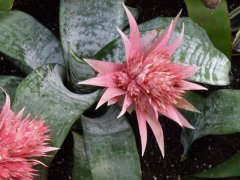
What Are Bromeliad Flowers? Introduction to Pink Pineapple, Guzmania, and Neoregelia
Below we introduce several different bromeliad flowers. Which one will you like? There is also growing information, so take a look as well. Whichever one you like, you can also grow it. Pink pineapple, this is the most popular among bromeliad flowers, especially Aechmea fascia
-
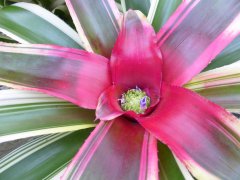
How to grow bromeliads? Master the care methods and watering tips after blooming
How do you plant bromeliads, do you know? Do you also want to grow a nice pot of bromeliads yourself? Then read the introduction below and see how bromeliads are grown. Bromeliads belong to the Bromeliaceae family, and most originate in the tropical rainforests of Central and South America. In total
-
Discovery of a Wild Self-Seeding Fertile Pinellia Plant and Analysis of Its Utilization Prospects
Since 1988, we have conducted surveys of wild Pinellia ternata variety resources in the Yimeng Mountain area and research on artificial cultivation techniques. During many years of investigation and study, we discovered a single Pinellia ternata plant that can self-pollinate and set seed under wild conditions. After artificial domestication and cultivation, one 1.5 g Pinellia tuber can produce 40 to 50 seeds in one year, thereby solving the problems of low natural seed-setting rate and the lack of five usable [varieties] in production, and opening a path for improving the propagation rate of Pinellia ternata. 1 Botanical characteristics: the plant is 10 cm tall
-
Detailed Explanation of the One-Year Three-Harvest Cultivation and Processing Technology for Pinellia (Pinellia ternata)
I. Land Selection and Preparation For planting Pinellia, loose and fertile soil is best. When preparing the land, apply 3000-5000 kg of farmyard manure per mu, 25-30 kg of phosphate fertilizer, and 100 kg of plant ash; do not apply ammonium bicarbonate. Plow deeply and harrow finely, with beds 1.3 m wide and 0.17 m high, and ditches 0.3 m wide; tall crops such as wheat, corn, sorghum, or kenaf can be intercropped in the ditches. II. Sowing Method Usually tuber propagation is used, allowing three plantings and three harvests in one year, namely planting in April and harvesting in July; planting in July and harvesting in October; planting in October and harvesting in April of the following year. The amount of seed tubers used per mu varies with
-
Detailed Explanation of High-Quality and High-Yield Cultivation Techniques for Pinellia ternata
Pinellia ternata is a commonly used precious traditional Chinese medicine, and its commercial supply mainly relies on harvesting wild resources. In recent years, due to changes in the environment, climate, and resources, the contradiction between supply and demand has become increasingly tense. Because cultivation development has been slow, the market has long been in short supply, and prices have remained stable and continued to rise. In many places, Typhonium flagelliforme (water pinellia) is used as a substitute. In southern provinces such as Jiangxi and Guangxi, cultivation of Typhonium flagelliforme has appeared. The state has repeatedly ordered that Typhonium flagelliforme be listed as a counterfeit, prohibiting pharmaceutical factories from using the counterfeit Typhonium flagelliforme to replace Pinellia ternata as a raw material. For various reasons, its wild resources are being dug up less and less, resulting in shortage. Artificial cultivation, due to problems such as low reproductive capacity and variety degeneration, has limited the improvement of yield and quality and cannot timely supply the strong market demand. The amount available on the market decreases year by year, while domestic medicinal demand and export volume increase significantly year by year. Its selling price keeps rising. In the winter of 2005, the medicinal market offered 55-65 yuan/kg, up 33.3% from the same-period price of 45 yuan. Both export and domestic sales are in tight demand, and there are still not many goods available, making it a hot variety in medicinal market transactions, with good market and cultivation prospects. Traditional methods of cultivating Pinellia ternata generally yield 500-750 kg of fresh tubers per mu, with a drying ratio of 25%-30%, and an annual yield of 125-200 kg. However, according to high-yield practical experience in producing areas, high-yield fields have an average tuber yield of 850-1500 kg fresh weight, an increase of 50%-100%, a significant yield increase, with an output value of more than 10000 yuan per mu and considerable benefits. Therefore, for medicinal farmers to obtain higher yields and high benefits from cultivating Pinellia ternata, in addition to good routine field management, they must also grasp the following key links:
条件筛选