-
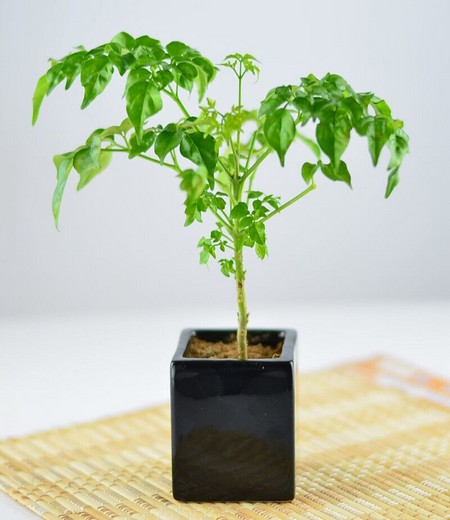
Cultivation Methods and Care Tips for the Happiness Tree Bonsai
Because of its auspicious name, the Happiness Tree (Radermachera sinica) is deeply loved for homes and office environments, especially since it has lush foliage, small emerald-green leaves and is highly ornamental. It can also absorb harmful substances in the air and has an anti-radiation effect, giving you back a healthy working and home environment. So how do you grow a Happiness Tree?
-
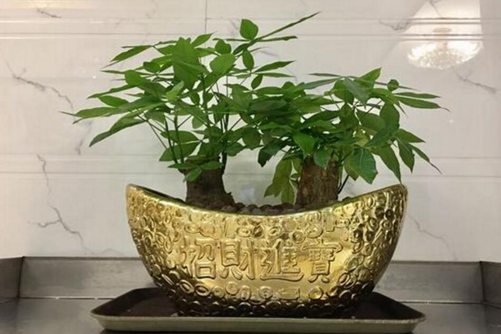
How to grow the small Happiness Tree: a guide to growing Happiness Tree well
As urbanisation continues to advance, more and more concentrated residential areas are being built, and people's sense of happiness is growing day by day. Among flowering plants there is a potted plant known as the small Happiness Tree (Radermachera sinica); it carries a beautiful meaning and can also beautify and decorate the environment, so it is deeply loved by everyone. How do you grow the small Happiness Tree?
-
How much does a 2 m Chinese pine cost per tree, and does it grow fast?
Chinese pine (Pinus tabuliformis) is generally used for afforestation, because it is a strongly sun-loving plant, cold-resistant, drought-resistant, barren-tolerant, and deep-rooted. It is a plant that is very easy to keep alive, and it is excellent for afforestation. The Chinese pine is widely distributed and is one of the main afforestation tree species across the vast areas of northern China.
-
How much is a one-meter cedar sapling? Wenjiang nursery wholesale price
Cedar is a variety of pine tree and a relatively popular type of pine. Would you like to plant a cedar? Do you know what the price of this kind of pine tree is like? Let's take a look at how much a cedar sapling costs. Price of a one-meter cedar sapling
-
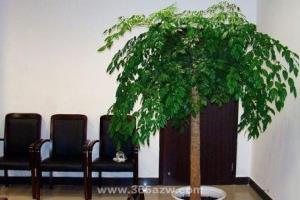
Is the happiness tree suitable for growing indoors?
Is the happiness tree suitable for growing indoors?
-
Black Pine Bonsai and Landscape Tree Price Guide
[Black Pine] Black Pine Bonsai_Black Pine Landscape Tree_Price Guide
-
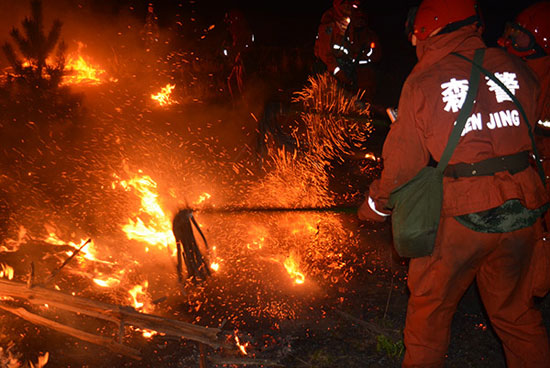
Forest fire in the Mongolian Scots pine seed tree forest area in Inner Mongolia has been successfully extinguished
Forest fire in the Mongolian Scots pine seed tree forest area in Inner Mongolia successfully extinguished
-

In which regions are Korean pine (Pinus koraiensis) tree species mainly distributed?
The distribution area of the Korean pine (Pinus koraiensis) tree species is: Korean pine is produced in the mountainous areas of Heilongjiang, Jilin and Liaoning in China at altitudes of 300 to 1800 m. Its natural distribution roughly coincides with the range extending from the Changbai Mountains and the Greater Khingan Mountains. It has been introduced and cultivated in Beijing and in such places in Shandong as Mount Tai, Mount Lao and Mount Kunlun. Korean pine has a fairly wide tolerance for light conditions, and as the tree age increases, its light requirement gradually rises. It most prefers deep, fertile mountain dark brown forest soil with good permeability. Korean pine is a shallow-rooted tree species, its taproot is not well developed, and its lateral roots spread very widely horizontally, which helps it absorb soil nutrients.
-
What are the characteristics of the Korean pine tree species? Learn about Korean pine characteristics in one article
The characteristics of the Korean pine tree species are: an evergreen tree of the pine family (Pinaceae). It can reach 50 m in height and 1.5 m in diameter at breast height. The trunk is straight and full, and the crown is conical. The tree can live more than 500 years. It is one of China's precious timber tree species. Because the trunk is straight, the wood quality is good, the lumber yield is high, and the decay resistance is strong, its craft value is extremely high. It is an excellent timber for construction, aviation, utility poles, sleepers, bridges, vehicles and ships. It is also a superior raw material for making various molds, plywood, musical instruments and sports equipment. In addition, Korean pine can also be tapped for resin; the bark can
-
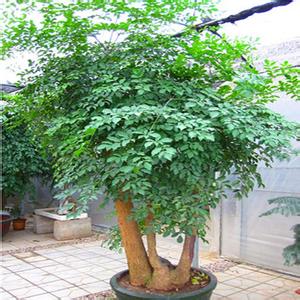
What causes the happiness tree to drop its leaves?
The first reason - temperature. We all know that the happiness tree likes a warm and hot environment, and the suitable temperature for growth is about 20°C to 30°C, so the temperature for the happiness tree's growth must be well controlled. Generally speaking, in summer it can receive full sun, but it must not be exposed to scorching sun
条件筛选