-

Vice Minister of Agriculture Yu Kangzhen: Resolutely protect and build every piece of grassland well
This website news August 26-27, the 2015 China Grassland Forum was held in Xilinhot, Inner Mongolia. Vice Minister of Agriculture Yu Kangzhen attended and delivered a speech. He emphasized that at the key juncture of summarizing the Twelfth Five-Year Plan and planning the Thirteenth Five-Year Plan, the vast number of grassland workers must unite their efforts, be brave in innovation, and
-
Export Volume of Chinese Medicinal Materials and Decoction Pieces Declined in the First Half of 2015
According to statistics from the Traditional Chinese Medicine Department of the China Chamber of Commerce for Import and Export of Medicines and Health Products, in the first half of 2015, China's export value of Chinese medicinal materials and decoction pieces was 550 million USD, down 7.50% year on year. This was mainly reflected in a 10.43% year-on-year decline in the average export price. This was the first decline in export value since the major bull market of 2010.
-
Agricultural and poverty-alleviation funds must not be embezzled or misappropriated
As of May this year, procuratorial organs nationwide handled a total of 29,000 duty-related crimes in agriculture-related and poverty-alleviation fields, accounting for 22% of the total number of duty-related crimes filed and handled by procuratorial organs during the same period. Duty-related crimes in agriculture-related and poverty-alleviation fields remain at a high level, in a prone and frequent state. (People
-
How Are Residents' Incomes Calculated?
Recently, a piece of good news delighted the people of Zhejiang: in 2014, the per capita disposable income of all residents in Zhejiang was 32,658 yuan, ranking third among the country's 31 provinces (autonomous regions and municipalities) and first among the provinces (autonomous regions). Moreover, farmers' incomes in every county of Zhejiang exceeded 10,000 yuan, with last year's per capita figure approaching 20,000 yuan.
-
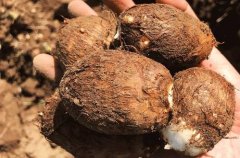
When is the best time to plant taro in the south, and can it be planted after cutting into pieces?
Is taro a vegetable you like to eat? Would you like to know some planting tips about it? Let's take a look at the questions and answers below. When is the best time to plant taro? It is generally planted in spring. That is around January to
-
Correct Methods and Steps for Planting Sweet Potatoes by Cutting into Pieces
Summary Early land preparation: In winter or early spring, form ridges according to the terrain, and per mu apply an appropriate amount of organic fertilizer, ammonium bicarbonate, superphosphate, and potassium sulfate. Select seed potatoes carefully: choose tuber pieces weighing 100-150 grams. Cut into pieces and soak the seed: soak the tuber pieces in a carbendazim solution. Sow and cover with film: avoid frost damage. Break the film to release seedlings: when the seedlings grow to 3 cm, manually break the film. Scientifically fill in seedlings: replant where seedlings are missing. Timely clear the plants: keep 2 strong seedlings per plant, and cut off all the rest.
-
High-yield cultivation method for sweet potato by cutting into pieces and direct sowing
In the cultivation of sweet potato by cutting into pieces and direct sowing, planting is carried out 20-30 days earlier than traditional planting. Because the growth period is extended, the yield of fresh sweet potato is generally increased by about 1000 kg per mu. It is a comprehensive high-yield cultivation technique with low investment, large returns, and savings in labor and time. 1. Prepare the soil early. In winter ⟦4 <p>In the cultivation of sweet potato by cutting into pieces and direct sowing, planting is carried out 20-30 days earlier than traditional planting. Because the growth period is extended, the yield of fresh sweet potato is generally increased by about 1000 kg per mu. It is a comprehensive high-yield cultivation technique with low investment, large returns, and savings in labor and time. </p><p></p><p>1. Prepare the soil early. In winter or early spring, open furrows and deep-plow 30 cm, which can increase soil temperature and water content, and use the low temperatures of winter and spring to kill overwintering underground pests and diseases. Form ridges along north-south rows or according to the terrain, with a ridge spacing of 60 cm and a ridge height of 20 cm. The ridge shape should be tall and plump, and the furrow should be deep and narrow, which is beneficial both for drainage and drought prevention and for root tuber expansion. When forming ridges, keep the ridge soil loose, and rake the ridge surface flat and firm. Apply sufficient base fertilizer: per mu, apply 4000-6000 kg of organic fertilizer, 50 kg of ammonium bicarbonate, 50 kg of superphosphate, 20 kg of potassium sulfate, or 100 kg of plant ash. </p><p>2. Carefully select seed potatoes. Choose excellent varieties suitable for local planting. The potato pieces should be uniform in size, and pieces of 100-150 g are better. Remove potato pieces damaged by freezing or pests and diseases. Generally, 50 kg of seed is used per mu. </p><p>3. Cut into pieces and soak the seed. According to the characteristic that the upper end of the potato piece has dense buds and the lower end has sparse buds, the upper part of the potato piece should be cut smaller and the lower part larger. Generally, each piece retains 2-3 bud eyes. Put the cut seed potatoes promptly into a 500-600 times carbendazim solution and soak for 10-20 minutes. The solution temperature should preferably be 5°C higher than the air temperature at the time. Remove, dry, and plant immediately. </p><p>4. Sow in time. The time for cutting into pieces and direct sowing is 1 month earlier than the time for transplanting seedlings. After the seed potatoes come out of the cellar, they should be handled promptly and sown into the field as soon as possible to avoid freezing damage. Before sowing, open a furrow 15 cm wide and 5-6 cm deep on the back of the ridge. After watering the furrow sufficiently and letting the water seep down, place the mother pieces in the furrow with the bud-eye side facing south and up, with a plant spacing of 25-30 cm. After planting, immediately cover with film to help preserve moisture and raise temperature, and promote sprouting. </p><p>5. Strengthen management. In the early stage, replant seedlings in time. When seedlings are about 2 cm high, promptly make holes in the film manually at the emergence points to avoid scorching the young seedlings. At the end of May and the beginning of June, when the soil temperature rises, remove the film in time. In the middle and late stages, pay attention to drainage and waterlogging prevention, protect stems and leaves, and do not turn the vines. Topdressing should not be excessive; foliar topdressing can be carried out. Spray 50 kg per mu of 1% urea or 0.5% potassium dihydrogen phosphate solution on the leaves. At the same time, pay attention to weeding and pest control.</p>
-
How to Grow Onions for High Yield? Save This Planting Secret Recipe
Prepare a piece of land with ample fertility, deep plow it and apply sufficient base fertilizer. Then select some healthy, high-quality seeds, soak them in cool water for 12 hours, remove and drain them, and place them in a 25°C environment to germinate. Once germinated, sow them into the soil at a row spacing and plant spacing of 10*10cm.
-
Detailed Guide to Abiu Planting Techniques and Cultivation Management
Prepare a piece of flat land and deep-plow it with sufficient base fertilizer. Then make the seedbed and water it thoroughly, evenly broadcast the seeds over the seedbed, and finally cover with soil and a layer of plastic film. When the seedlings grow to about 30cm, transplant them into the field at a row spacing of 3*2 m
-
Detailed Guide to Atractylodes Planting Technology and Management Methods
Prepare a piece of neutral or slightly acidic sandy loam with sufficient fertility and rich humus, deep plow and apply enough base fertilizer, and form ridges. Then plant the seedlings into the soil at a row spacing of 25*15cm. After successful planting, carry out basic management work such as weeding, watering and fertilizing, and pest and disease control.
条件筛选