-

Cultivation methods for Spikenard (Japanese parsley): fertilize mainly with farmyard manure
Abstract. Land preparation and bed making: deep plow the land about 25cm, apply high-quality farmyard manure, and make long beds. Planting: choose early to mid-June for planting, and water thoroughly after planting. Fertilizing: fertilize only after the seedlings have recovered, about once every 1 month, mainly with farmyard manure, if conditions
-
Watermelon, Tomato, and Parsley Seed Germination Times and Planting Techniques
Watermelon, tomato, and parsley are all common fruits and vegetables in our daily lives, and they are also widely grown. So when do their seeds germinate? What are the planting techniques? Let's take a look together below. Watermelon seeds I. Germination
-
A Detailed Guide to the Latest Parsley Planting Methods and Techniques
Parsley is actually European parsley, and many people also call it fragrant celery. It mainly appears in Western cuisine and can be used for plating, seasoning and as a vegetable. Its fruits also have a diuretic effect, and its roots are also edible. It contains very abundant vitamins
-
What are the methods for selecting seeds and raising seedlings of parsley?
Parsley is a vegetable, mainly eaten for its tender leaves and leaf stalks. It is not only rich in fragrance but also highly nutritious. Chewing its leaves can eliminate bad breath, making it a natural deodorizer. So if you want to grow parsley, how should you select seeds? What are the methods for raising parsley seedlings?
-
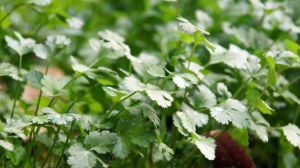
What Is the Difference Between Parsley and Cilantro? A Quick Guide to Telling Them Apart
Stem difference: Cilantro has cylindrical stems; parsley also has cylindrical stems. Leaf difference: Cilantro leaves are broadly ovate or fan-shaped and semi-divided; parsley leaves are pinnately compound and dark green. Flower difference: Cilantro flowers are white or slightly pale purple; parsley flowers are white or light green. Fruit difference: Cilantro fruit is spherical; parsley fruit is small, grayish brown or light brown.
-

-
Parsley
English name: Moss-curled Parsley Family: Apiaceae (Umbelliferae) Parts used: root, leaf, stem, seed Flavor characteristics: Mature plants can reach 80 cm; native to southern Europe; biennial with a taproot; stems are solid and bear creamy-white umbellate flower clusters; blooms in summer; seeds have a rich fragrance. Cultivation: Needs a sunny, well-ventilated environment; soil is best if fertile or deep and able to retain moisture. Sow seeds directly, 2-3 seeds per hole, plant spacing 20
-
Introduction to the Variety Characteristics and Cultivation Methods of Dutch Parsley
Variety origin: native to the Netherlands. Introduced from the Beijing Academy of Agriculture and Forestry Sciences. Characteristics: prefers a cool climate, relatively cold-tolerant, with optimal growth at around 20 degrees Celsius; long daylight easily promotes bolting and reduces quality, so it should be cultivated in protected areas with delayed autumn planting or advanced early planting. Cultivation points: transplant when seedlings are about 40 days old, water frequently with small amounts, keep the soil moist, apply sufficient base fertilizer, ensure topdressing, and take care to prevent the soil from drying out and waterlogging in the field.
-
Large-leaf parsley
Large-leaf parsley (Spuriopimpinella brachycarpa (Kom.) Kitagawa), also known as mountain parsley, false anise, Mingye vegetable (Anshan), spider fragrant (Jilin), and Channa Muer (Korean transliteration). It is a perennial herbaceous plant of the Umbelliferae family. It is mainly distributed in northeastern China and the Russian Far East. Its tender stems and leaves are edible, emerald green and juicy, fresh and refreshing in aroma, and rich in nutrients, making it one of the wild vegetables excellent in color, aroma, and taste. According to measurements by the Institute of Applied Ecology
-
Parsley
Special features: Parsley has a high dry matter content and is nutrient-rich. Every 100 g of fresh weight contains about 2 mg of vitamin A, 172 mg of vitamin C, 203 mg of calcium, and 727 mg of potassium. Parsley is mostly used as a spice and seasoning, and is also a garnish for side dishes and platters widely used around the world. At present, its development as a dehydrated vegetable has attracted people's attention. Variety characteristics: Agronomic traits: a semi-hardy plant, green-plant vernalization type, bolting under long-day conditions; the leaves are tripinnate compound leaves, with wrinkled leaf surfaces, and the outer edges are serrated, deeply lobed, and curled, growing in parallel;
条件筛选