-

A Detailed Guide to the Latest Methods for Pruning and Shaping Iron Jasmine
Iron jasmine originates from tropical and subtropical regions. It is a shrub-type plant that loves environments with abundant sunlight, is afraid of drought, and stays evergreen all year round. In our everyday flower-growing, when we find that the branches and leaves of a flowering plant have grown long, we face pruning problems. You should know that
-
Where is the latest production area distribution of chestnuts?
The production area of chestnuts originated in China, and they are now distributed in Vietnam, Taiwan, and mainland China, growing in areas at an altitude of 370-2800 m, mostly found in mountainous regions, and have been widely cultivated artificially. Chestnuts are most famous for Luotian in Hubei and Qianxi chestnuts in China. Luotian chest
-
-
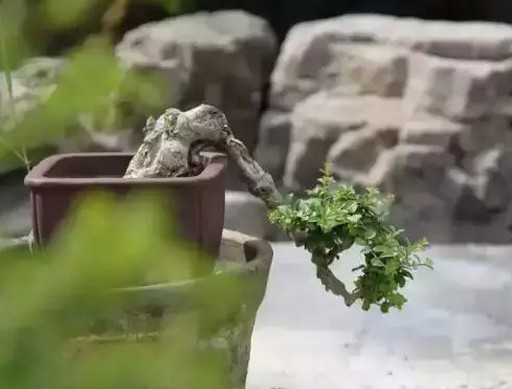
Cultivation of small trees for landscape bonsai originates from insights into how nature shapes trees
Bonsai starts from small seedlings, pruned once a year in the early stage, beginning with basic training; as time accumulates, the small tree naturally shows healed pruning cuts, and according to one's own needs and purposes, the tree's form is gradually perfected through continuous pruning. Young trees in the early stage have no degree of aging. Due to the characteristics of some tree species, such as Chinese privet (Ligustrum sinense)
-
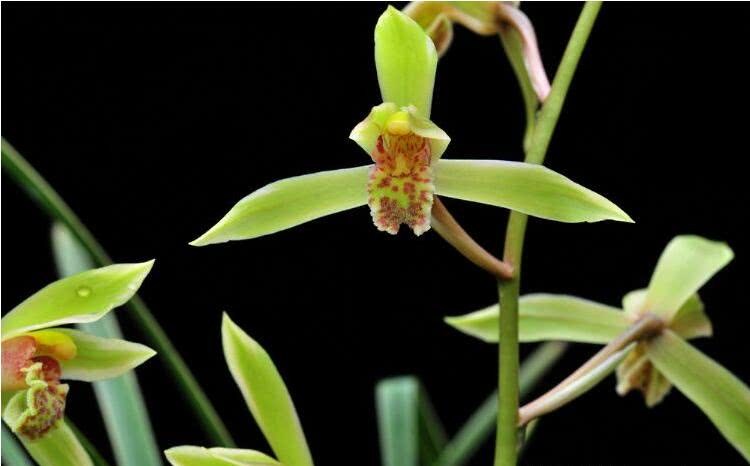
New Cymbidium faberi flower originates from a single wild-collected plant brought down from the mountains in 2002, the size of a toothpick
New Cymbidium faberi flower grown from a single wild-collected plant brought down from the mountains in 2002, the size of a toothpick New Cymbidium faberi flower grown from a single wild-collected plant brought down from the mountains in 2002, the size of a toothpick New Cymbidium faberi flower grown from a single wild-collected plant brought down from the mountains in 2002, the size of a toothpick New Cymbidium faberi flower grown from a single wild-collected plant brought down from the mountains in 2002, the size of a toothpick New Cymbidium faberi flower grown from a single wild-collected plant brought down from the mountains in 2002, the size of a toothpick...
-
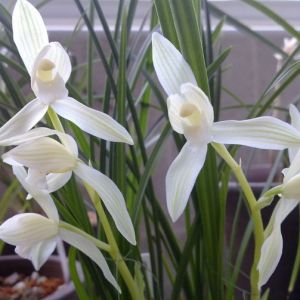
Lianban Orchid Taibai Su originates from Weixi, Yunnan
Taibai Su is a variety of Lianban Orchid (Cymbidium tortisepalum var. lianpan), named for its discovery in the valley of Taizi Snow Mountain and its pure white flowers without any speckles. It was originally called Lianban Su. Weixi is located on the borderland of Yunnan and Tibet, in the Three Parallel Rivers region of the Jinsha River, Lancang River and Nujiang River, where mountains are high and valleys are deep and unfathomable, with snow peaks reaching nearly 5000m and river valleys less than 1000m deep, an elevation difference of 4000 meters. High mountains bring much mist and cloud, deep valleys bring many streams, and the clear cold brings many orchids. In 1989, Chen Zhongqin, owner of the Snow Mountain Botanical Garden, found Taibai Su. The following spring, when Taibai Su bloomed, he wore Tibetan clothing and delivered it to the Second China Orchid Expo in Xiamen for exhibition, causing a sensation in the orchid world, and it was bought away by a foreign orchid merchant at a high price. Because of the discovery of Taibai Su, Weixi was listed as a famous orchid-producing area.
条件筛选