-

Straw mushrooms take only 7-10 days from spawning to cultivation: cultivation techniques
I. Determining the cultivation period. Straw mushrooms (Volvariella volvacea) like high temperature and high humidity, so in northern regions they should be grown in summer. In central Hebei and southern Hebei, this is generally from late May to early September, when the temperature inside plastic greenhouses can be maintained at 22-31°C. When cultivated in this period, the mycelium generally germinates on the second day after spawning, the mycelium runs through the substrate on the third day, and the first flush of mushrooms can be harvested on days 7-9; growers in other regions can adjust the cultivation period flexibly according to local climatic conditions. II. Selection and treatment of the growing substrate. The growing substrate is the nutritional medium for growth, and choosing a suitable substrate is
-
Detailed Explanation of Gentamicin-Micronomicin, a Commonly Used Clinical Drug for Ducks
Source and properties: This product is developed from the by-products of micronomicin production and contains components such as micronomicin and gentamicin. Its sulfate is easily soluble in water and almost insoluble in organic solvents such as methanol and ethanol, with good stability. Actions and uses: This product has antibacterial effects against a variety of Gram-positive and Gram-negative bacteria such as Escherichia coli, Salmonella, Pasteurella, Streptococcus, Staphylococcus, and Pseudomonas aeruginosa, with particularly strong effects against Gram-negative bacteria. Its antibacterial activity is slightly higher than that of gentamicin, while its toxic and side effects are lower than those of the same
-
What disinfectants are commonly used in snake farms?
"Disinfect the snake farm often, and with diligent care the snakes stay disease-free." For snake farms (and keepers), "prevention is better than cure" is an eternal rule. Especially under captive breeding and home propagation conditions, routine chemical disinfection must be kept up, otherwise a trivial matter can "brew" into a big problem, and by then it will be a bit late to try to salvage the situation. Disinfectants now on the market come in a confusing array of types, but snake farms (and keepers) must not blindly misuse disinfectants that are irritating, smelly or corrosive, such as caustic soda, Lysol, 84 disinfectant, formalin (formaldehyde)
-
Cotton-lily intercropping: a commonly used cotton field intercropping and relay cropping pattern
Cotton-lily intercropping is a cotton field intercropping pattern widely used in dryland sandy loam areas along the coast and along rivers. The two crops have little mutual influence and are mutually beneficial in fertilizer use, but note that lilies cannot be continuously cropped and must be rotated to a different crop. This intercropping pattern generally has a bed width of about 3 m, with cotton planted in wide and narrow rows, wide row spacing 140 cm, narrow row spacing 50 cm, and 4 rows of cotton per bed. In the wide cotton rows, 6 rows of lilies are planted, with row spacing 20 cm and plant spacing 20-25 cm, 5000-6000 plants per mu. Cotton is raised as seedlings and transplanted, planted separately on both sides of the bed, per mu
-
What are the two major problems commonly seen in garlic cultivation?
In recent years, in the main garlic-producing areas such as Jinxiang, Juye, Cangshan, Zhongmu, and Kaifeng, quite a few problems have arisen from a series of causes including continuous cropping, poor management, and unscientific fertilization. They can be summed up in 9 words: "yellow leaves, dry tips, dead seedlings, low yield." The author now introduces to the broad ranks of agricultural technology extension workers and garlic growers the causes of the two most headache-inducing problems that have appeared in garlic cultivation in recent years. Problem one: the garlic looks normal before winter, with a few yellow leaves and dry tips, but after green-up the garlic seedlings turn severely yellow.
-
Reasonable pig feed formulation is the only way to prevent pigs from losing their appetite
When the temperature rises above 35°C, pigs have low feed utilization and slow weight gain. Therefore, in hot seasons, different feeding methods should be given according to different categories of pigs and different physiological stages of pigs. Boars: feed 2 times a day, and add green feed or thin feed at noon. Mating and exercise are both carried out in the morning and evening; after mating, do not immediately let them go into water to wallow or spray them with cold water. From 1 p.m. to 3 p.m. every day, spray water once on the pigs' bodies and the ground, and reduce light to 8-10 hours. If the number of matings is low, the amount of concentrated feed should be reduced to prevent overfattening and poor libido.
-
Introduction to New Gieling (Benzalkonium Bromide), a Commonly Used Clinical Drug for Geese
Properties: This product is a colorless or light yellow clear liquid, easily soluble in water; its aqueous solution is stable, heat-resistant, and can be stored for a long time without losing potency; it has no corrosive effect on metal, rubber, or plastic products. Actions and uses: This product belongs to the quaternary ammonium cationic surfactant class; it has a cleaning and decontaminating effect, and can also adsorb onto the surface of bacteria, changing the permeability of the bacterial cytoplasmic membrane, affecting bacterial metabolism, and denaturing bacterial proteins, thereby producing a bactericidal effect. This product has a relatively broad antibacterial spectrum and can kill a variety of Gram-positive and Gram-negative bacteria. However, its bactericidal effect on Gram-positive bacteria
-
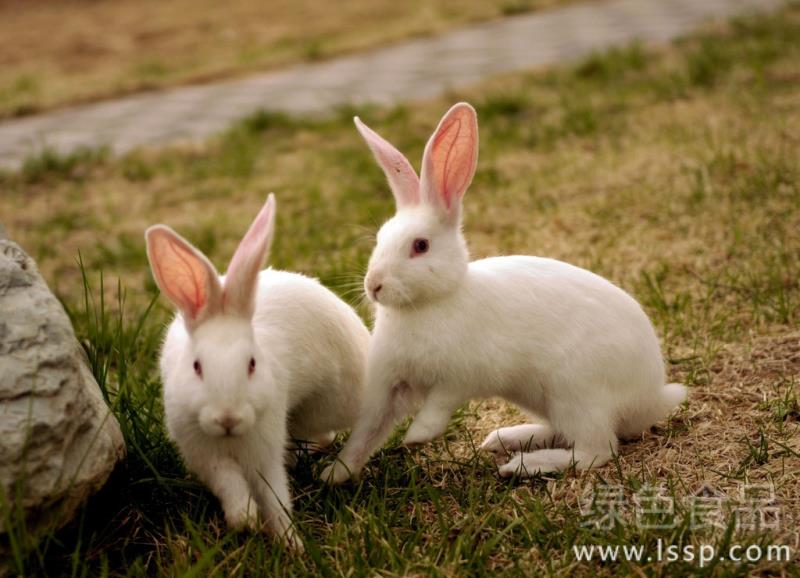
5 contraindications for immune injection in domestic rabbits; only reasonable immunization brings healthy rabbits
Reasonable immunization brings healthy rabbits: 5 contraindications for immune injection
-
What are the commonly used processing methods for Gastrodia elata?
The processing of Gastrodia elata must be done carefully and meticulously; otherwise, the good Gastrodia elata that was cultivated through hard work will be processed into inferior products, and all the effort will be wasted, failing to achieve good economic returns. There are 3 commonly used methods for processing Gastrodia elata: 1) Basket steaming method: the method of steaming Gastrodia elata in a basket is called the basket steaming method. Gastrodia elata processed by this method has bright color and the best quality. That is, wash the Gastrodia elata clean of surface soil with clean water, divide it into large, medium and small grades, place them separately in a ground basket and steam for 10-20 minutes; the small ones should be steamed for a shorter time, and the large ones slightly longer, with the degree of being steamed through and having no white core as the standard. 2) Rice-washing water boiling method: use 5
-
Wuzhimaotao (hairy fig, Ficus hirta) is a commonly used health food.
Wuzhimaotao, commonly known as wild loquat, tubeiqi, five-claw dragon and so on, is a small shrub or small tree. It grows 2-8 m tall, has milky sap, and its root bark is fragrant; the stems, leaves and fruits are all covered with stiff hairs, and the leaves are lobed like a hand. It mostly grows on open hillsides, in valleys, beside water or in thickets. The main part used is the root, and it is a plant with fairly good medicinal value. Its nature and flavour are pungent, sweet and neutral, and it has the effects of tonifying qi and replenishing deficiency, moving qi and relieving depression, strengthening the sinews and activating the collaterals, fortifying the spleen and resolving dampness, and relieving cough and transforming phlegm. It has now been developed into a green food for health-preserving dietary therapy, and has been made into
条件筛选