-

Is "no one to farm" really a problem? Let's hear what He Xuefeng has to say
During the National Day holiday, the author went to Sheyang County, Jiangsu Province to research "joint farming and joint planting" and made many interesting discoveries. Sheyang County, following the deployment of higher authorities, counted the number of farming households in the county with more than 30 mu of cultivated land, in order to transfer out 20% of the previous agricultural subsidies to support these new agricultural business entities.
-
Breeding seedlings on demand: farmers can grow whatever they want to plant
In recent years, the state has strongly supported the development of the national seed industry, issuing multiple documents and formulating multiple policies to push the national seed industry toward takeoff, and the dominant position of enterprises has gradually been clarified and strengthened. Yet since the founding of our country, a very large portion of scientific research investment has been placed in research institutes
-
What are the main triggering factors of agriculture-related corruption?
Important findings: 75.2% of respondents said that agriculture-related corruption is widespread in their region; 44.2% of respondents said that agriculture-related corruption occurs more often among township-level officials. At present, agriculture-related corruption problems occur more often in new rural construction (57.
-
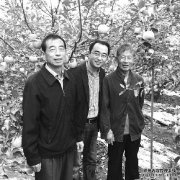
With apple-growing skills, returning home to grow apples beats a 10,000-yuan monthly salary
Li Qingjun often spends time with fruit growers, discussing apple-growing knowledge. Photo provided by the interviewee. Our reporter Li Jing. He once worked at a listed company in Shenzhen, engaged in securities and investment and financing work, with a monthly salary of over 10,000 yuan. This white-collar worker whom everyone envied chose to return
-
The 13th Five-Year Plan recommendations were recently released. What will they bring to farmers?
Editor's note: Recently, the "Recommendations of the Central Committee of the Communist Party of China on Formulating the 13th Five-Year Plan for National Economic and Social Development" was released. The 13th Five-Year Plan is the last five-year plan for achieving the goal of building a moderately prosperous society in all respects, and is of decisive significance for smoothly achieving the goal of building a moderately prosperous society in all respects.
-
With grain prices fluctuating sharply, what should farmers plant next year?
A bumper harvest, falling prices bring worry "This is yellow corn, this is sweet corn... very fragrant and tender." At the factory area of the Huaihe Seed Industry Grain Industry Consortium in Yongqiao District, Suzhou City, three or five farmers were sorting harvested corn into bags. "This year's yield is good, but
-
What's wrong with super rice? Yuan Longping asks why the entire project should be denied
Yuan Longping in the eye of the super rice storm: quietly tackling the rice "nuclear weapon," traveling across most of China in half a year. Since April 9 of this year, when the news was disclosed that the rice variety Liangyou 0293 suffered reduced yields and total crop failure in Anhui, various discussions about super rice have not ceased. On October 9, Yuan
-
Market-oriented reform of agricultural factors is poised for action: what signal will it send?
With the approval of the "Opinions on Further Promoting the Reform and Development of State Farms" at the 17th meeting of the Central Leading Group for Comprehensively Deepening Reforms on October 13, another reform plan aimed at introducing market-oriented factors into the traditional agricultural economic system is about to be implemented. 18th National Congress
-
What Conditions Are Needed to Advance Mortgage of Rural Land Contractual Management Rights
The State Council recently issued the "Guiding Opinions on Carrying Out Pilot Programs for Mortgage Loans on Rural Contracted Land Management Rights and Farmers' Housing Property Rights." This is a solid step forward in the reform of the rural land system and an important exploration of rural land capitalization. From domestic and international
-
China's grain output, imports and stocks all rising at once: what new problems does this pose?
In 2014, China's annual grain output achieved an 11th consecutive increase, basically remaining above 600 million tons, and at the same time, China's grain imports also grew rapidly. The reporter learned that over the whole of last year, China's grain imports exceeded 100 million tons for the first time, while according to data released by the General Administration of Customs on the 8th
条件筛选