-

Observations and Reflections on the "Hollowing Out" of Rural Collective Economies
Hard to Get Things Done Without Money, Services Can't Keep Up -- Observations on the "Hollowing Out" of Rural Collective Economies (Part One) Currently, the "hollowing out" of collective economies in some rural areas of western China has become the norm, affecting the development of village-level public welfare undertakings and the supply of public services. Yet China has not yet established a public finance system covering both urban and rural areas, and a large number of livelihood needs in rural areas still rely on the already weak village collective economies.
-
Reporter's Observation: Northeast Asia Expo Boosts the Transformation of the Grain and Bean Industry
Miscellaneous grains and beans, Jilin agriculture's colorful calling card. Jilin's miscellaneous grains and beans enjoy a high reputation nationwide and even worldwide, and demand has been growing year by year. But behind this advantage, the predicament of the miscellaneous grains and beans industry is hard to conceal: long-term reliance on traditional production and management models,
-
Ten Years After Village Mergers: Another Look at Rural Change
After the tax and fee reform, because village-level income was greatly affected, the government promptly launched the work of merging villages and combining groups, meaning that by reducing the number of village cadres it could cut expenditures and maintain the normal operation of village-level organizations. In fact, as the state in the following years increased input into rural areas,
-
Observations and Reflections on the Phenomenon of Capital Crossing into Agriculture
Agriculture is a dialogue between life and life; the brilliance of life requires patient waiting. It is inadvisable for capital to seek rapid wealth creation by replicating profit models from other sectors. Evergrande recently announced in a high-profile manner its entry into modern agriculture. The planned investment of 100 billion yuan covers grain and oil, livestock, dairy and other sectors.
-
A detailed explanation of dog farming techniques and methods, mastering the key points of scientific feeding and management
Summary Selecting puppies: observe whether the body shape is well-proportioned, whether the appetite is strong, and whether the coat color is bright; puppies need to be vaccinated before being placed in the farm. Daily management: clean the dog house every day, wash the feed troughs and water troughs, disinfect the dog house every half month, and ensure
-
How to Feed Laying Ducks? A Detailed Guide to the Four-Observation Feeding Method
I. Feeding by Body Weight Determine the quality and quantity of feed based on the body weight and egg-laying rate of the laying ducks: (1) If the flock's laying rate is still above 80% while the ducks show a slight trend of weight loss, appropriately increase the amount of animal-based feed in the diet (fresh river snails are even better)
-
Clever Use of the "Five Observations" Method to Identify Sheep Diseases
Posture Healthy sheep generally compete for feed, walk at an even pace, and respond quickly; sick sheep respond slowly, stop eating and stand still or lie down. Some diseases also present special postures, such as tetanus, which manifests as stiff limbs; sheep suffering from coenurosis (brain tapeworm cysts) show neurological symptoms such as circling.
-
How to apply topdressing after wheat turns green? Analysis of the latest three-point observation key points
As temperatures rise, wheat will enter a stage of rapid growth and development, and the key period for topdressing wheat after it turns green will also arrive. Most farmers arbitrarily increase the amount of green-turning fertilizer when topdressing, causing wheat lodging and reduced yields. Therefore, the author suggests that farmers apply topdressing to wheat after it turns green
-
How to Tell If a Sheep Is Sick? An Expert Teaches You Five Observations to Identify Sheep Diseases, Detect Early and Treat Early
Sheep, also called domestic sheep or white sheep, are woolly four-legged ruminants and one of humanity's domestic livestock. But during the breeding process, improper management can easily lead to the occurrence of sheep diseases, and many farmers have also suffered no small
-
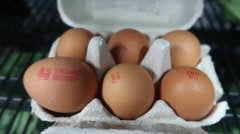
UK Poultry Egg Market and Consumer Observations: A Proud Badge on the Eggshell
Milk, meat and eggs are the main sources of animal protein for humans. As the human population grows and living standards rise, the global demand for animal protein increases accordingly. Egg production, in particular, has grown at a greater rate than milk and meat. For example:
条件筛选