-
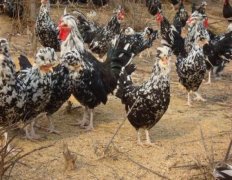
How to prevent and treat organophosphate pesticide, arsenide and zinc phosphide poisoning in chickens?
How should organophosphate, arsenide and zinc phosphide poisoning in chickens be prevented and treated? How are these three types of poisoning caused? Is it because of pesticides? Would you like to find out? The three types of poisoning mentioned above are caused by substances commonly used as pesticides and rat poison, leading to poisoning in free-range grass chickens and scavenging native chickens, which is very common in rural areas, because in spring, when chickens forage near farmland where pesticides have been used, they eat food contaminated with these pesticides.
-

How many years does it generally take for Jinxiu crabapple to bear fruit?
Jinxiu crabapple, also known as chicken heart fruit, was first discovered in the home of a farmer in Maixin Town, Tongliao City, Inner Mongolia. Its tree is strong with thick leaves, resistant to cold and drought, with beautiful fruit shape and bright color. It has always been grown as a small apple tree species, but in recent years it has also been promoted externally as a landscaping tree species.
-
Key Technical Points and Detailed Methods for Free-Range Chicken Farming
The free-range chicken is a type of poultry. It is different from caged broiler chickens. Among them, free-range chickens raised on hillsides are the best. Let's take a look at the techniques for raising free-range chickens below. 1. Choosing a suitable site: Free-range chicken farming should choose a site that is sheltered from the wind and faces the sun, with flat terrain, high and dry ground, convenient water access
-
Key Technical Points and Scientific Free-Range Methods for Raising Native Chickens
A native chicken is a local chicken breed that is free-range raised by farming households themselves and has a relatively long rearing period. Some of the native chickens currently sold in farmers' markets are indeed local breeds, but they are raised in confinement, or their rearing period has been greatly shortened by using artificial compound feed and the like; some
-
Is the zelkova an evergreen or a deciduous plant?
Zelkova, also known as the chicken-fat tree, combines ornamental and medicinal value. Although it grows slowly, its wood is very good, so it is planted in most parts of our country. So is the zelkova an evergreen or a deciduous plant? 1. Is the zelkova an evergreen or a deciduous plant? The zelkova is a deciduous tree plant. The tree can reach a height of
-
Detailed Explanation of Fast-Growing Chicken Farming Technology and Scientific Feeding Management Methods
Summary Fast-growing chickens usually refer to white-feathered broilers. They have a shorter rearing cycle than ordinary broilers, higher feed utilization, and lower feeding costs. This depends on the optimization and improvement of chicken breeds, as well as the reasonable formulation of feed. The feed can be selected from ingredients rich in nutrients such as carbohydrates and proteins.
-
Key Points and Methods of Wolf Mountain Chicken Breeding Technology Explained
Abstract Wolf Mountain Chicken breeding requires raising in a quiet environment. In winter the temperature should be higher, in summer attention must be paid to cooling down, and the chicken coop should be kept dry inside. The free-range area should be large, and feeding should be done on time every day to meet its needs. Observation efforts also need to be strengthened, and
-
Detailed Explanation of Key Points for Ecological Breeding Technology of Jiuyuan Black Chickens
Summary Site selection: First of all, choose a place close to a water source and in a mountainous area, preferably with natural feed. Feeding: Feed three times a day, mainly with rice, corn, etc. Disinfection: The cleaning and disinfection of the chicken coop must be done well. In summer, pay attention to the ventilation and cooling of the chicken coop.
-
Key Technical Points and Rearing Management Methods for Hetian Chicken Farming
Abstract In Hetian chicken farming, temperature must first be well controlled, the chicken coop must maintain good ventilation, and in summer when it exceeds 35 degrees the coop must be cooled. The rearing density should be controlled at 8 to 15 birds per sq m. Feeding uses fresh green vegetables, corn and paddy rice, and the drinking water must be clean
-
Key Points of High-Leg Chicken Breeding Technology and Detailed Rearing Methods
Abstract High-leg chicken chicks need constant-temperature, meticulous feeding to improve the survival rate. During the growing period, high-leg chickens should have enhanced lighting and a sufficient supply of drinking water, and their feed should also be nutritionally balanced. The coop where high-leg chickens rest should have daily sanitation and disinfection and epidemic prevention work strengthened to avoid
条件筛选