-
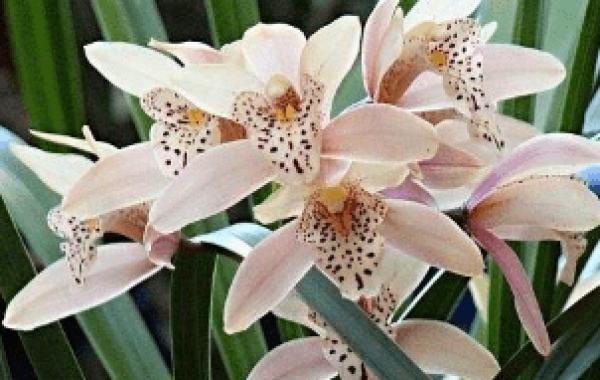
New orchid care and management techniques to teach you how to grow orchids well
How can orchids be cared for better? New orchid care and management techniques
-
New Taipei City Government Launches Ten-Championship Tea Exhibition: 10 Consecutive Years of Winning the National Tea-Making Technique Competition
(Taiwan TB News Network / Reporter Sun Yao-chang) Since the 100th year of the Republic of China (2011) to the present, New Taipei City has won the championship in the National Tea-Making Technique Competition for 10 consecutive years, making it a veritable "champion tea hometown." This year's winter tea combines three major themes - "10-Year Champion of the National Tea-Making Technique Competition," "New Taipei Six...
-

Analysis of Native Honey Prices Before the 2020 Chinese New Year, Beekeeping Techniques and Cost
Among the many tonic foods, honey should count as a relatively common agricultural product with few dietary restrictions, and native honey is especially popular. So do you know how much a jin of native honey cost before the 2020 Chinese New Year? What are the techniques for keeping bees? Cost
-
How to control pests and diseases on evening primrose? Latest technical methods tutorial
Evening primrose, also known as sundrop, mountain sesame, and wild sesame, is a plant in the family Onagraceae, under the genus Oenothera. It is highly adaptable, tolerant of acid and drought, and not demanding about soil; it can grow in generally neutral, slightly alkaline or slightly acidic soil that is well drained and loose. If the soil is too
-
The Latest High-Yield Planting Techniques and Methods Tutorial for Anemarrhena asphodeloides
Anemarrhena asphodeloides, also called hairy Anemarrhena, is cultivated throughout our country. It has strong drought and cold resistance, is a perennial herbaceous plant, and can grow in dry, rain-scarce barren hills, deserts and wasteland. It is the first choice variety for greening mountainous areas and wilderness, and it can be sown in all seasons
-
How to grow evening primrose? The latest planting techniques and methods tutorial
Evening primrose is an upright biennial robust herbaceous plant of the genus Oenothera in the family Onagraceae, also known as late cherry primrose, evening star grass, mountain sesame, wild sesame, etc. It is native to North America, was introduced to Europe early on and then spread rapidly through the world's temperate and subtropical regions, and in Northeast China, North China, East China
-
The latest tutorial on the newest cultivation techniques for Centipeda minima
Centipeda minima is a traditional Chinese medicine, commonly growing in rural areas, and it got its name because even geese will not eat it. It has the effects of dispelling wind-cold, clearing the nasal passages, relieving cough, detoxifying, and relieving itching, and is often used to treat rhinitis. So how should it be cultivated? Let's take a look together.
-
The Latest Complete Guide to Hairy Euphorbia (Dijincao) Planting Techniques
Dijincao, also known as Jianchou, Hongsicao, or Naijiangcao, is a plant of the Euphorbiaceae family. The whole plant can be used as medicine and has the effects of clearing heat and detoxifying, cooling blood and stopping bleeding, and draining dampness to relieve jaundice. It is widely used and is cultivated in most provinces of our country. So below, the editor will explain
-
The Latest Cultivation Techniques and Methods for Digupi: A Tutorial
Digupi, also known as Chinese wolfberry root bark, is the root bark of the Chinese wolfberry (Lycium chinense). It can be used as medicine and has the effects of reducing fever, cooling the blood, and clearing the lungs to reduce internal heat. It is fairly widely used and is distributed across most regions of our country. So how should Digupi be cultivated? Let's take a look together. 1.
-
The latest tutorial on the newest cultivation techniques and methods for Gouji (Cibotium barometz)
Gouji (Cibotium barometz), also known as Golden Hair Dog, is a plant of the Dicksoniaceae family. Its rhizome can be used as medicine, having the effects of warming and nourishing the liver and kidneys and dispelling wind-dampness, and is mainly used to treat rheumatic bone pain, waist and leg pain, numbness of the hands and feet, and unsmooth sinews and vessels. So how should Gouji (Cibotium barometz) be cultivated? Let's find out together with the editor.
条件筛选